Blog
Nylon Cable Glands in Automotive Industry
How nylon cable glands are used across automotive wiring, engine compartment routing and EV charging infrastructure, with specifications and selection guidance.
Read More
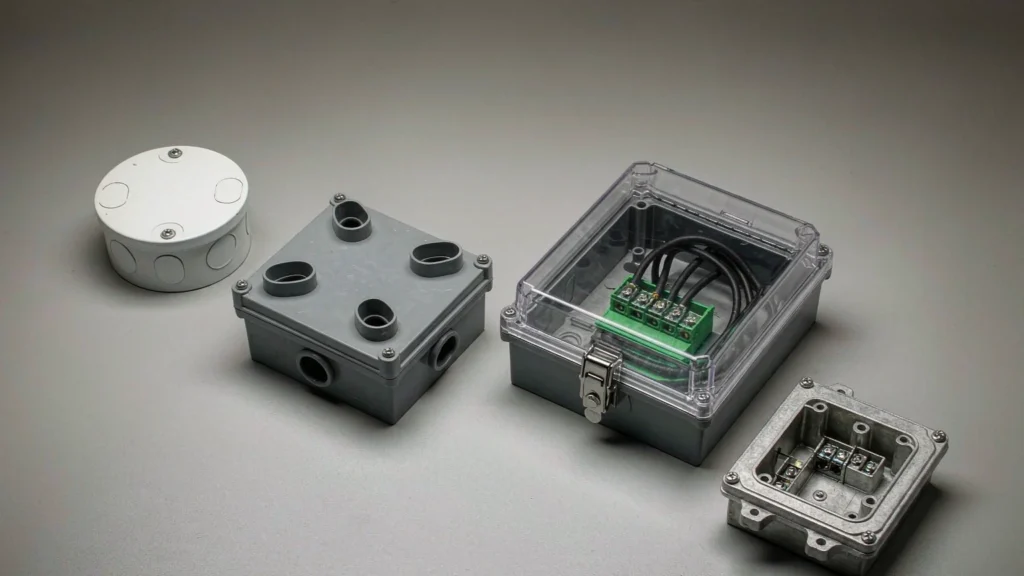
Junction box terminology is a purchasing problem before it is a language problem. A UK buyer writes “adaptable box”, a US buyer writes “weatherproof box”, an Australian writes “J-box”, and a German writes “Abzweigdose” — and all four may be asking for the same sealed enclosure with four entries. When the name on the drawing does not match the name in the factory, you get a box with the wrong number of entries, the wrong lid type or no entries at all, and the cost lands on the next order. This glossary maps the words buyers actually use to the waterproof junction box hardware they describe.
Most of the confusion comes from four unrelated vocabularies being used on the same object: the trade name for the fitting, the regional name for the room it serves, the standard’s formal term, and the catalogue name the factory invented. IEC 60670-22 calls it a connecting box. A UK electrician calls a through-joint box an adaptable box. A US contractor calls the same thing a junction box and calls the thing behind a switch a box too. None of these are wrong. They are simply not interchangeable in a purchase order.
Before any translation, separate the object from the job. What follows is what buyers mean nine times out of ten.
| Term | Where it is used | What it actually means |
|---|---|---|
| Adaptable box | UK, Ireland | A joint box with multiple entry points |
| Junction box, J-box | US, Canada, Australia | Generic term for any splice enclosure |
| Weatherproof / raintight box | US | A sealed box for outdoor use, NEMA 3R or 4X |
| Abzweigdose, Anschlussdose | Germany, Austria | Branch box and connection box — not the same thing |
| Boîte de dérivation | France, Belgium | Branch box, usually for indoor joints |
| Caja de conexiones | Spain, Latin America | Connection box, sealed or open |
| Lasdoos, puszka instalacyjna | Netherlands, Poland | Junction box, domestic and commercial |
The trap in this table is Abzweigdose versus Anschlussdose: German-speaking buyers use the first for a branch joint and the second for a device connection, and a supplier who treats them as synonyms will quote the wrong enclosure. Our comparison of junction and distribution boxes covers the same split in English.
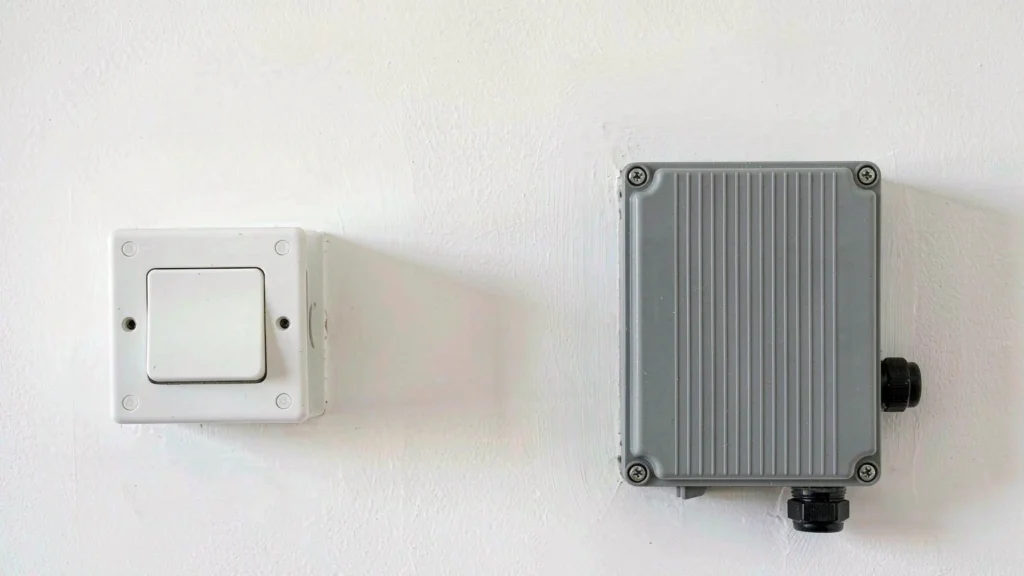
These three are the most misused terms in enquiries. An adaptable box is a joint box with spare entries, and it is the correct word for the product most overseas buyers actually want. A pattress box — pattress, patress, or back box in UK use — is the container behind a switch or socket, surface or flush, and it is not a joint box at all. A gang box in US use is the same accessory container, sized by gang count rather than by volume. If a drawing says “pattress”, the question to ask is what goes inside it, because no gasket specification will fix a box that was never meant to be sealed.
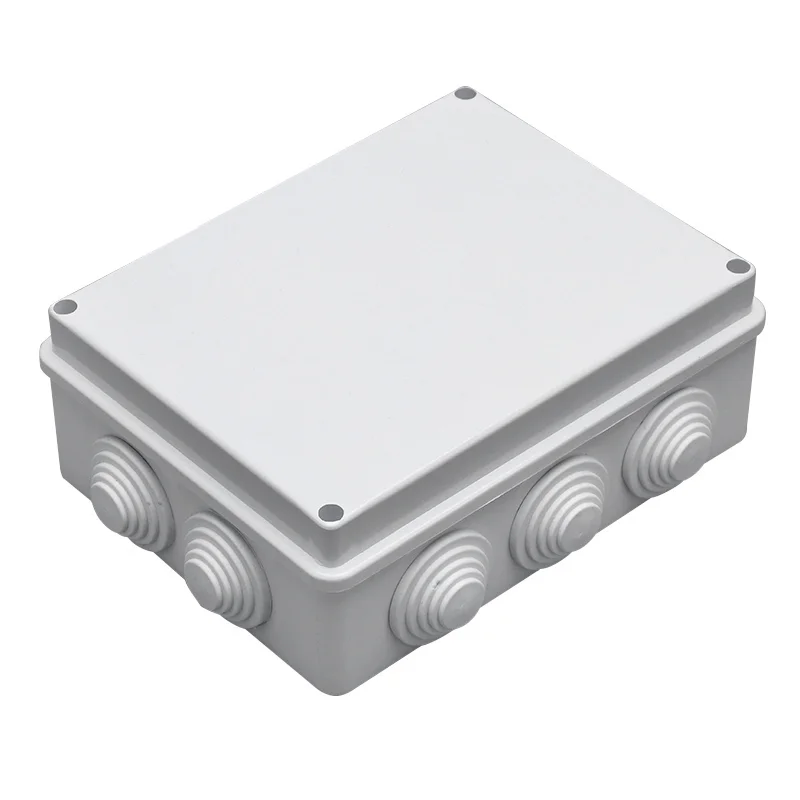
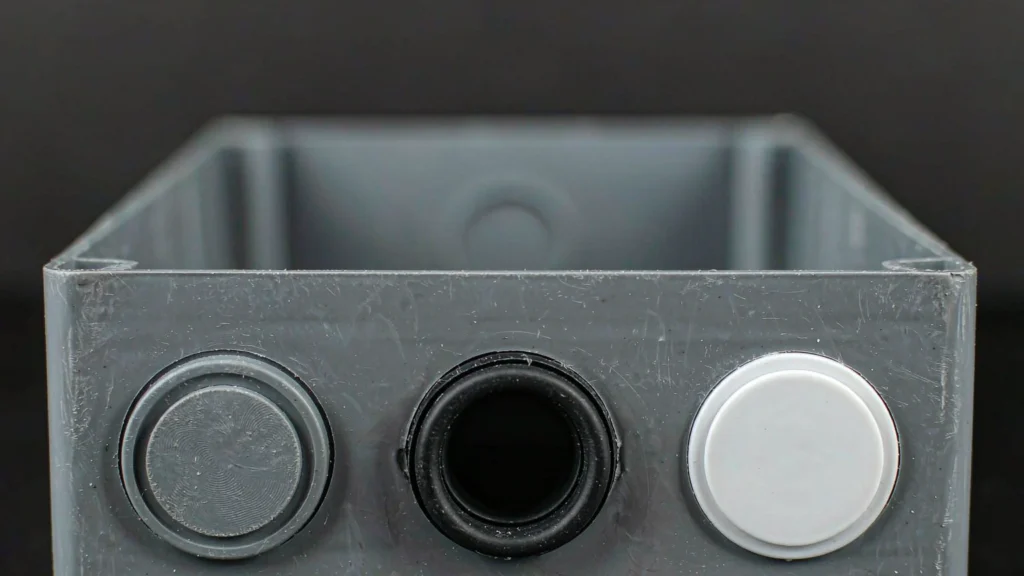
Four words describe how cable enters, and they are routinely swapped. A knockout is a moulded circle that is broken out and then filled with a gland. A membrane grommet is a soft pierceable membrane that seals around a cable without any gland, good for a fixed cable range and poor for re-entry. A stopper or blanking plug closes an entry you are not using — PVC stoppers, as on our ABS range, are the cheap version of this. A cable gland is the threaded compression fitting that grips the sheath and seals on the jacket. The sealing result depends on which of the four you picked, and the mechanics are set out in our guide to knockouts, grommets and glands. If the entry vocabulary crosses languages too, the multilingual cable gland glossary covers the fitting itself.
An O-ring is a moulded ring sitting in a groove, compressed by the lid. A flat gasket is a cut sheet, usually silicone or EPDM, relying on even screw pressure across its whole length. Poured gel fills the box after wiring and cures around the joint; potting is the same idea with a rigid resin. The three are not grades of the same thing: an O-ring tolerates lid flex and re-entry, a flat gasket needs flatness and even torque, and gel gives up serviceability to buy sealing certainty. Buying “a sealed box” without naming the seal is how a specification ends up with the wrong one.
IP is two digits: solids first, liquids second, so IP68 is dust-tight and immersion-rated. IK is impact energy in joules and says nothing about water. NEMA 4X is a North American enclosure type that includes corrosion resistance, and it does not map one-to-one onto any IP number. UL 50E is the enclosure standard behind a UL listing; UL 514B covers fittings, not boxes. V-0 is a UL94 flammability classification for the polymer, and glow wire is a separate IEC test at a stated temperature. None of these substitute for each other, and a datasheet that lists them without units or standard numbers is telling you something about its own rigour. The rating logic that matters most in practice is the one in our IP54 to IP68 explanation.
MOQ is the minimum order quantity per model, not per order, and it usually falls once tooling is paid. Tooling means the mould cost, quoted once and owned either by the buyer or the factory — confirm which before you pay it. OEM means the box carries your brand on an existing mould; ODM means the factory develops the variant, which is why ODM quotes include engineering time. Add EXW or FOB and you have the four words that decide whether a quotation is comparable to the next one. The full set of variables is in our OEM openings, colours and MOQ guide.
Three phrases deserve a second question every time. “Waterproof” has no standard definition — ask for IP and, if immersion is claimed, the depth and duration. “Weatherproof” in US use usually means rain-tight, which is not the same as dust-tight. “IP68” without a depth and time is a family of ratings, not a specification, because the standard leaves both to the manufacturer. A fourth phrase, “same as last time”, is the most expensive of all when the last time was a different factory’s part number.
If you want the short version of all of the above in one place, the waterproof junction box selection guide walks the same decisions from scratch.
Vocabulary is cheap to fix and expensive to ignore. Learn the four objects behind the word “junction box”, keep the UK, US and continental names side by side on the drawing, and never let a seal, a rating or an entry description stay generic. A purchase order that names the function, the standard, the IP condition and the seal type will be quoted correctly by any competent factory — including the ones that use a different word for all four.
In UK use, an adaptable box is a junction box with multiple entry positions. In US use the term is not normal at all, so it is worth confirming what the buyer means by it.
It holds a switch or socket, surface or flush mounted. It is an accessory box, not a splice enclosure, and it usually has no gasket or seal.
A North American accessory box sized by how many devices it holds — one gang, two gang, three gang — rather than by internal volume.
Because trade vocabulary, regional usage and catalogue naming all feed the same object. The formal term in IEC 60670-22 is connecting box, which almost no buyer uses in an enquiry.
No. It has no defined meaning. Ask for the IP code, and for the depth and duration behind any IP68 claim.
How nylon cable glands are used across automotive wiring, engine compartment routing and EV charging infrastructure, with specifications and selection guidance.
Read More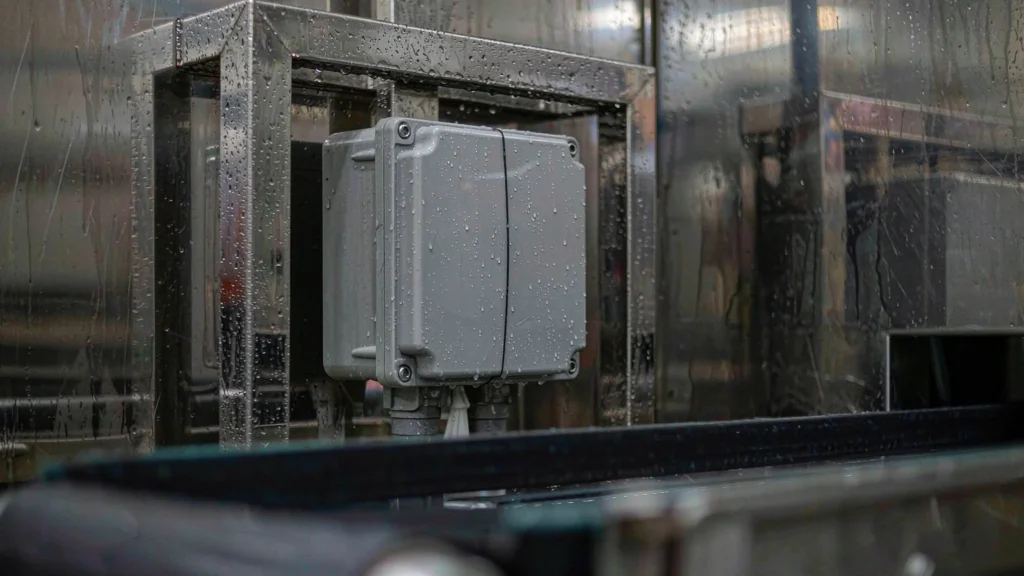
Washdown duty is a design question, not a label question: what IP69K really tests, why thermal cycling pulls water in, and how to specify a box that stays sealed.
Read More
A junction box joins strings; a combiner box fuses them. The voltage, entry and pressure arithmetic that decides which enclosure survives twenty years on a roof or in a field.
Read More