If water turns up inside a “waterproof” box three months after installation, the box was rarely the weak point. The junction box cable entry was. The enclosure wall is one moulded piece with no joint to fail; every hole you open in it becomes a new joint, and each entry style seals that joint differently, to a different rating, with a different amount of pull-out resistance.
This guide compares the four entry types in enclosure catalogues, then does the arithmetic most datasheets skip: which gland actually drops into a 25 mm or 36 mm moulded hole.
What a Cable Entry Has to Do
An entry does four jobs at once, and most literature only advertises the first: seal the gap between jacket and wall; retain the cable so pull and weight never reach the terminals; protect the jacket from the cut edge of the hole; and preserve the enclosure’s stated IP rating, which was tested with every entry closed.
The last point is where projects fail. IEC 60529 testing runs on a complete, correctly assembled enclosure; open a hole and the rating belongs to the assembly of box, entry and workmanship — and an assembly is only as good as its weakest element.
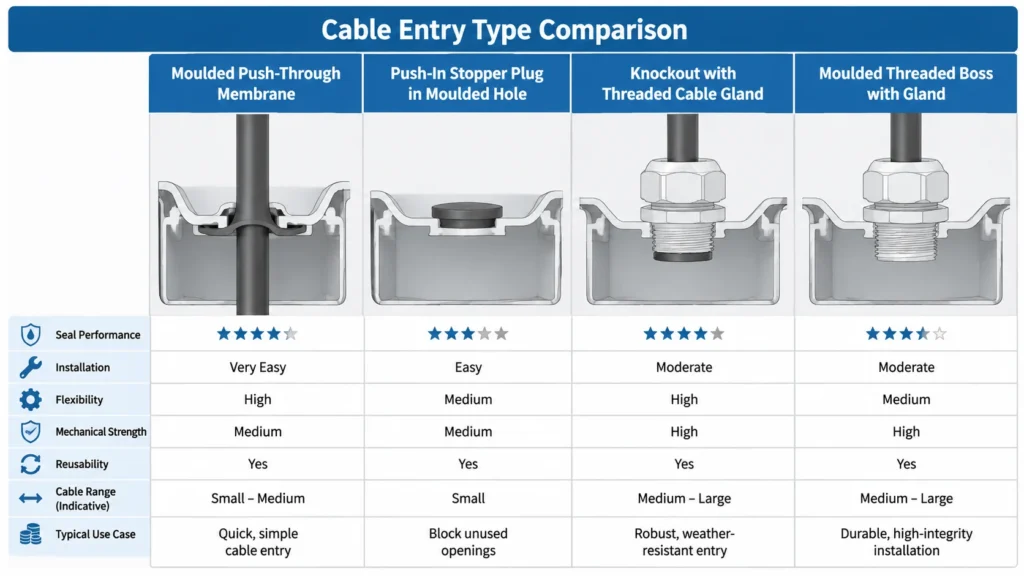
The Four Entry Types in Box Catalogues
Entry type
What seals
Retention
Typical rating
Rework
Moulded membrane (push-through)
Elastomer closes on the jacket
None
IP65–IP67
Membrane stretches with reuse
Push-in stopper in a moulded hole
Stopper seals the hole
Light
IP65
Removal leaves an open hole
Knockout with a gland
Gland seal plus wall washer
Strong clamp
IP68
Hole size fixed once punched
Threaded boss with a gland
As above, defined thread engagement
Strong clamp
IP68
Best on thin moulded walls
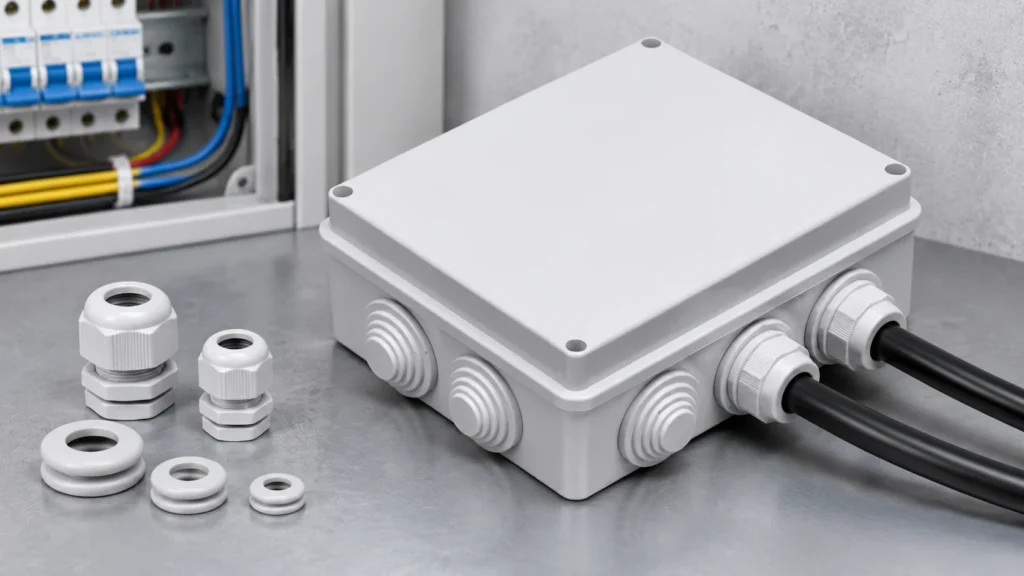
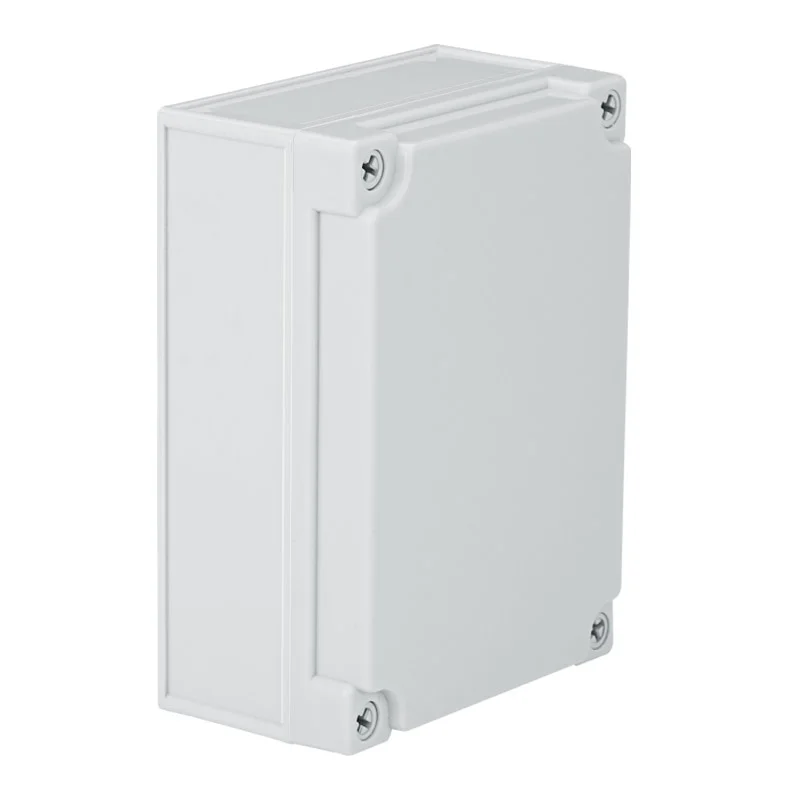
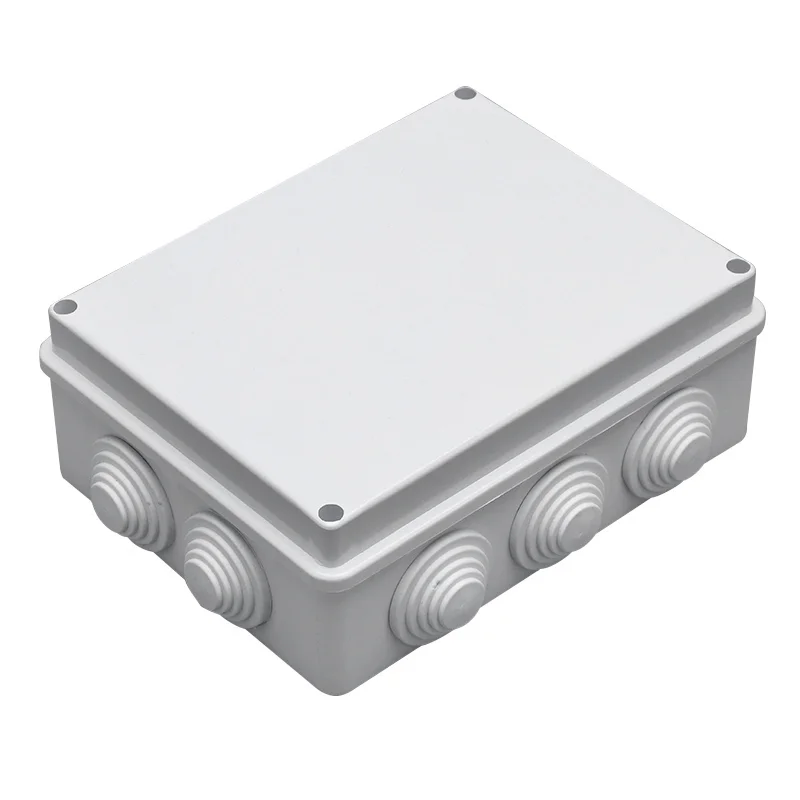
The hybrid case matters commercially. Enclosures such as the JX-RA plastic waterproof junction box arrive with pre-moulded holes fitted with PVC stoppers, and the same hole takes either a gland or a blanking plug. WISKA’s COMBI range works the same way: the membrane gives a fast IP66 entry, and a gland screwed into that position breaks the membrane away and lifts the assembly to IP67. One hole, two ratings, decided by what you screw into it.
The Number on the Box Is Not the Number at the Entry
From our own range: the JX-RA 50 × 50 has four 25 mm holes and is rated IP55; the 85 × 85 has seven 25 mm holes and is rated IP65. Same body, same stopper material — the smaller box carries less because its hole area is a larger share of the wall. That is the honest consequence of moulding holes into a small surface.
Two rules follow. Unused holes need a closure of the same class as the entry — a stopper for a moulded bore, a threaded plug for a threaded boss — and each unused hole is a part number, not a detail. Our IP rating guide covers how the tests are run, including why a box can pass IPX7 and still leak in service.
Read the Hole Before You Read the Gland
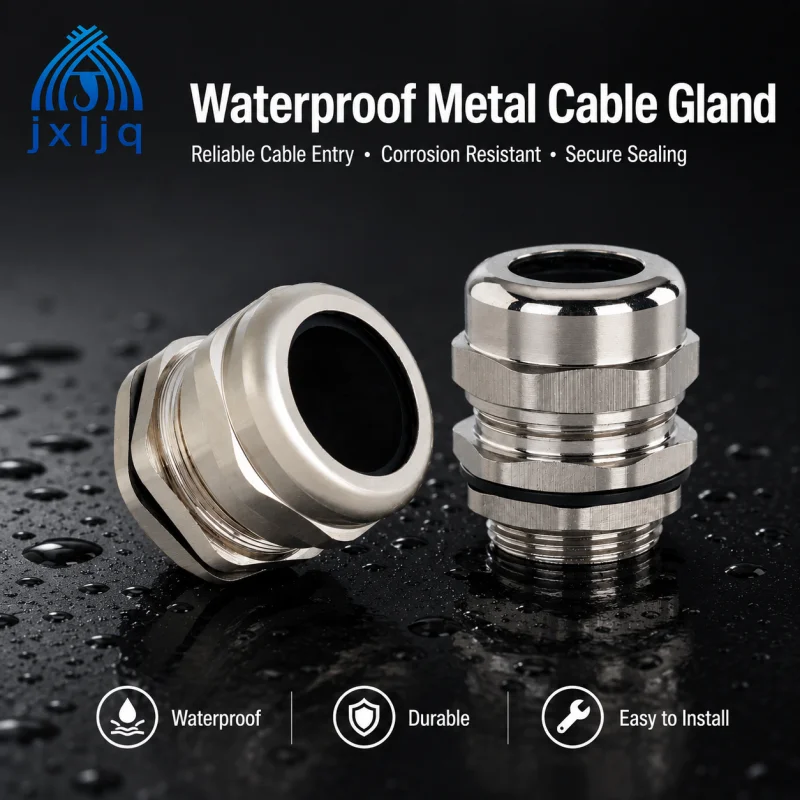
Gland datasheets quote a thread size and a cable range. The dimension that decides fit is the hole size: thread major diameter plus 0.1–0.5 mm clearance. On a plastic wall that clearance is what lets the thread seat without cracking the moulding.
Thread
Thread O.D. (mm)
Hole size (mm)
Cable range (mm)
PG7
12.5
12.6–13.0
3.5–6.5
PG9
15.2
15.3–15.5
4–8
PG16
22.5
22.6–23.0
10–14
PG21
28.3
28.5–29.0
13–18
PG29
37.0
37.2–37.5
18–25
Source: the dimensional table on our standard nylon cable gland page. Note how narrow each window is. Now apply it to the two hole sizes our plastic boxes actually have:
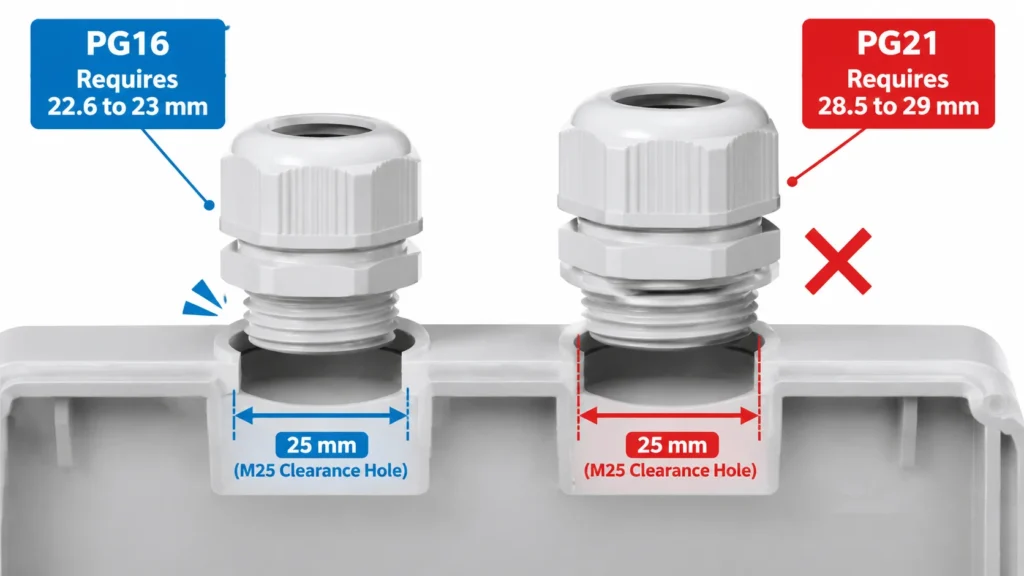
25 mm hole. PG16 needs 22.6–23.0 mm, so it drops through with 2 mm of slack no washer can seal. PG21 needs 28.5–29.0 mm, so it will not enter at all. A 25 mm hole is a clearance hole for an M25 thread, not a PG16 hole.
36 mm hole. PG29 needs 37.2–37.5 mm — 1.2–1.5 mm undersized, close enough that a fitter will force it, which is how cracked walls happen. A 36 mm hole matches an M36 thread.
If the BOM says PG and the box is moulded metric, use a reducing washer made for that duty, an adapter, or a plain wall. Forcing a thread into a hole two millimetres small is not an option.
When a Gland Is the Wrong Answer
Glands are the industrial default and are often over-specified. One gland seals one cable and costs a locknut, a washer and a spanner movement: twelve holes take twelve glands or twelve stoppers, and on a 200-unit contract that gap is measured in days. If the cable is clipped within 150 mm of a sheltered box, the clamp adds nothing the clips do not already do.
When a Membrane or Stopper Is the Wrong Answer
The cable hangs. A 2 m vertical drop puts kilograms on a friction seal. Fit a gland or clamp above the box.
Immersion or washdown. A membrane is a low-pressure device; below the waterline the seal must be a compressed O-ring or a clamped dome.
The cable is outside the membrane’s range. A membrane seals because it is stretched. A cable noticeably thinner than the stated range leaves the nipple slack — it looks closed and is not.
Repeated re-entry or top entry. Every push enlarges the membrane permanently, and an upward-facing entry collects water in the dome. Point entries down and run a drip loop below the gland.
Pre-Terminated Cables: The Entry You Cannot Push Through
This is the most common specification error we see on camera, sensor and network jobs. An RJ45 plug body is about 11.7 mm wide. A gland with a 3.5–10 mm cable range seals a 6 mm Cat5e jacket perfectly, but the plug on the end of that cable will never pass through it.
Three answers, in order of preference: pass the bare cable and crimp inside the box, which needs a crimp tool and about 50 mm of clear depth; use a split gland that clamps after the cable is laid in; or leave the connector outside and house only the joint. What does not work is enlarging the entry and taping over it — the tape then holds the rating, and it is rated for nothing.
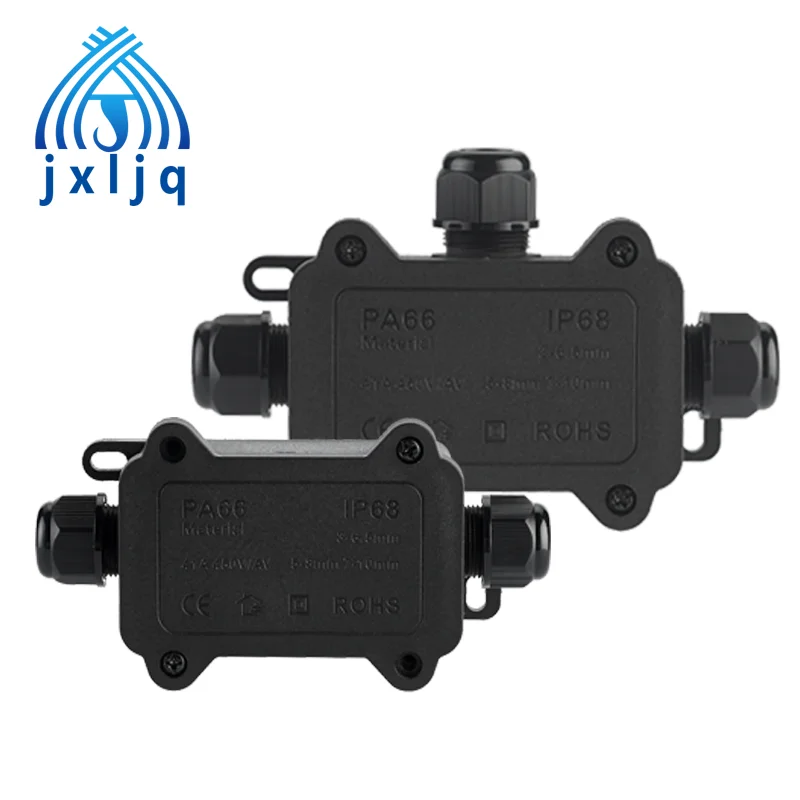
The same logic applies to moulded-entry enclosures. The F1 series mini junction box offers eight stock configurations across 2-way, 3-way and 4-way bodies with cable ranges of 3–6.5, 5–8 and 7–10 mm, IP68 with a silicone O-ring. Those ranges suit a bare cable, not a terminated RJ45 — so the entry decision comes before the box size.
Unused Entries Are Part of the Seal
A 12-hole box carrying four cables has eight open entries, each needing a closure rated for the environment. Our screw plug covers PG7–PG48 and M12–M63 in PA66 with an NBR or EPDM seal, IP68 with its O-ring and −40 °C to +100 °C static. It must match the thread type of the hole, and a push-in stopper is no substitute for a threaded plug on a threaded boss.
Installation Details That Decide the Result
Deburr every hole, and tighten by hand. A rolled burr cuts the O-ring on assembly. Washer outside, locknut inside, hand-tight plus a quarter turn. A 6 mm wall or double-skinned box needs a long-thread gland, or the dome never reaches the seal.
Condensation is not an entry leak. A sealed box with a temperature swing pumps moist air in through micro-paths. A breathable vent plug equalises at 325 ml/min at 0.07 bar while holding IP68 through its O-ring; drilling a drain hole is not the fix.
Conclusion
Choosing a junction box cable entry is a system decision, not an accessory decision. Work from three facts — cable outside diameter, whether a connector is already fitted, and how much pull and water the joint will see — then check the hole arithmetic before the order goes out.
If you are matching entries to a specific enclosure, send us the cable schedule and the box reference. We will return the entry list, closures for the unused holes, and gland sizes that fit the holes you already have — contact our engineering team.
Frequently Asked Questions
Is a knockout the same as a cable entry?
No. A knockout is a weakened disc in the wall — a preparation, not a seal. It becomes an entry only when a gland, grommet or plug is fitted, and an open knockout is the most common cause of water in a box supplied sealed.
What IP rating can a membrane grommet achieve?
IP65–IP67 with a well-designed moulding and a cable inside the stated range. A budget membrane with an undersized cable reaches nothing useful, because the seal depends on being stretched.
Do I need a locknut on a plastic junction box?
Yes, unless the enclosure has a moulded thread. The locknut stops the thread pulling out and spreads load on a thin ABS or PA66 wall — washer outside, locknut inside.
Can a gland be fitted to a box with pre-moulded holes?
Yes, if the threads match. Check the required hole size first: the gap between a 25 mm hole and a PG16’s 22.6–23 mm requirement is enough to prevent a seal.
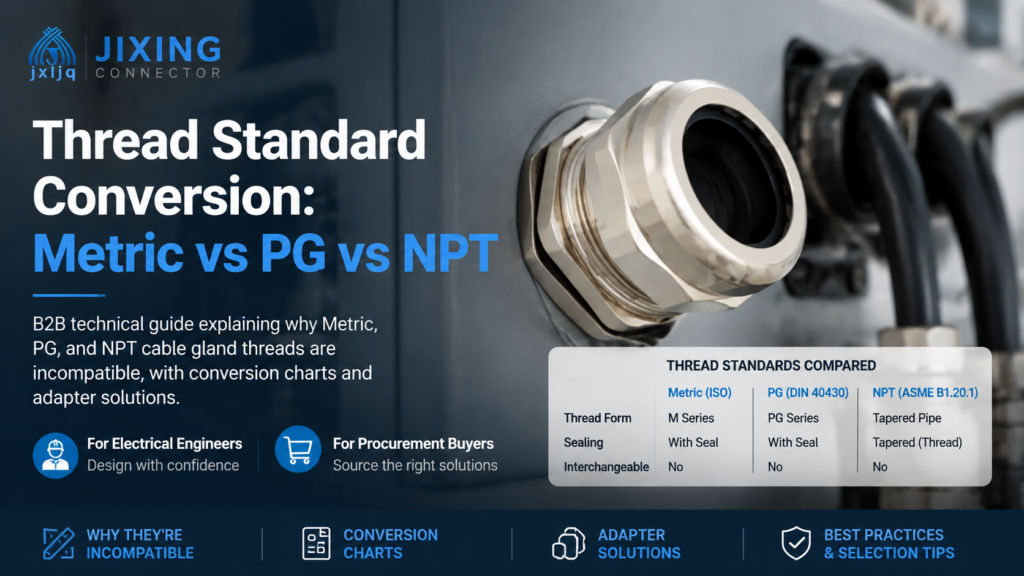
Metric, PG, and NPT cable gland threads are mechanically incompatible. This guide explains the dimensional differences, shows conversion by cable OD band, and lists adapter solutions for legacy enclosures.
A practical guide to cable gland sealing ranges: measure cable outer diameter correctly, match it to the right gland size, and avoid sealing failures in industrial installations.
We use cookies to enhance your browsing experience, serve personalised ads or content, and analyse our traffic. By clicking "Accept All", you consent to our use of cookies.