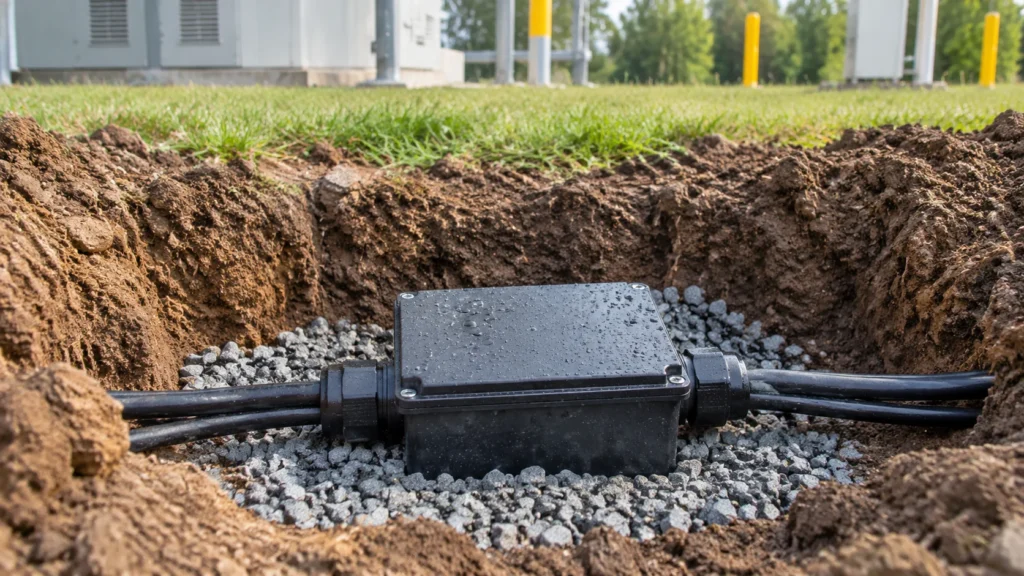
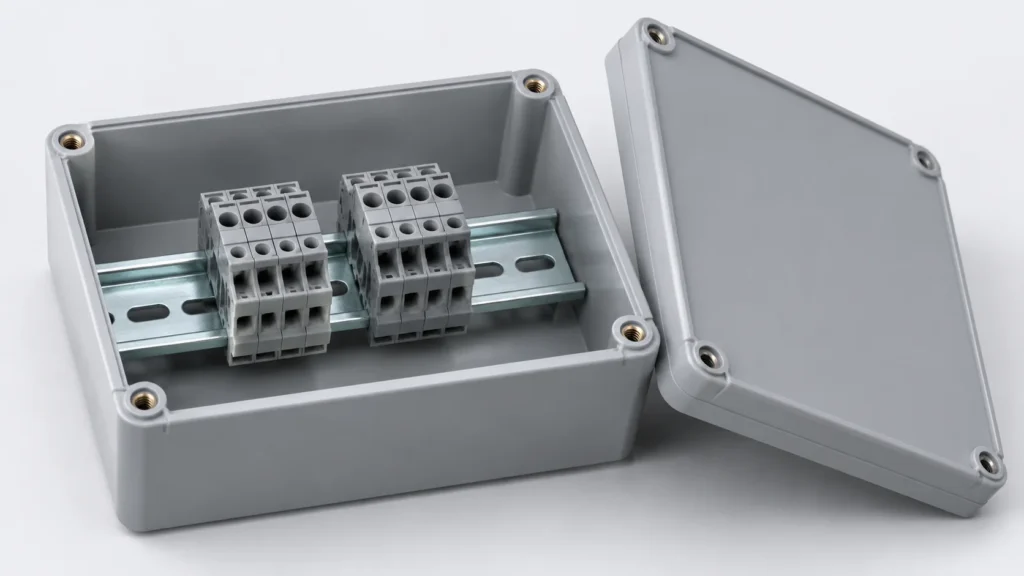
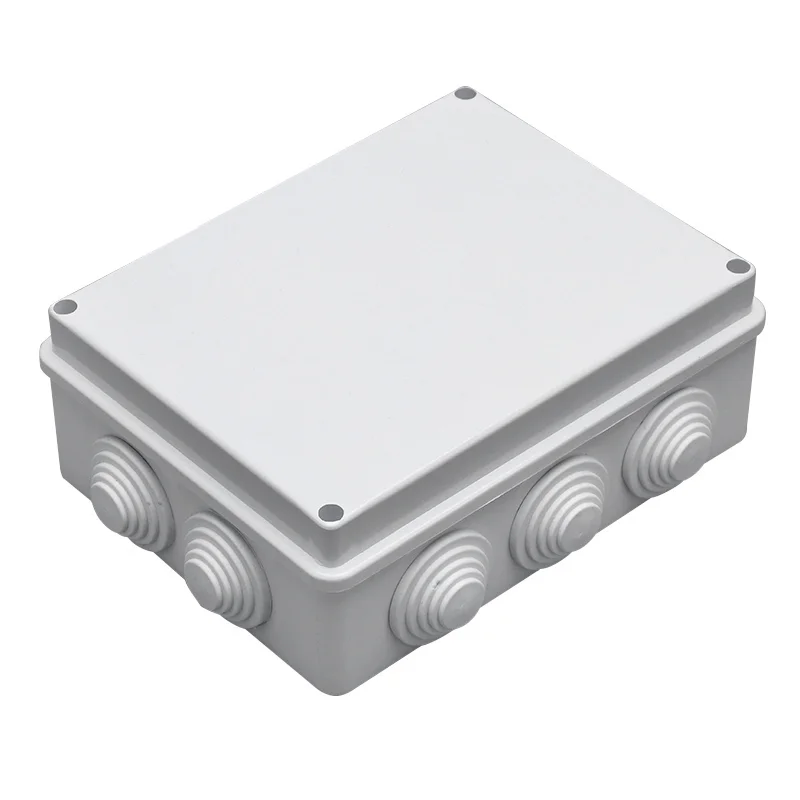
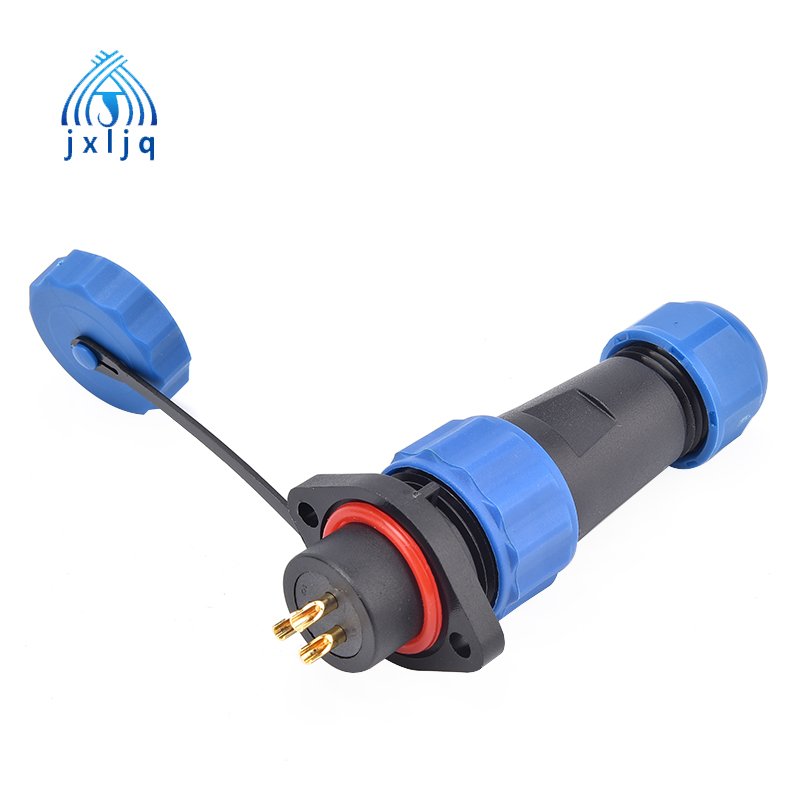
Can you bury a junction box? In most jurisdictions, no — not one that contains splices. NEC 314.29 requires boxes to be installed so the wiring inside can be reached without excavating anything used to establish finished grade. There is exactly one narrow exception, for listed boxes covered by gravel, light aggregate or noncohesive granulated soil with their location effectively identified, and it is far narrower than most forum answers suggest.
Everything below unpacks that exception, separates the box rule from the cable rule that people confuse it with, and explains why an IP-rated waterproof junction box buried in soil still fills with water.
The Short Answer, and Why It Exists
The accessibility rule is not bureaucratic. A splice is the least reliable point in a circuit: it can loosen, corrode or arc, and it is the joint most likely to need attention over the life of the installation. Code writers concluded that a joint nobody can reach is a joint nobody will maintain, so the requirement is about maintenance access rather than moisture.
That framing matters, because it tells you which part of the problem a higher IP rating can solve and which part it cannot. Moisture protection is an enclosure question. Accessibility is a wiring question. A box can pass the first test and fail the second, and burying it guarantees the second failure.
The One Exception, Read Precisely
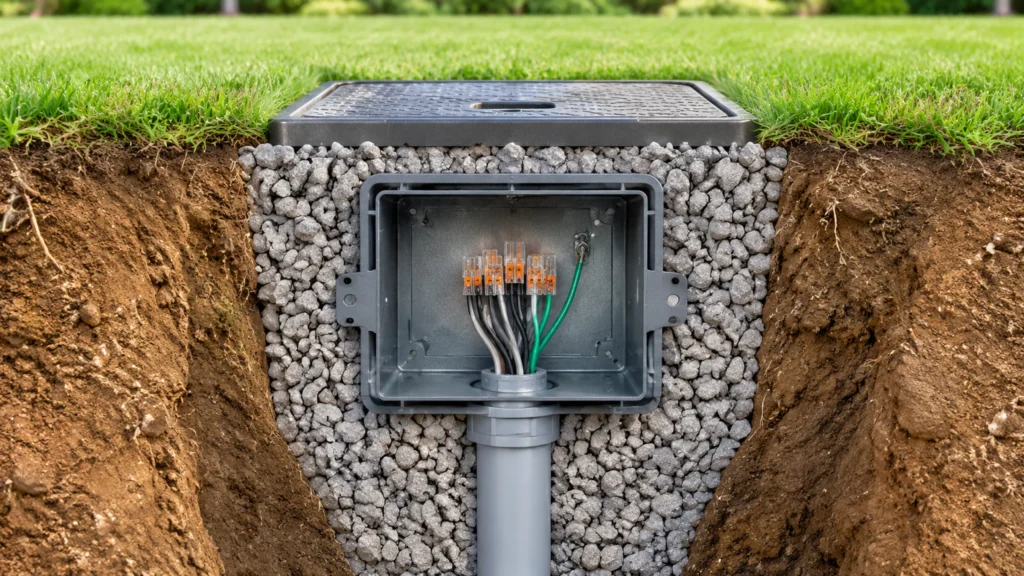
NEC 314.29(B) covers underground boxes and handhole enclosures, and its exception permits listed boxes and handhole enclosures where they are covered by gravel, light aggregate or noncohesive granulated soil, provided the location is effectively identified and accessible for excavation. Note what is on that list and what is not: earth, paving, concrete and finished grade are absent.
So the permitted installation is a handhole raised into a gravel-filled pit, with a cover you can lift and a location you can find again on a drawing. The forbidden installation is a box under a lawn or a driveway. In practice that means the exception works for a service pit and does not work as a way to save a trench run.
Installation
Permitted
Condition
Box in a gravel-filled pit, cover at grade
Yes
Listed box, location recorded, excavatable
Box under noncohesive granulated soil
Yes
Same three conditions, still accessible
Box under earth to finished grade
No
Excavation required to reach wiring
Box under paving, concrete or a driveway
No
Explicitly named in the code text
Box cast into a slab
No
Structure cannot be removed without damage
Depth Rules Govern the Cable, Not the Box
Most searches that start with a buried box actually need the cable depth rule. NEC Table 300.5 sets minimum cover over direct-buried cables and conductors, measured from finished grade: 24 inches in general, 18 inches where the trench sits below a 2-inch concrete slab, and 12 inches for residential branch circuits at 120 V or less with GFCI protection and overcurrent protection of 20 A or less.
Those numbers describe how deep the conductor must sit. They say nothing about whether you may put a box down there, and satisfying one requirement never satisfies the other. A perfectly legal 24-inch cable run with an illegal box spliced into it is still a failed inspection.
Condition
Minimum cover
Governs
Direct-buried cable, general
600 mm / 24 in
Cable depth
Trench below 50 mm concrete
450 mm / 18 in
Cable depth
Residential ≤120 V, GFCI, ≤20 A
300 mm / 12 in
Cable depth
Any junction box with splices
Not applicable
Accessibility, not depth
Why a Buried IP68 Box Still Fails
IPX8 means the enclosure survived continuous immersion at a depth and duration the manufacturer declares. Neither figure appears in the digits, and neither is defined by IEC 60529. Soil is not water either: it adds sustained load on the lid, chemistry from fertiliser and road salt, and a temperature that never dries the enclosure out.
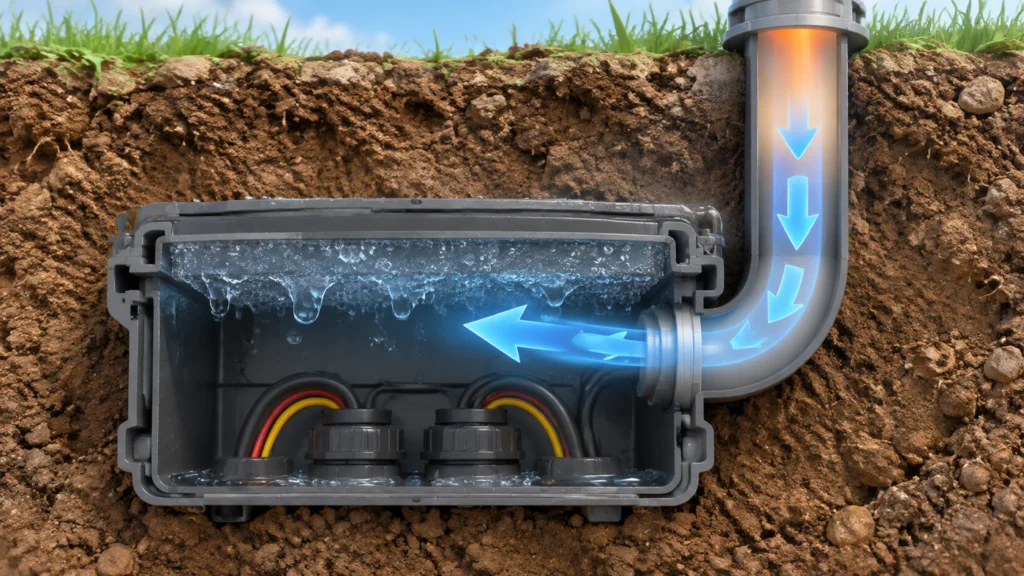
The mechanism that actually destroys a buried box is a convection loop through its own conduits. Soil holds a near-constant temperature. The conduit connects the box to warm, humid air above grade. By day that air expands and drifts down; by night the box cools below the dew point of the air above it, and moisture condenses on the inside of the lid and runs down onto the terminals. Two cycles a day, every day.
That is why a buried box so often arrives at its first inspection half full. The gasket held; the water came down the pipe and condensed out of the air. Our guide to condensation in sealed boxes covers the same physics above grade, where it is slower and easier to manage.
Four Ways to Handle an Underground Splice
The options rank by how much of the code problem you remove, not by how much they cost. Bringing the splice to grade removes it entirely. Encapsulating the splice removes the box, and with it the accessibility requirement — provided the kit is listed for direct burial and your inspector agrees.
Raise the box. Run the conduit up a post, wall or pedestal and splice above grade. Always the first choice.
Use a listed handhole. A pit with a liftable cover at grade, gravel backfill, and the position recorded on the as-built drawing.
Encapsulate the splice. A resin or gel kit listed for direct burial, no enclosure. Non-serviceable by design, so confirm acceptance locally.
Gel-fill a sealed enclosure. Potted and permanently closed; useful where a splice must sit below grade and no pit is possible.
Option
Accessible
Serviceable
Best fit
Box above grade
Yes
Yes
Default answer
Listed handhole in gravel pit
Yes
Yes
Long runs, gate posts, garden circuits
Encapsulated splice kit
Not applicable
No
Short branch taps, no pit possible
Gel-filled enclosure
No
No
Landscape and irrigation taps
If You Bury One Anyway
Where a handhole or pit is unavoidable, the details that decide whether it survives are unglamorous. Backfill with gravel or light aggregate rather than excavated clay, so water drains instead of sitting against the lid. Keep the pit out of vehicle paths, because covers crack under wheel loads. Photograph the position, mark it on the drawing and note the depth.
Then design for water arriving from above: entries should point down where possible, every gland should match the measured cable diameter, and each unused opening should be blanked. A pit that fills after heavy rain is normal; a pit that holds water against the lid for days is not.
What Our Own Datasheets Do and Do Not Claim
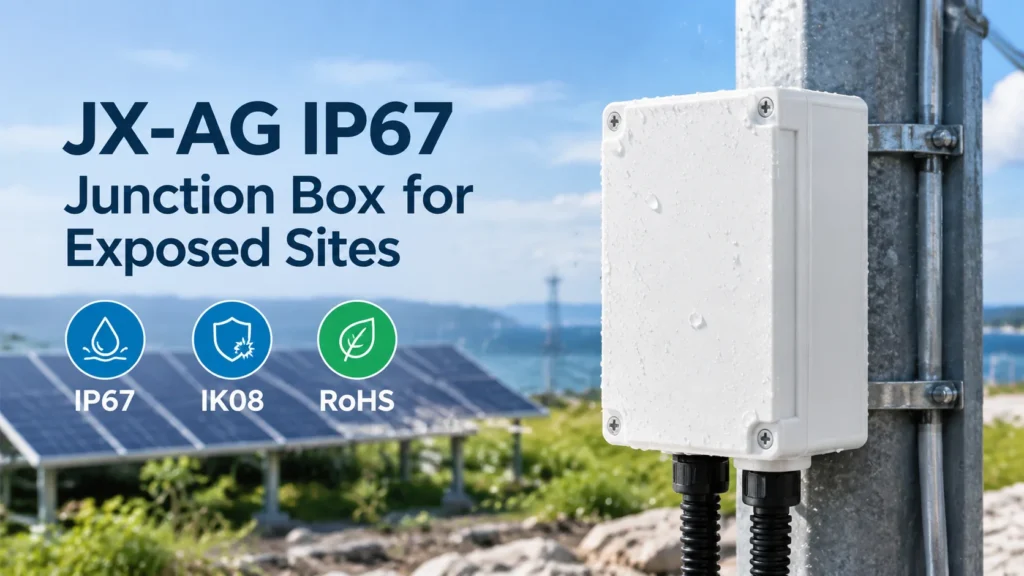
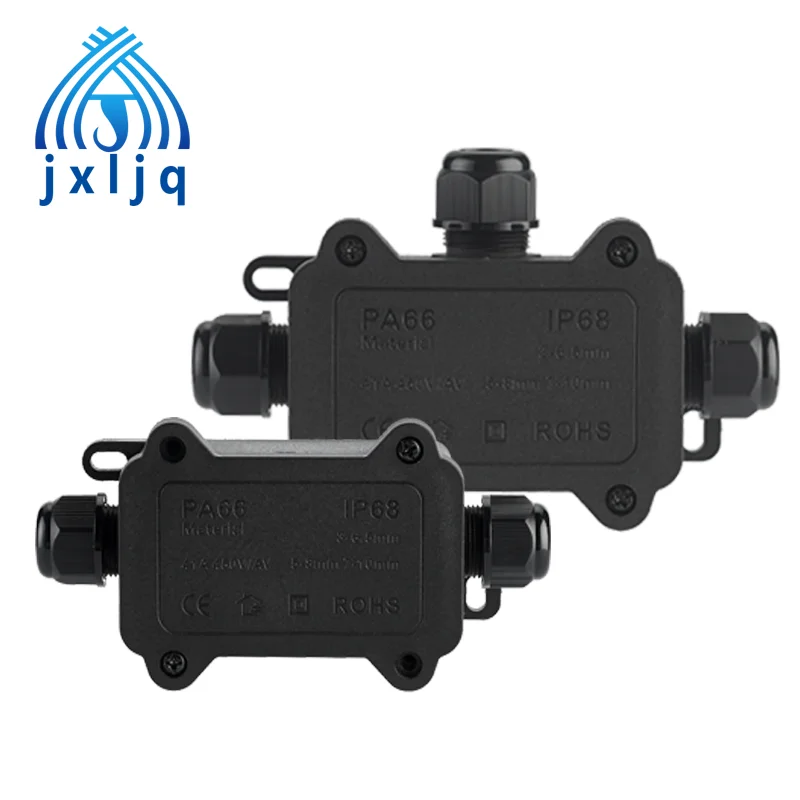
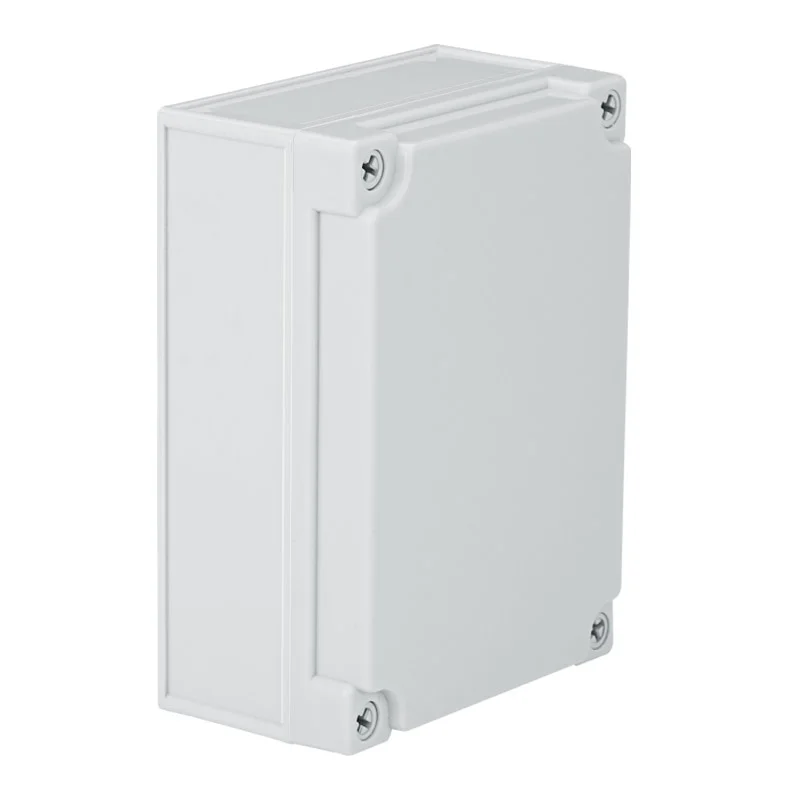
It is worth being blunt here, because supplier pages are where most burial myths start. Our F1 series is IP68 in flame-retardant PA66 with a silicone O-ring, rated −40 °C to +105 °C, 450 V and 24 A. The JX-AG series is IP67 with an IK08 impact rating in ABS from 95×65×55 mm to 280×190×180 mm. The JX-RA series is IP55 or IP65 in ABS.
None of those datasheets states direct-burial suitability, so none of them should be read as a burial rating. IP68 covers immersion under declared conditions; it does not cover soil load, soil chemistry or the fact that a buried lid must stay liftable. If your design needs an enclosure in the ground, the honest specification is a listed handhole, not a higher IP digit.
Conclusion
So can you bury a junction box? You can bury an enclosure; you cannot bury a splice that has to remain accessible, and bringing the joint to grade is usually cheaper than arguing about it. Use the selection guide to pick the housing once the joint is above grade, and check what each IP level really tests before you accept a rating as a burial claim. If the joint is outdoors but not underground, NEMA 4X versus IP68 is the more relevant comparison.
FAQ
Can I bury a junction box if it is IP68?
The rating does not change the accessibility rule. An IP68 box may survive immersion, but NEC 314.29 still requires the wiring to be reachable without excavation, so the rating cannot legalise a buried splice.
How deep can a junction box be buried?
There is no burial depth for a box with splices. The depth figures people quote, 24, 18 and 12 inches, come from Table 300.5 and apply to direct-buried cable, not to enclosures.
What is the difference between a junction box and a handhole?
A handhole is a listed enclosure designed to be installed with its cover at grade and opened from above. That design is what makes the 314.29(B) exception usable for an underground circuit.
Can I use a waterproof box inside a plastic valve box?
Yes, and it is a reasonable retrofit. The valve box keeps soil off the enclosure and gives you access, while the inner box handles splashing. Drain the outer pit with gravel and keep the cover liftable.
Do I need a junction box for a landscape lighting splice?
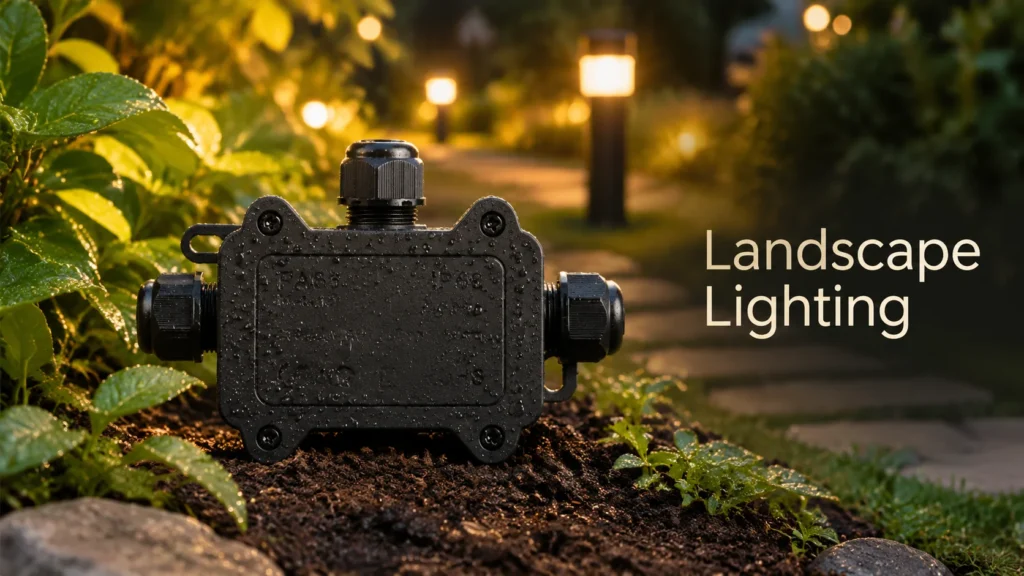
Treat it as any other outdoor joint: splice above grade in a waterproof enclosure, or use a listed direct-burial connector. The landscape lighting wiring guide covers the voltage drop and terminal limits that decide the box size.
What an IP67 junction box is really tested for, why IK08 matters on an exposed wall, and the three questions that tell you a semi-submerged site needs a different enclosure.
Rail height, module width and depth decide which DIN rail junction box works. A practical guide to rail clearances, PCB standoffs and heat rise in a sealed ABS enclosure.
Size a landscape lighting junction box from the circuit up: voltage drop, cable OD, terminal capacity, opening count and burial rules, with real ordering data.
We use cookies to enhance your browsing experience, serve personalised ads or content, and analyse our traffic. By clicking "Accept All", you consent to our use of cookies.