Blog
Cable Gland Torque Specifications and Sealing Points Guide
A practical guide to cable gland torque specifications and sealing points, covering nylon, brass, and stainless steel torque values by thread size.
Read More
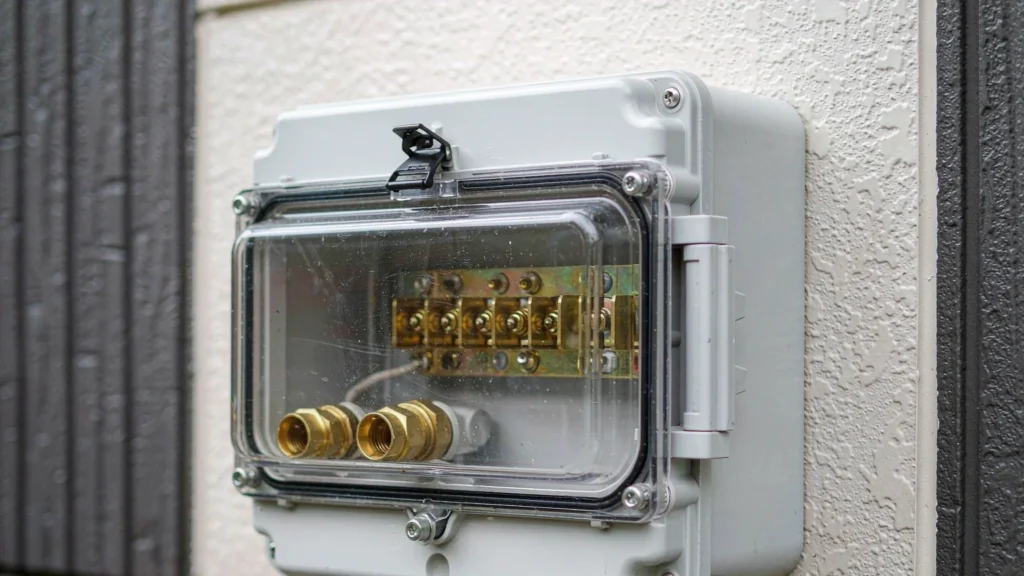
A transparent junction box cover is bought for one reason: to see what is happening inside without breaking the seal. Everything else about it — the resin, the UV package, the flame rating, the gasket stiffness — is the price you pay for that one ability, and the price is higher than most buyers expect. In a waterproof enclosure the lid is part of the seal, so every inspection you avoid is one less chance of refitting a gasket into a channel that has grit in it.
We mould waterproof junction boxes in ABS, PA6 and PA66, so the question is answered here from the moulding side.
An enclosure is a system, not a box with a window. The IP rating belongs to the assembled part: housing, gasket, lid, screws, every gland and every plug. Each time the lid comes off, four things can go wrong — the gasket picks up dirt, the screws lose their torque reference, the cable is pulled at the terminal, and the gasket takes one more compression-set cycle. A clear lid removes most of those events.
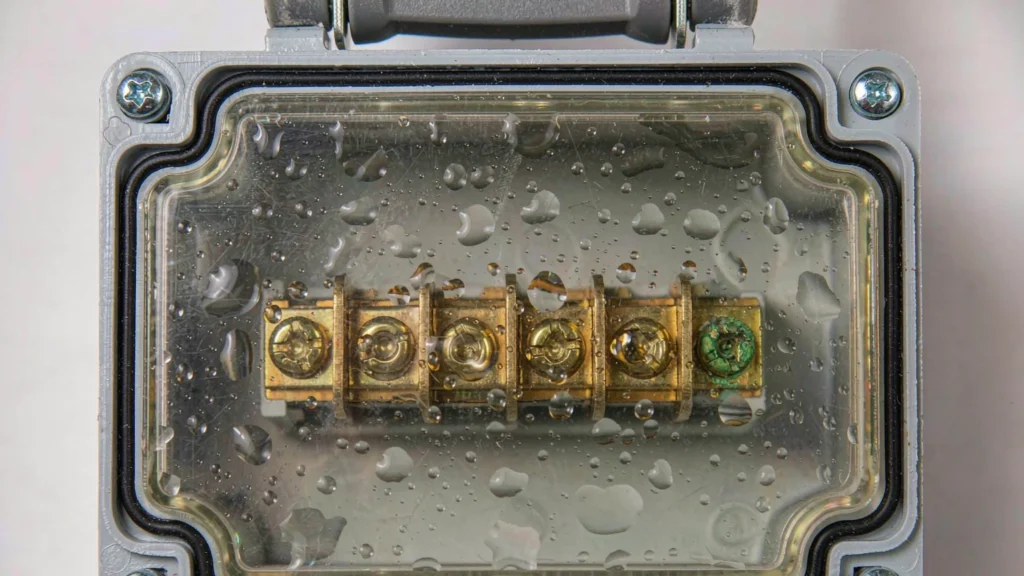
It does not remove all of them. Through a window you can see standing water, mist on the underside of the lid, green or white corrosion on a terminal, browned insulation, a strand sitting outside the clamp, and whether gel is present. You cannot see clamping force or gasket compression. A window turns a hidden failure into a visible one; it does not verify a joint.
Polycarbonate is the only common engineering thermoplastic that is both genuinely clear and genuinely tough. ABS can be made translucent, but clear ABS is a compromise grade: transparency is bought by cutting the rubber content, which drops notched Charpy impact to roughly 10 to 14 kJ/m² — about a fifth of polycarbonate. A “clear ABS box” sold at ABS prices is not a bargain; it is a part that will crack at a screw boss. Polycarbonate keeps its clarity from its chemistry, holds useful impact from about −100 °C to +135 °C over short periods, and carries a natural UL 94 V-2 rating without additives.
| Criterion | Opaque ABS | Opaque PC | Clear PC |
|---|---|---|---|
| Clarity | None | None | Glass-like, about 89 % |
| Impact near 0 °C | Falls sharply | High | High |
| UV without a package | Yellows, embrittles | Yellows, loses impact | Yellows fastest, fully exposed |
| Cheapest UV route | Carbon black | Carbon black | HALS, absorber or hard coat |
| Flame rating as moulded | HB, needs FR grade | V-2 | V-2, needs FR grade |
The standard answer to sunlight in outdoor plastics is carbon black, and it works because it is never consumed. It is also black. A clear lid gives that route up entirely and must rely on hindered amine light stabilisers, UV absorbers or an applied hard coat.
The numbers explain why the grade name matters. Unstabilised polycarbonate outdoors gains roughly 5 to 15 yellowness index points a year and can lose 30 to 50 % of its impact strength within two to three years; stabilised or hard-coated PC can hold appearance and impact for a decade or more. ABS fares worse: UV additives push it to about 24 to 30 months, because the butadiene phase stays sensitive regardless. Under UL 746C, stabilised polycarbonate can carry the f1 outdoor and water-exposure rating; ABS generally cannot. The mechanism, and the UV dose at your latitude, is set out in UV resistance and outdoor service life.
A white lid reflects sunlight, a black lid absorbs and blocks it, and a clear lid transmits it — which changes the thermal budget inside. Visible light passes through the polycarbonate, lands on terminals and cable insulation, and is re-radiated as long-wave infrared that polycarbonate does not pass. The heat stays in. A clear-lidded box on a sunlit wall therefore runs hotter inside than the same box with a white lid, and the difference lands on the parts with the least margin: PVC insulation, typically rated 70 °C, and the terminal, which already spends part of its 45 K temperature-rise allowance on load current. If you need the window and the sun, a shaded mounting position and a de-rated circuit are the levers you have.
Window area is not the same as usable sight line. With terminals standing 20 to 30 mm off the floor you need depth behind the lid to see past the first row, and a 50 × 50 mm box does not have it — the window shows the tops of four terminals and nothing else. The practical floor is around 150 × 110 × 70 mm, the third size up in a series like our JX-RA range. Two details decide whether the window is useful: a contrasting interior, so corrosion is visible at arm’s length, and a window placed over the terminals rather than over the cable entries.
Polycarbonate is stiffer than ABS and expands at a slightly different rate, so a clear lid does not behave like the opaque one it replaces. It is usually flat, which puts the whole gasket load on four screw bosses, and it cracks at those bosses instead of deforming when over-torqued. The torque values for your box, and the cross-pattern closing sequence, come with the installation data — use a torque driver, never feel. The compensation is that a bad gasket seat is visible before the first temperature swing pressurises the box — while mist on the inside after a cold night is normal physics, not a leak, as explained in condensation in sealed junction boxes.
V-0 in a clear part is possible, but transparency, flame retardance and UV stability in a light colour pull against each other because the additive packages interact. A clear FR polycarbonate is usually slightly hazier or tinted, and outdoor stabilisation narrows the choice further. The class is measured on a 125 mm bar at a stated thickness rather than on the finished box, which is why UL 94 V-0 and glow wire must be asked for as a grade and a thickness.
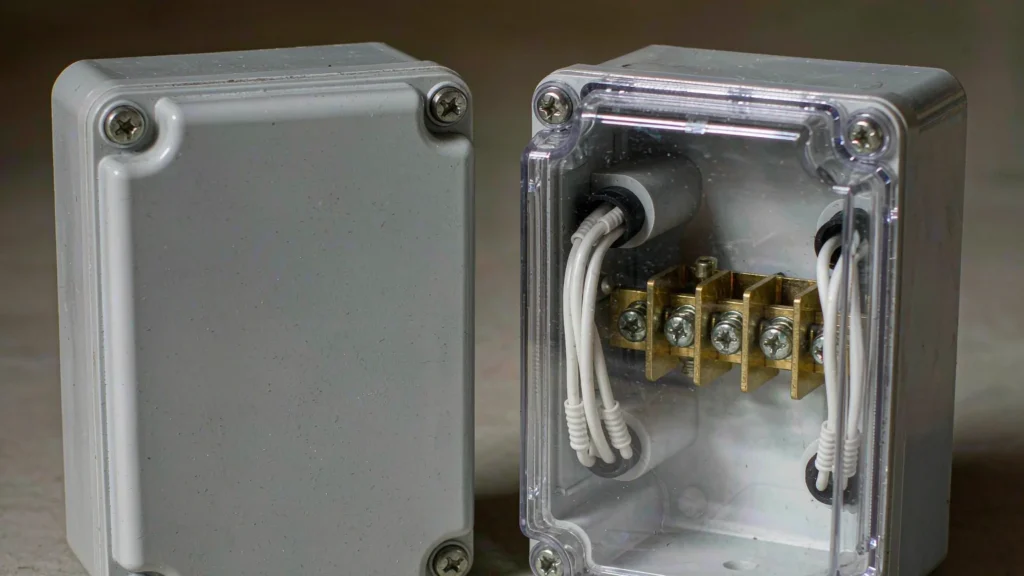
Three cases argue for the solid lid. Aggressive cleaning chemistry — alkaline foam, solvents, some adhesive residues — fogs or crazes polycarbonate from the inside, and the damage cannot be polished out. Full tropical sun uses up the stabiliser reserve faster than any inspection benefit repays. And a clear lid tells anyone standing beside the box what is inside it, which matters in public-realm installations.
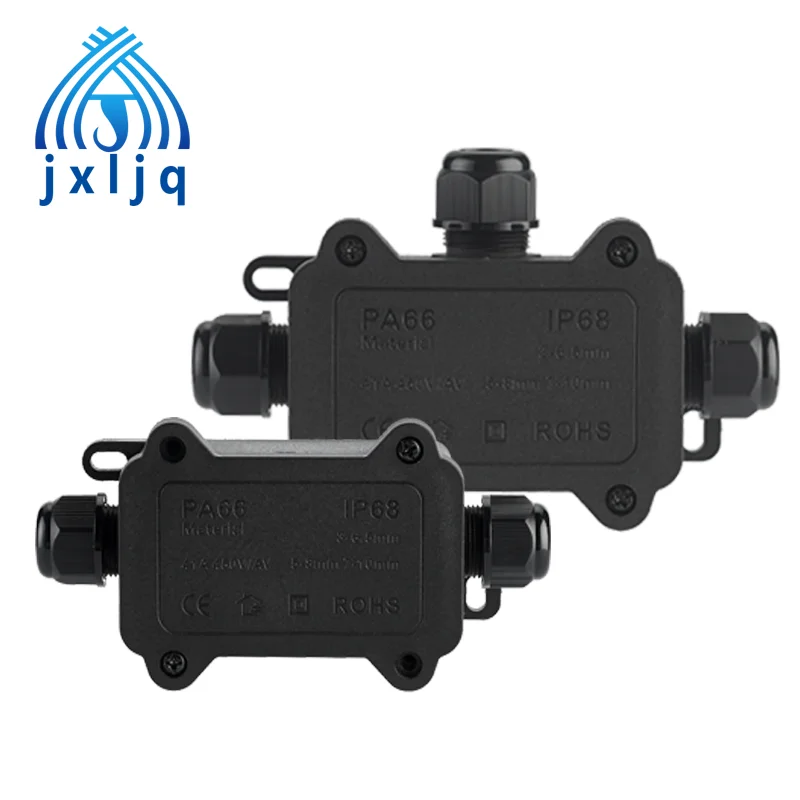
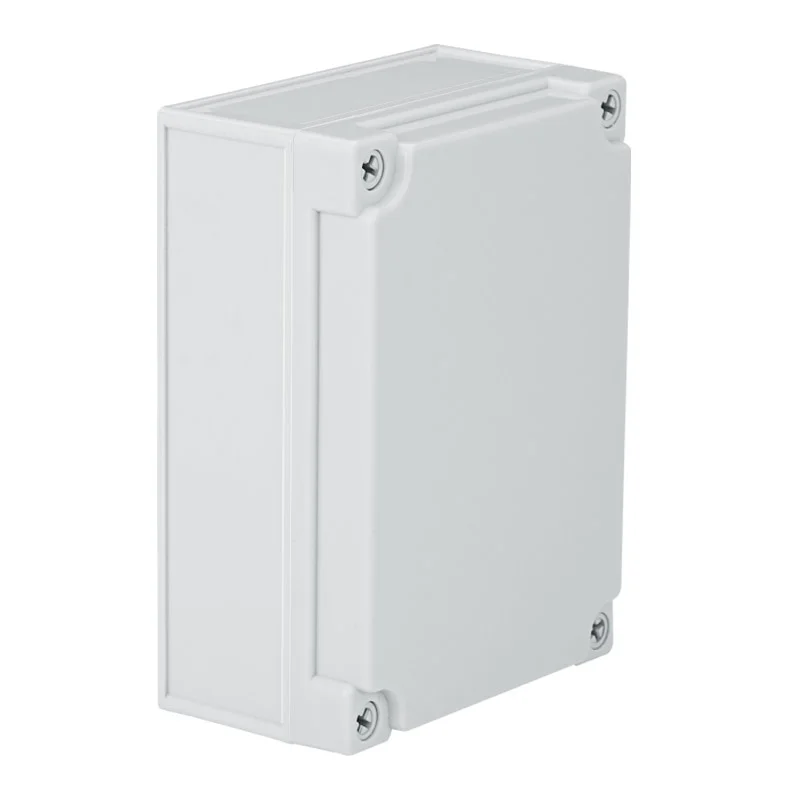
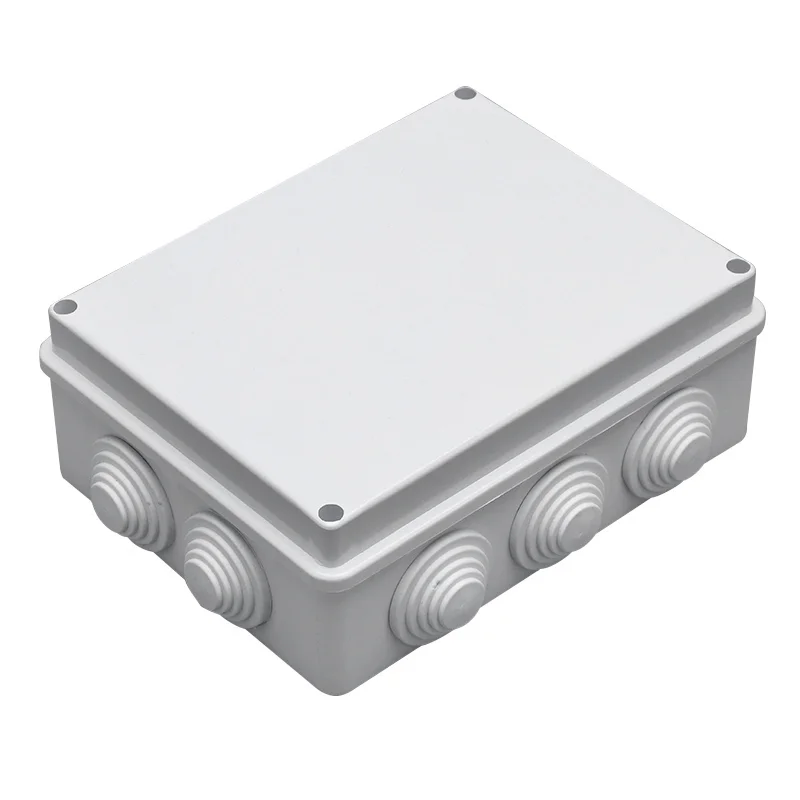
Honesty here saves a wasted purchase order. The JX-RA is moulded in ABS with PVC stoppers, rated IP55 or IP65 by size, CE and RoHS, with internal mounting holes for a PCB or DIN rail and 4 to 16 entry holes of 25 or 36 mm across twelve sizes from 50 × 50 to 400 × 350 × 120 mm. Its lid is opaque. So are the JX-AG, IP67 at 1 m with an IK08 impact rating, and the F1 mini series, PA6 or PA66 with a silicone O-ring and IP68.
None of the three has a clear lid in the catalogue. A transparent cover on this class of box is a polycarbonate part, and polycarbonate is a different tool from an ABS housing, so it is a tooling question rather than a colour option — see custom junction box OEM. If the specification must be met from stock, the DIN-rail version of the ABS box is the better starting point, and our DIN rail enclosure guide covers the internal geometry.
A transparent junction box cover pays for itself in one case: an installation inspected often, in a location where opening the lid is the main way water gets in. Specify it as polycarbonate with a named stabilisation route, and accept that you are trading thermal margin and UV reserve for visibility. Where inspection is annual and the site is a chemical plant or a tropical roof, the opaque lid is not the cheap option — it is the correct one.
Only as a reduced-rubber grade, and impact drops to about a fifth of polycarbonate. It suits cosmetic panels, not parts that get hit.
Not if the assembled box is tested with that lid. The rating follows the system, so a clear lid needs its own torque and gasket data.
All of them do eventually. Unstabilised polycarbonate gains about 5 to 15 yellowness index points a year; with a stabiliser or hard coat it can hold for a decade in a temperate climate.
Yes, and that is half the benefit — but mist after a cold night is normal. Judge by standing water at the bottom, not by droplets on the lid.
No. Torque cannot be seen. Mark the screw heads with paint and look for a shifted mark, or re-check with a torque driver.
A practical guide to cable gland torque specifications and sealing points, covering nylon, brass, and stainless steel torque values by thread size.
Read More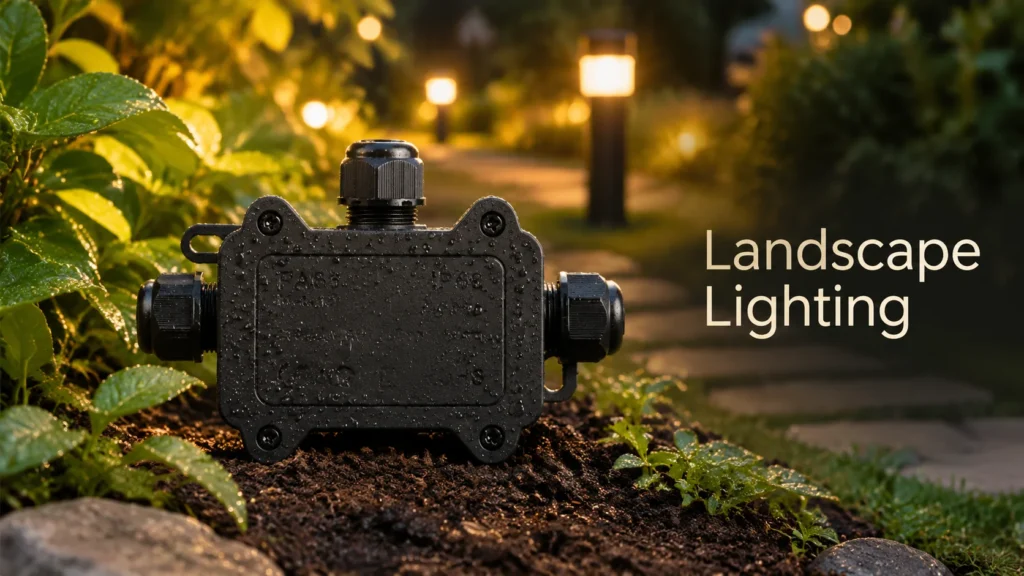
Size a landscape lighting junction box from the circuit up: voltage drop, cable OD, terminal capacity, opening count and burial rules, with real ordering data.
Read More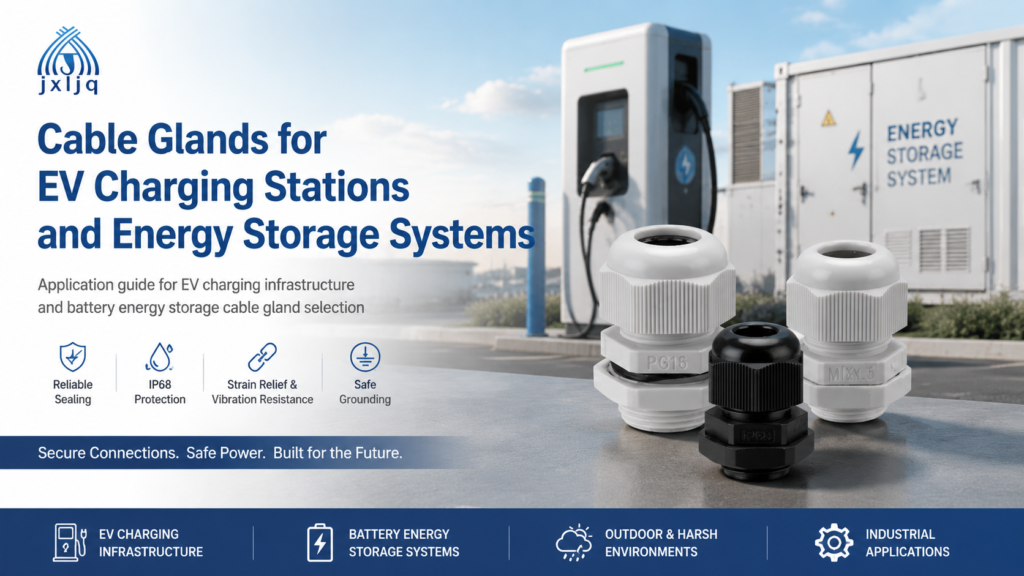
Discover the right cable glands for EV charging infrastructure and energy storage systems. This guide covers selection criteria, materials, IP ratings, and installation best practices.
Read More