If your machine, motor, or control panel uses flexible conduit for cable protection, the fitting where that conduit enters the enclosure is the weakest point of the whole run. A liquid tight hose connector is the component that seals that entry point, and its job goes far beyond simply holding the hose in place. This guide explains what a liquid tight hose connector does, how the seal works, how to size and install it, and when to choose the BH or MH series for your application.
What Is a Liquid Tight Hose Connector?
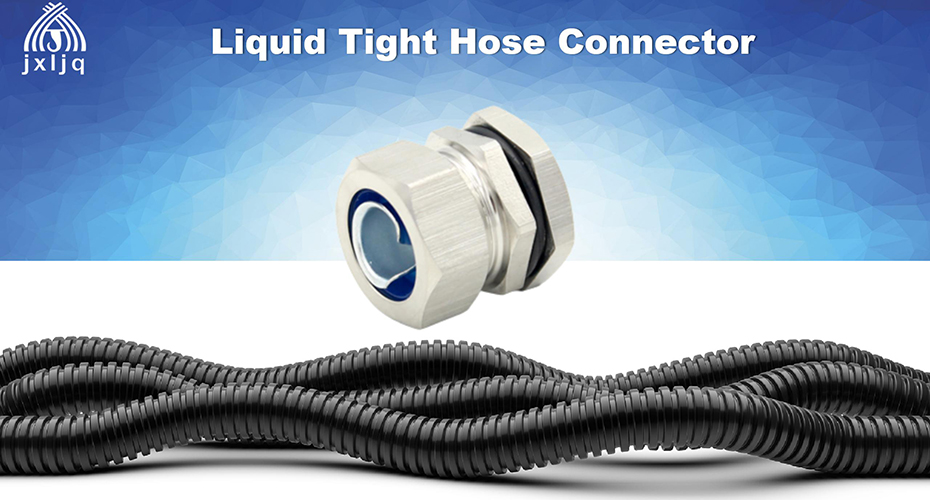
A liquid tight hose connector is a compression fitting used to connect flexible liquid tight conduit, corrugated tubing, or flexible hose to fixtures, electrical boxes, motors, and enclosures. One end of the connector accepts the hose, and the other end threads into the equipment entry with a locknut or into a threaded hole.
Unlike a standard conduit fitting that only joins parts mechanically, a liquid tight hose connector is engineered to create a sealed transition. It keeps water, dust, oil, and other contaminants out of the wiring system at the exact point where the conduit stops and the enclosure begins. That is why it is specified for motors, processing equipment, chemical plants, pumps, and marine applications where standard fittings would fail quickly.
Key Functions of a Liquid Tight Hose Connector
A liquid tight hose connector performs several jobs at once. Understanding each function helps you specify the right connector and install it correctly.
Sealing against water and moisture. The compression seal around the hose blocks dripping liquids, condensation, and pressurized water spray from entering the enclosure, protecting conductors from short circuits and corrosion.
Keeping out dust and particles. The same seal prevents fine dust, dirt, and airborne contaminants from degrading insulation and damaging connections.
Resisting oil and grease. In machine tools and hydraulic areas, the seal stops oils and lubricants from wicking along the hose and attacking the cable jacket.
Mechanical retention and strain relief. The ferrule grips the hose profile so the conduit cannot be pulled out of the equipment, and the locknut secures the assembly against the enclosure wall.
Vibration and flexing endurance. The sealed design allows the flexible conduit to absorb continuous flexing and vibration without loosening the connection.
Corrosion protection. Connectors are available in corrosion-resistant materials such as nickel-plated brass and stainless steel for wet, chemical, and marine environments.
How the Seal Works
A typical liquid tight hose connector is assembled from four main parts:
Body: the machined housing with a thread on the enclosure side, available as a straight, 45-degree, or 90-degree design.
Gland nut: the domed nut on the hose side that compresses the seal when tightened.
Ferrule and sealing ring: the compression component that grips the corrugated profile of the conduit and forms the liquid-tight barrier.
Locknut: secures the connector body to the enclosure wall from the inside.
When you tighten the gland nut, the ferrule and seal compress onto the outer surface of the hose, closing the gap that water would otherwise use to travel into the wiring system. The seal actively grips the corrugated or smooth profile of the hose, which is why the ferrule size must match the hose’s inner or outer diameter.
BH Series and MH Series Hose Connectors
For flexible hose termination, two connector families cover most industrial needs: the BH series and the MH series. Both are nickel-plated brass with NBR/PA6 seals and a brass ferrule, rated IP65, with a working temperature range of -40 °C to +100 °C (up to 120 °C for short periods).
The BH series is designed for corrugated conduit and AD-size tubing from AD10 upward, with Metric and PG thread options. If your cable route uses corrugated flexible conduit, the BH series is the connector that couples it to the equipment while maintaining the seal.
The MH series covers smooth flexible hoses and tubing from φ6 to φ38, with Metric M12-M56 and PG7-PG48 thread options. It is the general-purpose choice for flexible hose termination on motors, pumps, and automation equipment.
How to Choose the Right Size
Sizing a liquid tight hose connector comes down to two measurements:
The hose dimension. Measure the inner diameter of the hose and select a connector whose ferrule outer diameter matches it. For example, a connector marked JX-M10×1.5 φ8 has a ferrule outer diameter of 8 mm and suits a hose with an 8 mm inner diameter.
The thread and enclosure entry. The connector thread must match the equipment entry or knockout. Confirm whether the entry is Metric, PG, NPT, or G, and check the exact thread size before ordering.
For corrugated conduit, match the connector to the AD size of the tubing; for smooth hoses, match the ferrule to the hose’s inner diameter. When in doubt, provide the hose type, hose inner diameter, and the equipment thread to the manufacturer, and they can specify the correct size.
How to Install a Liquid Tight Hose Connector
Installation is straightforward when the parts are handled in the right order:
Cut the hose square. Use a conduit cutter or fine-tooth saw and make a clean, square cut. An angled cut prevents the ferrule from seating evenly and creates a leak path.
Deburr the cut end. Remove sharp burrs that could damage conductor insulation when wires are pulled through.
Slide on the gland nut and ferrule. Slip the gland nut onto the hose first, followed by the ferrule, then push the hose onto the connector body.
Tighten the gland nut. Turn the domed nut until the seal compresses fully around the hose. Avoid over-tightening, which can crack the fitting or damage the hose jacket.
Secure to the enclosure. Thread the body into the equipment entry or knockout and tighten the locknut from inside to hold the assembly firmly.
If the conduit path needs to change direction in a tight space, a 90 degree elbow conduit fitting solves the problem: it couples flexible metallic or liquid-tight conduit on one side and threads into the box on the other, so the cable route stays protected without forcing an unsupported bend. For flexible metallic conduit systems, a brass flexible cable gland provides the same sealed, bonded termination with an insulating liner that protects the cable from the cut metal edge.
Common Applications
Liquid tight hose connectors protect wiring wherever moisture, dust, oil, or vibration would damage a standard termination:
Electric motors, pumps, and gearboxes
Machine tools and automation lines
Chemical and processing plants
HVAC equipment and building services
Marine and offshore installations
Outdoor lighting, signage, and power distribution
In these settings the connector does more than hold the conduit in place: it keeps contaminants out of the enclosure, holds the cable against vibration, and maintains the protection rating of the whole installation.
Material Options
The connector material should match the environment where it will serve. Nickel-plated brass is the most common choice because it combines corrosion resistance with electrical conductivity, which matters when the conduit system must be bonded and earthed. Zinc alloy offers a cost-effective option with good waterproof performance and resistance to salt, acid, alkali, alcohol, and common solvents. Where conditions are extreme, stainless steel in SS304 or SS316 provides the highest corrosion resistance and operates over a wide temperature range; our comparison of 304 versus 316 stainless steel explains when the higher grade is worth the extra cost. For a broader view of the full fitting family, including straight, elbow, and hose connector types, see our guide to brass conduit fittings.
Liquid Tight Hose Connector: FAQ
What does a liquid tight hose connector do?
It connects flexible liquid tight conduit or hose to an electrical enclosure, box, or motor, and seals the connection point so water, dust, oil, and other contaminants cannot enter the wiring system.
What is the difference between the BH and MH series?
The BH series is designed for corrugated conduit and AD-size tubing from AD10 upward, while the MH series covers smooth flexible hoses and tubing from φ6 to φ38. Both are nickel-plated brass, rated IP65, and offer Metric and PG thread options.
How do I choose the right size connector?
Measure the inner diameter of the hose and match it to the ferrule outer diameter of the connector. Then confirm the thread size of the equipment entry (Metric, PG, NPT, or G). For corrugated conduit, match the connector to the AD size of the tubing.
What IP rating do liquid tight hose connectors provide?
Typical brass hose connectors such as the BH and MH series are rated IP65, meaning dust-tight and protected against low-pressure water jets. Higher-rated designs and shrouds are available for wash-down and outdoor installations.
Can a liquid tight hose connector be used outdoors?
Yes. Nickel-plated brass and stainless steel connectors are suitable for outdoor and coastal environments. Confirm that the connector’s IP rating and material match the wettest condition on site.
Is over-tightening the gland nut a problem?
Yes. Over-tightening can crack the fitting or crush the hose jacket, creating the very leak path the connector is meant to prevent. Tighten until the seal compresses fully, and follow the manufacturer’s torque guidance where provided.
Conclusion
A liquid tight hose connector is much more than a mechanical joint. It seals the enclosure entry against water, dust, and oil, holds the conduit securely under vibration and flexing, and protects the cable from the environment for the life of the installation. Choosing the right series, size, and material — and installing it correctly — is what keeps a flexible conduit system reliable in industrial, outdoor, and marine settings.
If you are planning a project and need help selecting between our BH series and MH series liquid tight hose connectors — or need custom sizes, threads, and packaging — contact our team for a quick quotation. We also provide free samples so you can verify the fit before you commit.
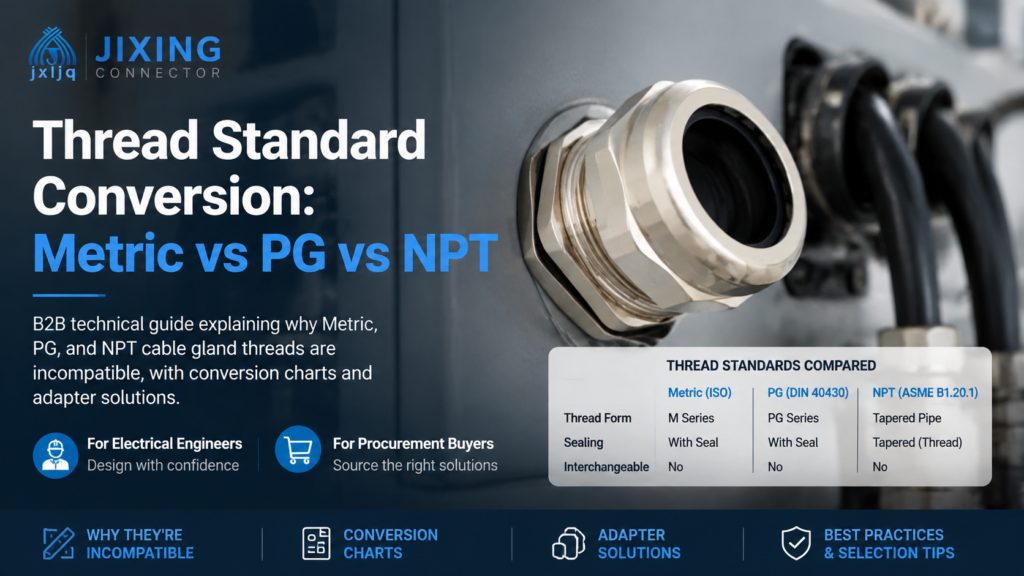
Metric, PG, and NPT cable gland threads are mechanically incompatible. This guide explains the dimensional differences, shows conversion by cable OD band, and lists adapter solutions for legacy enclosures.
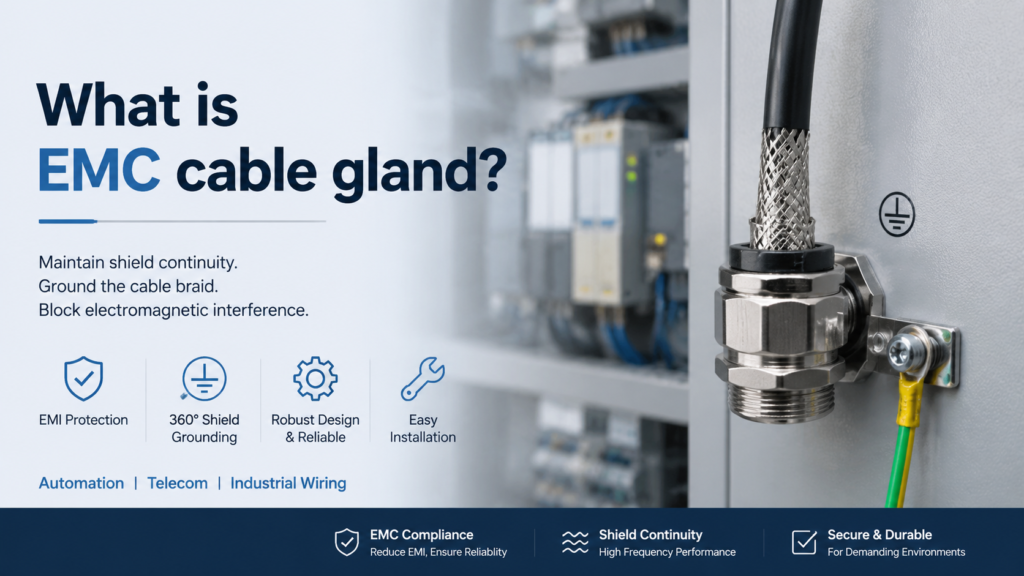
Learn what an EMC cable gland is and how it keeps a shielded cable’s braid grounded to the enclosure to block electromagnetic interference in automation, telecom, and signal systems.
What a cable gland factory tour should show you: the 7-stage production chain, injection molding discipline, capacity verification and a 12-point audit checklist.
We use cookies to enhance your browsing experience, serve personalised ads or content, and analyse our traffic. By clicking "Accept All", you consent to our use of cookies.