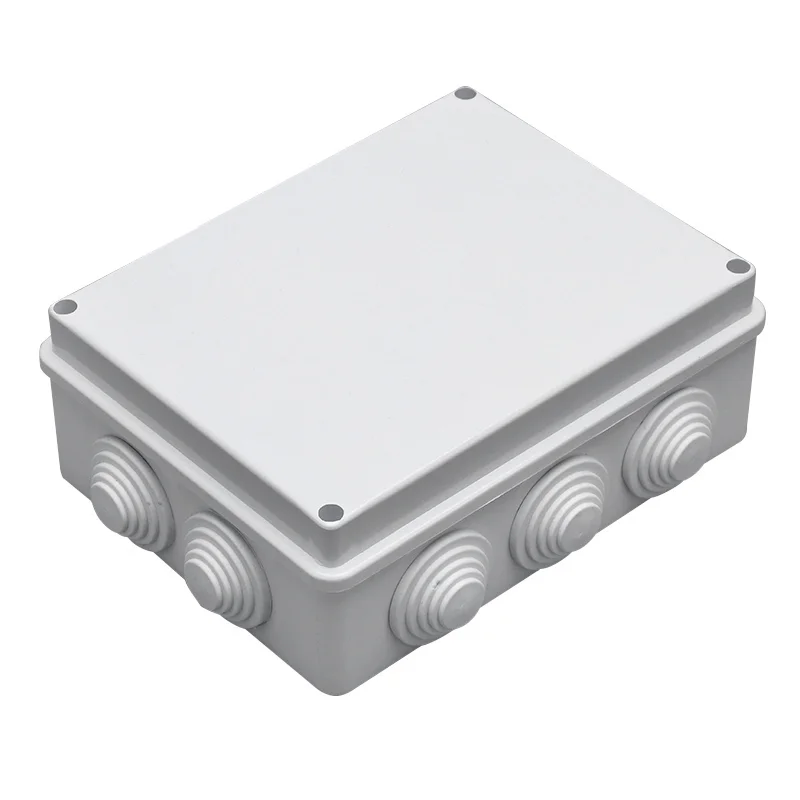
If you have ever opened an electrical enclosure or distribution board, you have probably seen a row of identical threaded holes on the gland plate, most of them empty. Those openings are pre-drilled for future cable entries, and the component that seals the ones not in use is a screw cap, also called an end cap or blanking plug. A screw cap is a threaded cap with international standard threads that covers reserved or extra holes, and although it looks like a minor part, it plays a real role in keeping an enclosure safe, sealed, and compliant. This guide explains what a screw cap does, where it is used, and how to choose the right material and size.
What Is a Screw Cap?
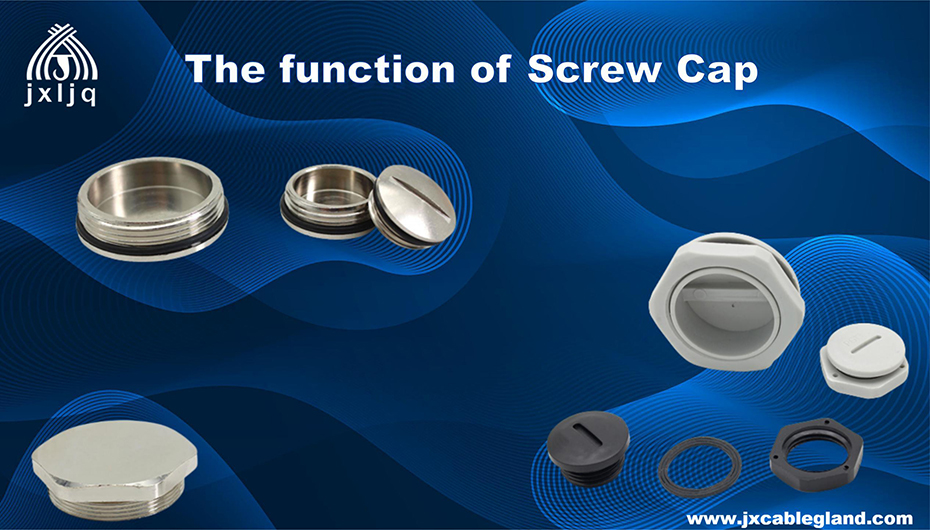
A screw cap, also known as an end cap, blanking plug, or stop plug, is a solid threaded component with a standard thread on the outside. It screws directly into an unused cable gland entry, knockout hole, or tapped opening in an enclosure wall, sealing the hole completely so that no cable passes through. Unlike a cable gland, which carries a cable, a screw cap carries nothing — its entire job is to close an opening that is not in use.
Screw caps are made to match standard cable gland thread sizes, so they are interchangeable with the glands already used on the enclosure. They are available in nylon, brass, and stainless steel, and in metric, PG, NPT, and G thread forms, with a sealing washer that maintains the enclosure’s IP rating.
Key Functions of a Screw Cap
A screw cap performs several important jobs at once:
Maintaining the IP rating. An open knockout lets water, dust, and moisture straight into the enclosure. A correctly fitted screw cap with its sealing washer restores the rated protection, typically IP66, IP67, or IP68.
Blocking dust and contaminants. The cap stops dust, dirt, insects, and airborne particles from degrading insulation and settling on terminals.
Preventing accidental contact. Open holes in an electrical enclosure are a shock risk. A sealed entry keeps live components out of reach and is a safety requirement on professionally commissioned panels.
Protecting spare capacity. Pre-drilled entries stay clean and ready for future cable runs, so the enclosure can be extended later without drilling or compromising the seal.
Improving appearance. A panel with every unused hole sealed looks finished and professional, and avoids moisture collecting in open threads.
Enabling reuse. When a layout changes, a screw cap can be unscrewed and reused at another location, or replaced by a gland when the entry is finally used.
What happens when a screw cap is missing? An unsealed knockout in an outdoor panel allows water and dust to enter, and over time that leads to corroded terminals, failing contacts, and nuisance trips. In wet or coastal sites the effect is faster: moisture condenses on the exposed threads and seeps inside. The cost of leaving a hole open is measured in downtime and repair visits, while the cost of a screw cap is a few cents. Sealing every spare entry at commissioning — and after any change to the cable layout — is one of the simplest reliability measures a panel builder can take.
Where Screw Caps Are Used
Screw caps appear wherever enclosures carry pre-drilled cable entries that are not all used at commissioning:
Distribution boxes and switchgear panels
Instruments and metering equipment
Control cabinets and PLC panels
Motor terminal boxes
Power plants and substation equipment
Junction boxes, CCTV camera boxes, and industrial enclosures
In each case, the rule is the same: every unused entry point must be closed with a rated plug so the enclosure keeps the environmental protection and safety level it was designed to provide. Our screw plug range covers the sizes and materials needed for this job, from compact metric plugs for instrument boxes to larger sizes for distribution and motor panels.
Nylon Screw Caps
Nylon screw caps are the most economical choice, priced well below brass, stainless steel, and other metal options. Our nylon screw caps are made from high-quality PA66 material, which resists salt water, weak acids, alcohol, oil, grease, and common solvents, and carries a UL94 flammability rating suitable for electrical enclosures. Because they are insulating, they add no risk of accidental contact, and their light weight and corrosion-free body make them ideal for outdoor and coastal installations.
Nylon caps are also the easiest to customize. In addition to the standard black and white, the colour can be matched to the enclosure or the customer’s specification, which is useful for OEM panel builders who want a consistent finish across their products.
Brass Screw Caps
Brass screw caps are machined from durable nickel-plated brass with a smooth, burr-free surface. They offer a long service life in demanding environments, resist corrosion and tarnishing, and are effectively maintenance-free once installed. Brass caps are available in round and hexagonal head series, so you can choose a hex head for spanner tightening on larger sizes or a round head for a flush, tidy finish on control panels.
Because brass is conductive, brass caps also maintain electrical continuity across metal enclosure plates, which matters on bonded and earthed panels and in EMC-sensitive applications.
Stainless Steel Screw Caps
Stainless steel screw caps are chosen where strength and hygiene matter most. They perform well under harsh conditions and extreme temperatures, and they are easy to clean and maintain, which makes them the first choice for hospitals, kitchens, and food and pharmaceutical processing facilities. Jixiang supplies stainless steel screw caps in SS304 and SS316, with SS316 providing the highest corrosion resistance for marine, offshore, and chemical environments.
How to Choose the Right Screw Cap
Selecting a screw cap is straightforward when you work through a short checklist:
Match the thread. The cap thread must match the enclosure entry or knockout: metric (M16, M20, M25, M32, M40 and up), PG, NPT, or G.
Confirm the size. Use the same size designation as the cable glands on the panel, so the cap fits the same threaded holes.
Check the IP requirement. Verify that the cap with its sealing washer maintains the enclosure’s required IP rating, typically IP66 to IP68 for outdoor panels.
Choose the material. Nylon for economy, corrosion resistance, and colour matching; brass for durability, conductivity, and a metal finish; stainless steel for hygiene and extreme environments.
Use a locknut when needed. For thick-walled enclosures or where the cap may be subject to vibration, a screw plug with a locknut secures the seal from inside.
If you are unsure about the thread or size of an entry, measure the threaded hole and the existing glands on the panel, or send the measurements to the manufacturer for a recommendation.
Screw Cap: FAQ
What is a screw cap used for?
A screw cap, also called an end cap or blanking plug, seals unused cable gland entries and knockout holes in electrical enclosures. It keeps water, dust, and contaminants out, maintains the enclosure’s IP rating, and prevents accidental contact with live components.
What is the difference between a screw cap and a cable gland?
A cable gland carries a cable through the enclosure wall and seals around it. A screw cap carries no cable; it closes an unused opening completely. Both use the same standard threads and are interchangeable in the same holes.
What materials are screw caps available in?
Screw caps are available in nylon PA66, nickel-plated brass, and stainless steel SS304 or SS316. Nylon is the most economical, brass offers durability and conductivity, and stainless steel is preferred for hygiene and extreme environments.
What thread sizes do screw caps come in?
Screw caps are made in metric (M16 to M63 and larger), PG, NPT, and G thread forms, matching standard cable gland sizes so they fit the same enclosure entries.
Do screw caps maintain the IP rating of an enclosure?
Yes, when fitted with the correct sealing washer and tightened properly. Nylon and brass screw caps with sealing washers typically maintain IP66, IP67, or IP68 protection, matching the enclosure’s rating.
Can a screw cap be reused?
Yes. A screw cap can be unscrewed and reused at another location, or removed and replaced with a cable gland when the entry is finally needed. Check the sealing washer for wear before reinstalling.
Conclusion
A screw cap is a small component with a clear job: it closes the unused openings on an electrical enclosure so the panel stays sealed, safe, and ready for future expansion. Sealing every spare entry with the right material and thread — nylon for economy and corrosion resistance, brass for durability and conductivity, or stainless steel for hygiene and extreme conditions — protects the equipment inside and keeps the installation compliant and professional.
If you are finishing a panel or enclosure and need screw caps for your unused entries, contact our team with your thread sizes and material preference. We supply nylon, brass, and stainless steel screw caps with OEM/ODM support, including colour customization for nylon, and we provide free samples so you can verify the fit before you commit.
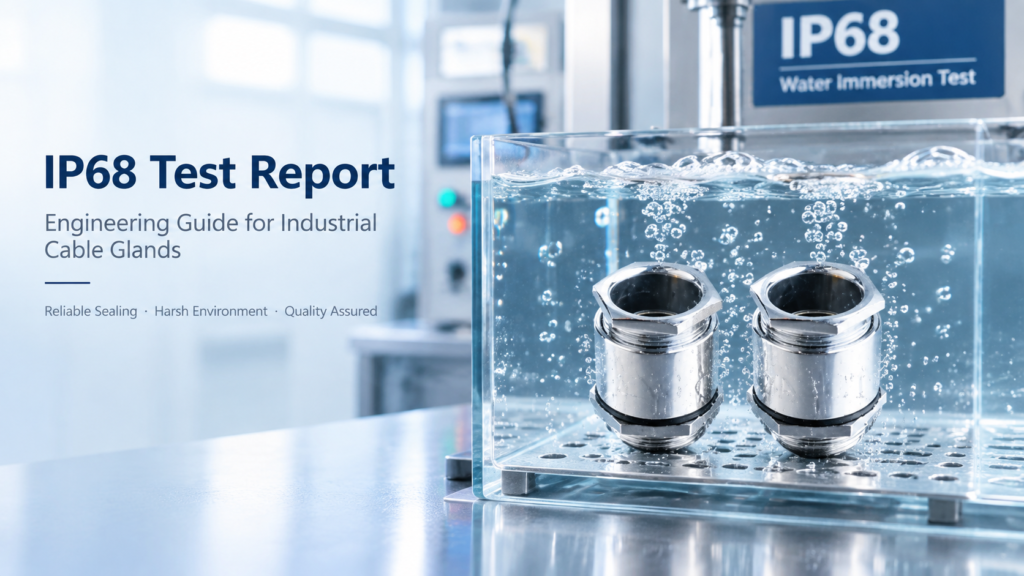
Read IP68 test reports with confidence: what IEC 60529 immersion testing covers for cable glands, what a real report contains, and how to verify a supplier’s IP68 claim before you buy.
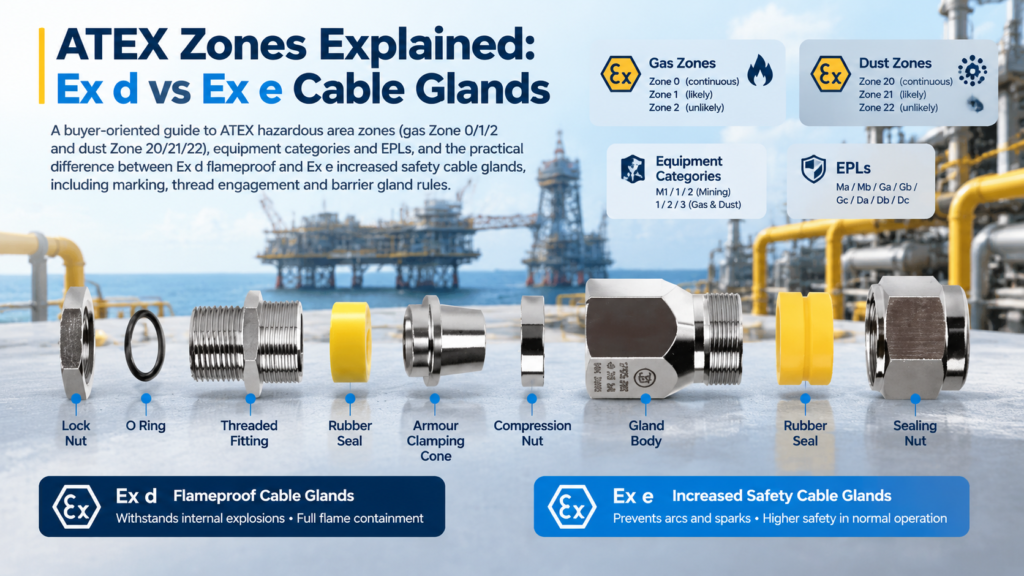
ATEX zones explained in plain terms: Zone 0-2 and 20-22, equipment categories and EPLs, plus how Ex d and Ex e cable glands differ and when a barrier gland is required.
For engineers and technical procurement specialists in Europe and Australia, selecting the right cable gland is critical to ensure both electrical safety and long-term system reliability. The IP68 Nylon Cable Gland offers a specific combination of waterproof performance, electrical insulation, and lightweight material properties that are essential in many industrial applications. Understanding its features, proper […]
We use cookies to enhance your browsing experience, serve personalised ads or content, and analyse our traffic. By clicking "Accept All", you consent to our use of cookies.