Blog
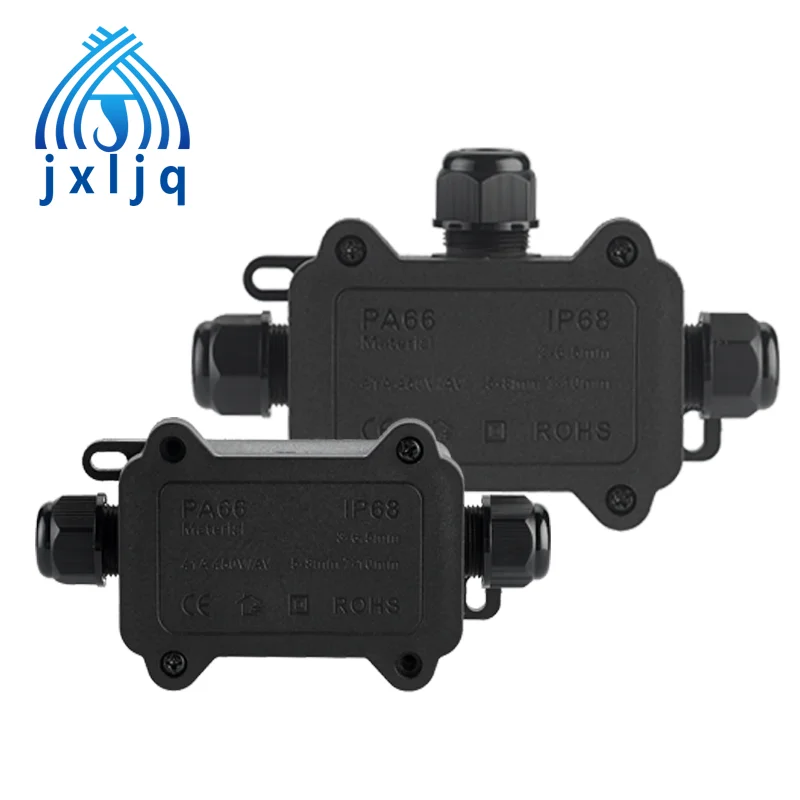
Waterproof Junction Box vs Distribution Box: Key Differences
A waterproof junction box joins wires, a distribution box protects circuits. Compare function, standards, IP ratings, sizing and cost before you specify the right enclosure.
Read More

If you are choosing between 304 and 316 stainless steel cable glands, the honest answer is that neither grade is “better” in absolute terms. 316 stainless steel resists chloride attack and seawater corrosion significantly better than 304, which makes it the default for marine, coastal and chemical duty. 304 stainless steel delivers the same mechanical performance and a very high level of general corrosion resistance at a noticeably lower cost, which makes it the economical choice for most industrial and indoor applications. The right decision depends on the environment the gland will actually live in, not on which number is higher.
This guide compares the two grades on the factors that matter in real installations, shows where each one wins, and explains how to verify that the gland you receive is really the grade you specified.
304 and 316 belong to the 300-series austenitic family, the most common stainless steels in cable gland manufacturing. Both are non-magnetic in the annealed condition, both keep their toughness at low temperatures, and both can be machined into the thin-walled bodies, threads and compression seals that a cable gland requires. Because they share the same crystal structure, the two grades look identical after nickel plating or bead blasting, which is why grade verification is an important part of procurement rather than a visual judgement.
The chemistry is where the two grades separate.
304 stainless steel contains roughly 18% chromium and 8% nickel. 316 contains slightly less chromium and more nickel, and adds 2 to 3% molybdenum. That single addition is the entire story of the practical difference between the two grades.
| Element | 304 (EN 1.4301) | 316 (EN 1.4401) | 316L (EN 1.4404) |
|---|---|---|---|
| Chromium (Cr) | 18-20% | 16-18% | 16-18% |
| Nickel (Ni) | 8-10.5% | 10-14% | 10-14% |
| Molybdenum (Mo) | None | 2-3% | 2-3% |
| Carbon (C) | Max 0.08% | Max 0.08% | Max 0.03% |
| Chloride resistance | Good | Excellent | Excellent |
Molybdenum strengthens the protective oxide film on the steel surface and dramatically improves resistance to pitting and crevice corrosion in chloride-containing environments. Without it, 304 can develop small pits where chloride ions break through the passive layer, especially in salt air, seawater spray or chlorinated washdown water. This is not a failure of quality; it is a chemical property of the grade, and it is the reason 316 exists.
Translate the chemistry into site conditions and the picture becomes practical. The table below summarises how each grade behaves in the environments where stainless steel cable glands are actually specified.
| Environment | 304 behaviour | 316 behaviour | Recommended |
|---|---|---|---|
| Seawater and marine atmosphere | Pitting can occur over time | Excellent resistance | 316 / 316L |
| Chloride solutions, road salt, pools | Weak to fair | Excellent | 316 |
| Rural outdoor atmosphere | Excellent | Excellent | 304 (economical) |
| Coastal outdoor atmosphere | Good | Excellent | 316 |
| Food and beverage processing | Excellent | Excellent | 316L preferred |
| Pharmaceutical washdown | Good | Excellent | 316L |
| General industrial and indoor | Excellent | Excellent | 304 (economical) |
In coastal and marine service, 316 cable glands typically last several times longer than 304 before pitting appears, because the molybdenum content directly counters the two failure modes that matter most at sea: pitting and crevice corrosion under the sealing surfaces. If a project sits within reach of salt air, or the gland will be washed with chlorinated water, 316 is the responsible specification.
304 is not a compromise; it is the correct grade for a large share of real projects. Machine builders, control panel manufacturers, food equipment builders and general industrial plants specify 304 stainless steel cable glands because the environment never exceeds what 304 can handle. In dry or mildly humid indoor conditions, rural outdoor installations and ordinary industrial atmospheres, 304 offers the same mechanical strength, the same IP68 sealing and the same clean appearance as 316, at a lower unit cost that matters when a project uses hundreds of glands. A standard stainless steel cable gland in 304 is the workhorse choice for these applications.
There are environments where 316 is a requirement rather than an upgrade:
If your project falls into any of these categories, specify 316 up front. Retrofitting corroded glands in a marine or chemical plant is far more expensive than the grade upgrade.
316L differs from 316 only in its carbon content, capped at 0.03% instead of 0.08%. Lower carbon reduces the risk of chromium carbide precipitation at grain boundaries when the steel is heated, which makes 316L the preferred grade for welded assemblies and for food and pharmaceutical equipment that undergoes repeated hot cleaning. For a cable gland, which is machined rather than welded, both 316 and 316L behave identically in service; specifying 316L simply guarantees the stricter chemistry on the material certificate.
Beyond corrosion, three practical factors influence the decision:
Because 304 and 316 look identical, grade verification belongs on the purchasing checklist:
If the application is indoor, dry or general industrial, choose 304 and save the cost. If the gland will face salt air, seawater, chloride washdown, sterilisation chemicals or marine classification, choose 316 or 316L. When the gland feeds a food or pharmaceutical line, choose 316L. When in doubt, ask the manufacturer to recommend the grade for your specific environment, and request the material certificate with the order.
For installation practice, our guide on installing stainless steel cable glands covers torque, sealing and thread preparation for both grades. And if you are still deciding between stainless steel and brass as a material family, our comparison of brass versus stainless steel cable glands covers that separate question; this article assumes stainless steel is already the chosen family and focuses only on which grade to use.
304 and 316 stainless steel cable glands are both excellent products, and neither replaces the other. 316 wins wherever chlorides, seawater or aggressive cleaning are present, at a 40 to 50% cost premium. 304 wins everywhere else, offering the same strength, sealing and appearance at the lower price. Match the grade to the worst environment the gland will see, verify the grade with a material certificate, and the gland will outlast the equipment it protects.
If you are specifying stainless steel cable glands for a marine, coastal or general industrial project, browse our stainless steel cable gland range to compare 304 and 316 options, or contact us with your environment and cable size and we will recommend the right grade.
No. 316 has superior resistance to chlorides and seawater, but 304 provides the same mechanical strength and sealing performance in general industrial and indoor environments at a lower cost. The better grade is the one matched to the actual environment.
316L is the low-carbon version of 316, capped at 0.03% carbon instead of 0.08%. It resists carbide precipitation when heated, which makes it the preferred grade for welded assemblies and food or pharmaceutical washdown service. For machined cable glands, both grades perform identically.
304 can survive limited salt exposure, but it is prone to pitting and crevice corrosion in seawater and salt air. For marine, offshore and coastal installations, 316 or 316L is the recommended grade because its molybdenum content resists chloride attack.
316 contains 2 to 3% molybdenum and a higher nickel content, both of which add raw material cost. Expect 316 to cost roughly 40 to 50% more than 304, a premium that is justified only where the environment requires its corrosion resistance.
Visual inspection cannot distinguish the grades. Request an EN 10204 material certificate from the manufacturer, check the grade marking on the product or packaging, or perform a portable XRF (PMI) test to confirm the molybdenum content.
Yes. The IP rating depends on the sealing design, not the steel grade, so both 304 and 316 glands can be built to IP65, IP66, IP67 or IP68. The grade decides long-term corrosion resistance; the seal design decides ingress protection.
A waterproof junction box joins wires, a distribution box protects circuits. Compare function, standards, IP ratings, sizing and cost before you specify the right enclosure.
Read More
Cable gland accessories explained: locknuts, earth tags, sealing washers, reducers, blanking and vent plugs — and when each one is required.
Read More
A practical guide to choosing solar-grade cable glands for PV rooftops, farms, and battery storage. Compare materials, IP ratings, and installation tips.
Read More