Blog
Cable Gland Size Chart: Metric, PG & NPT Sizes Explained
Compare metric, PG, and NPT cable gland sizes in one chart. Learn how to measure cable diameter, match sealing ranges, and avoid sizing mistakes.
Read More
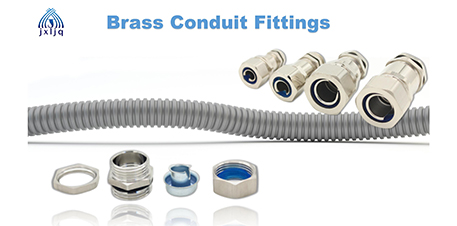
Brass conduit fittings are precision-machined connectors used to join one piece of conduit to another, or to terminate conduit at an electrical box, junction box, control panel or machine. Together, the conduit and its fittings form a continuous protective route that carries and shields electrical cables from impact, moisture, dust and chemical exposure. A brass conduit fitting is the point where the mechanical protection of the conduit system meets the enclosure, so its sealing quality and mechanical strength determine whether the whole cable route stays reliable.
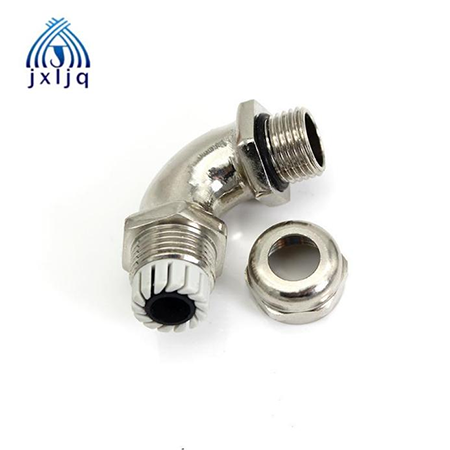
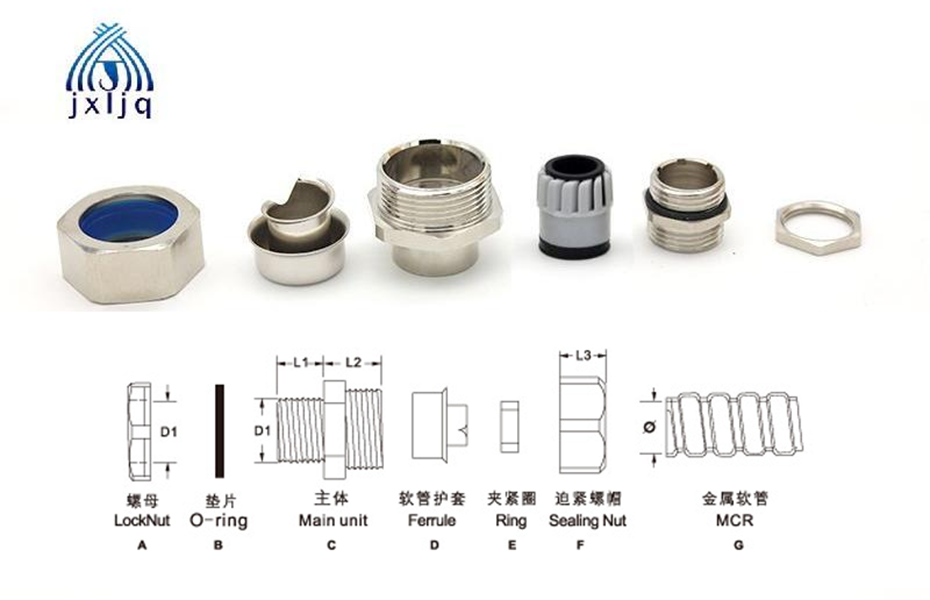
Typical brass conduit fittings are assembled from a machined body, a sealing ring or O-ring, a ferrule that grips the conduit profile, a compression or gland nut, and a locknut that secures the fitting to the enclosure wall. Some designs add an insulating throat or liner that protects cable jackets from the cut metal edge, and a ground cone or ferrule that maintains electrical bonding continuity through the fitting.
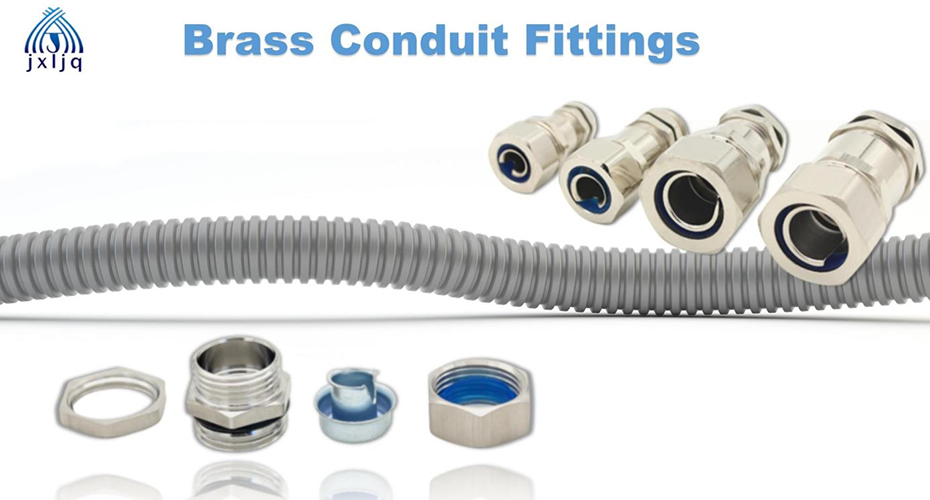
This guide answers the questions buyers ask most often: what these fittings are, why brass is used, which types exist, which specifications matter, and how to install and select them correctly.
Conduit fittings are available in zinc alloy, nylon, stainless steel and brass. Brass is the most widely specified for demanding industrial duty because it balances several properties at once:
If you are weighing brass against stainless steel as a material family, our comparison of brass versus stainless steel cable glands explains the trade-offs in detail.
Conduit systems change direction, terminate at equipment and transition between conduit types, and each situation uses a different fitting.
| Fitting type | What it does | Typical rating |
|---|---|---|
| Straight connector | Terminates a straight conduit run at a box or panel | IP65-IP68 |
| 90° elbow connector | Changes conduit direction at a right angle in tight spaces | IP67 |
| Hose connector (MH / BH) | Couples flexible hose or corrugated tubing to equipment | IP65 |
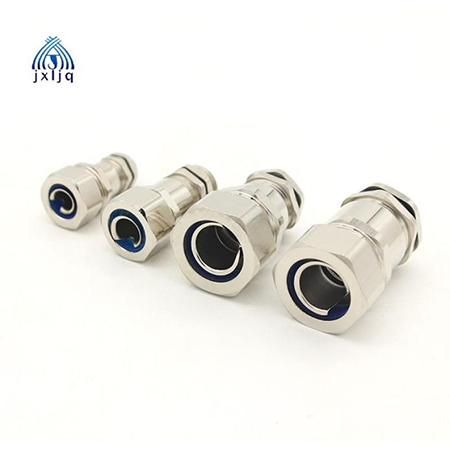
| Flexible conduit gland | Bonds flexible metallic conduit to an enclosure while protecting the cable | IP67 |
| Locknut and accessories | Secures the fitting to the enclosure and completes the system | — |
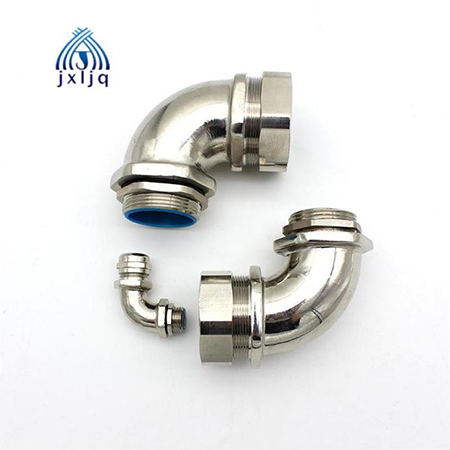
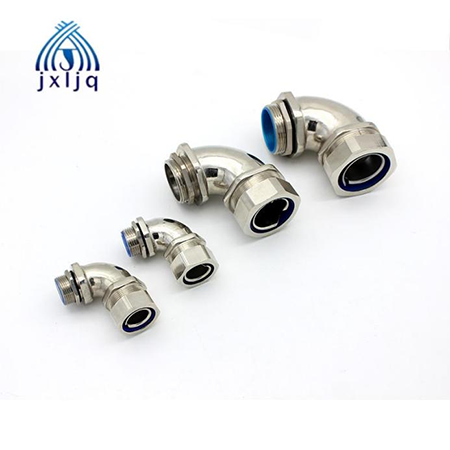
For a right-angle change of direction, a 90 degree elbow conduit fitting is the component you need: one end couples to the flexible metallic or liquid-tight conduit, and the threaded end fixes into the box, switch enclosure, distribution board or motor terminal. The 90° profile is particularly useful where space is limited and a straight fitting would not fit.
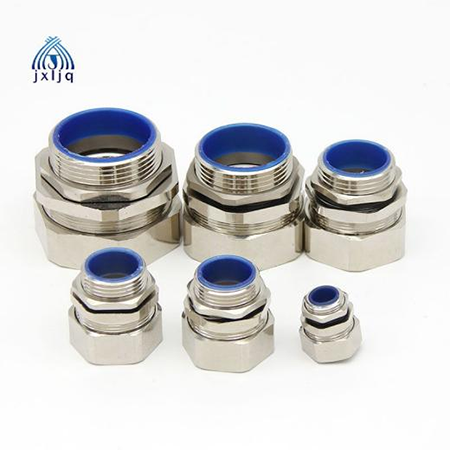
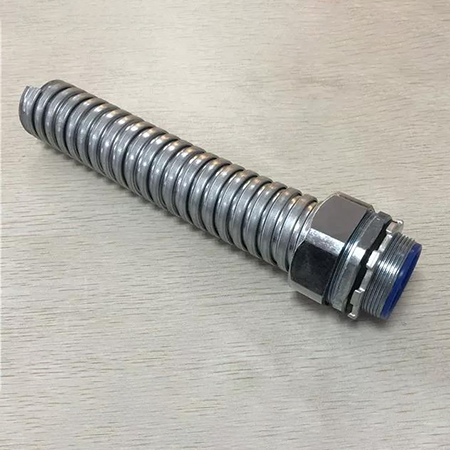
Where the cable route uses flexible hoses or corrugated tubing, a brass hose connector MH series couples standard flexible hoses to equipment with an IP65 seal and a working range of -40°C to +100°C, while a brass hose connector BH series handles AD-size corrugated conduit. For flexible metallic conduit systems, a brass flexible cable gland terminates the conduit at the enclosure with an insulating liner that protects the cable from the cut edge, and positively bonds the conduit to the box for grounding continuity.
When you compare brass conduit fittings, four specifications decide whether the fitting matches your system:
Brass conduit fittings protect wiring in environments where plastic fittings would not last:
In these settings the fitting must do more than hold the conduit in place: it must keep water and dust out of the enclosure, hold the cable securely against vibration, and keep the metallic conduit system electrically bonded.
Installation is straightforward when the parts are handled in the right order:
Work through the installation before you order:
Brass conduit fittings are the connecting pieces that turn a length of conduit into a complete cable protection system. They terminate, join and change the direction of conduit runs, seal the entry into electrical enclosures, and maintain grounding continuity through metallic systems. Nickel-plated brass is the material of choice for wet, corrosive and mechanically demanding environments, and choosing the right thread, conduit profile, IP rating and temperature range ensures the fitting performs for the life of the installation.
If you are specifying conduit fittings for an industrial, food, pharmaceutical or outdoor project, contact us with your conduit type, thread and environment, and we will recommend the right brass conduit fitting for your cable route.
A brass conduit fitting connects one piece of conduit to another, or terminates conduit at an electrical box, junction box, panel or machine. It protects the cable at the connection point, seals the enclosure entry against dust and water, and maintains grounding continuity in metallic conduit systems.
A cable gland terminates and seals a cable directly at an enclosure, clamping on the cable jacket. A conduit fitting terminates a conduit, which then protects the cable along its route. In some designs the two overlap, for example a flexible conduit gland that both bonds the conduit and protects the cable at the entry point.
Most brass conduit fittings are rated IP65 to IP68 depending on the seal design. IP65 covers low-pressure jets and rain, IP67 covers temporary immersion at 1 metre for 30 minutes, and IP68 covers continuous immersion at a manufacturer-defined depth. Check the datasheet rating for the exact condition.
Brass conduit fittings are produced in Metric (per EN 60423), PG, NPT and G/BSP threads. The fitting thread must match the enclosure entry or knockout, so confirm the thread standard and size before ordering.
Yes. Nickel-plated brass is corrosion resistant and suits outdoor, coastal and washdown environments. For direct seawater exposure or extreme chloride environments, stainless steel fittings may be required instead.
Match the fitting to three dimensions: the conduit profile or nominal size (including AD size for corrugated tubing), the thread size of the enclosure entry, and the cable diameter if the fitting also clamps the cable. When in doubt, provide all three to the manufacturer and they will specify the correct size.

Compare metric, PG, and NPT cable gland sizes in one chart. Learn how to measure cable diameter, match sealing ranges, and avoid sizing mistakes.
Read More
How nylon cable glands are used across automotive wiring, engine compartment routing and EV charging infrastructure, with specifications and selection guidance.
Read More
Introduction Even the best IP68 cable gland can fail if installed incorrectly. Installation mistakes are one of the main causes of water ingress and cable damage. Mistake 1: Incorrect Cable Diameter Selection Using a cable outside the recommended clamping range can compromise sealing performance. Mistake 2: Over-Tightening or Under-Tightening Both can damage seals or reduce […]
Read More