Blog
How Does IP68 Rating Work for Cable Glands?
Learn how the IP68 rating on cable glands works: what IEC 60529 actually tests, how the two-seal waterproofing mechanism blocks water, and why installation errors cause most leaks.
Read More
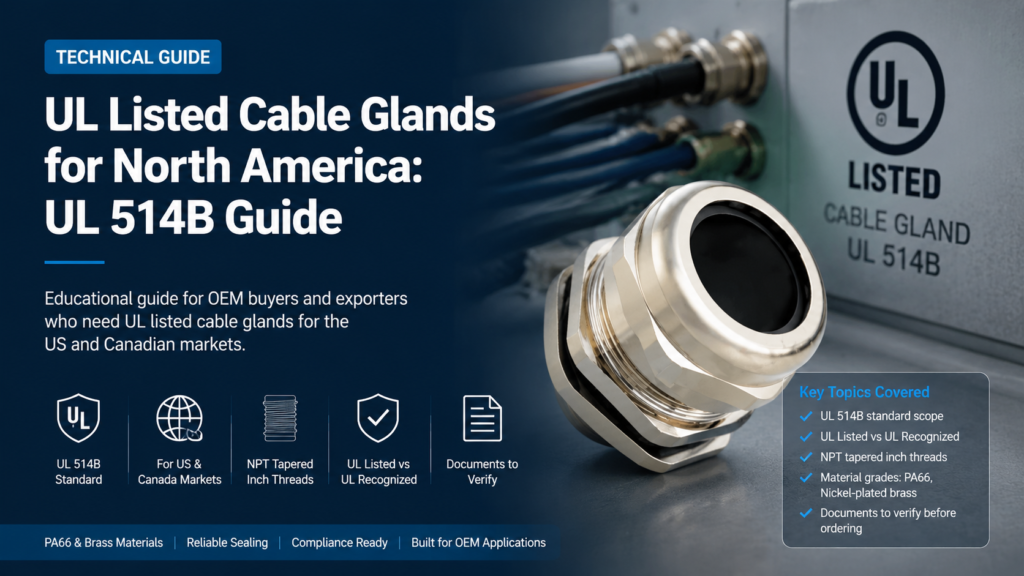
If your machinery, control panel, or enclosure is headed to the United States or Canada, “UL listed cable gland” is likely the first phrase in the specification. Yet how cable glands are certified in North America confuses even experienced buyers: UL versus ETL, Listed versus Recognized, UL 514B versus other standards, and NPT threads that look nothing like the metric sizes used in Europe or Asia. This guide explains what the UL mark means for a cable gland, which standard applies, and what to verify before you order.
UL (Underwriters Laboratories, now UL Solutions) is an OSHA-accredited Nationally Recognized Testing Laboratory (NRTL). When a cable gland carries a UL Listing mark, it means that specific product from that factory passed testing against an applicable safety standard — and the factory faces periodic follow-up inspections to confirm production still matches what was tested.
That distinction matters more than the logo itself:
The standard that governs most cable glands — called cord grips in North America — is UL 514B, Standard for Conduit, Tubing, and Cable Fittings. Its scope covers fittings used with cable and conduit in NEC and CE Code installations: cord grips, liquid-tight fittings, locknuts, bushings, and related cable entry fittings.
Several practical points follow from that scope:
For the vast majority of OEM and project buyers, the question “is it UL listed?” really means “is it Listed under UL 514B, from a verifiable file, for the thread and cable range I need?”
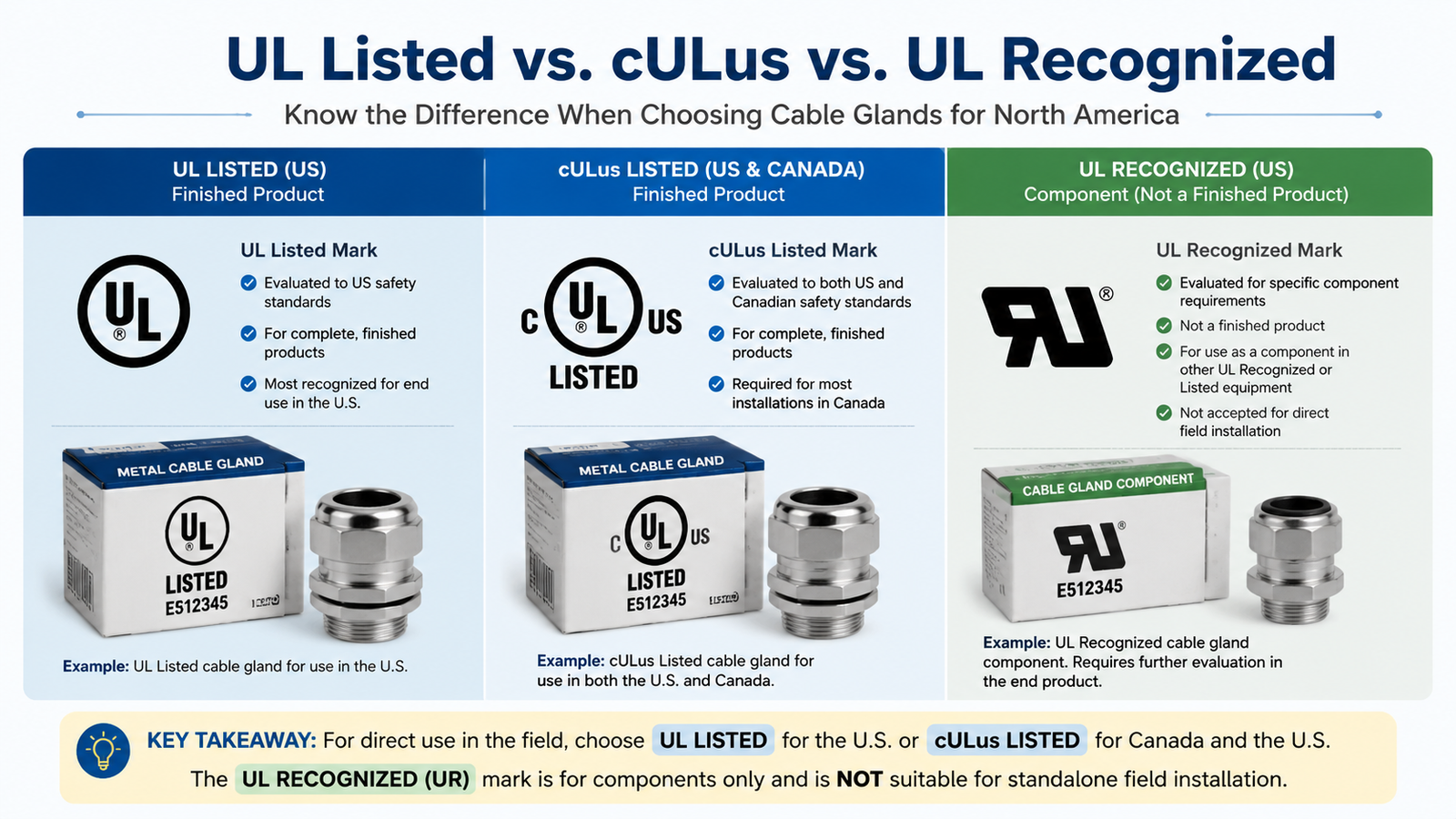
North American buyers often confuse two UL approval types that are not interchangeable:
| Mark type | What it applies to | Typical use for a gland buyer |
|---|---|---|
| UL Listed (circular UL, cULus) | Finished products evaluated as a complete unit | A complete cable gland you mount on an enclosure entry — what you normally want |
| UL Recognized (UR) | Components intended to be built into end equipment | An individual grommet, seal, or raw material inside a larger assembly |
When a supplier says a cable gland is “UL approved,” ask which one they mean. A Recognized component mark on a rubber grommet does not make the assembled gland a Listed product, and an inspector will not accept it as one. For a gland installed at the point of cable entry, request a Listed product. If the same gland will be sold in both the US and Canada, the cULus mark is the practical choice because it covers both countries under one certification.
You will also meet the ETL mark (Intertek) and CSA marks. ETL is not “worse than UL”: Intertek is a separate OSHA-accredited NRTL that tests to the same UL 514B standard. What matters is that the file is real, current, and matches the exact product you are buying.
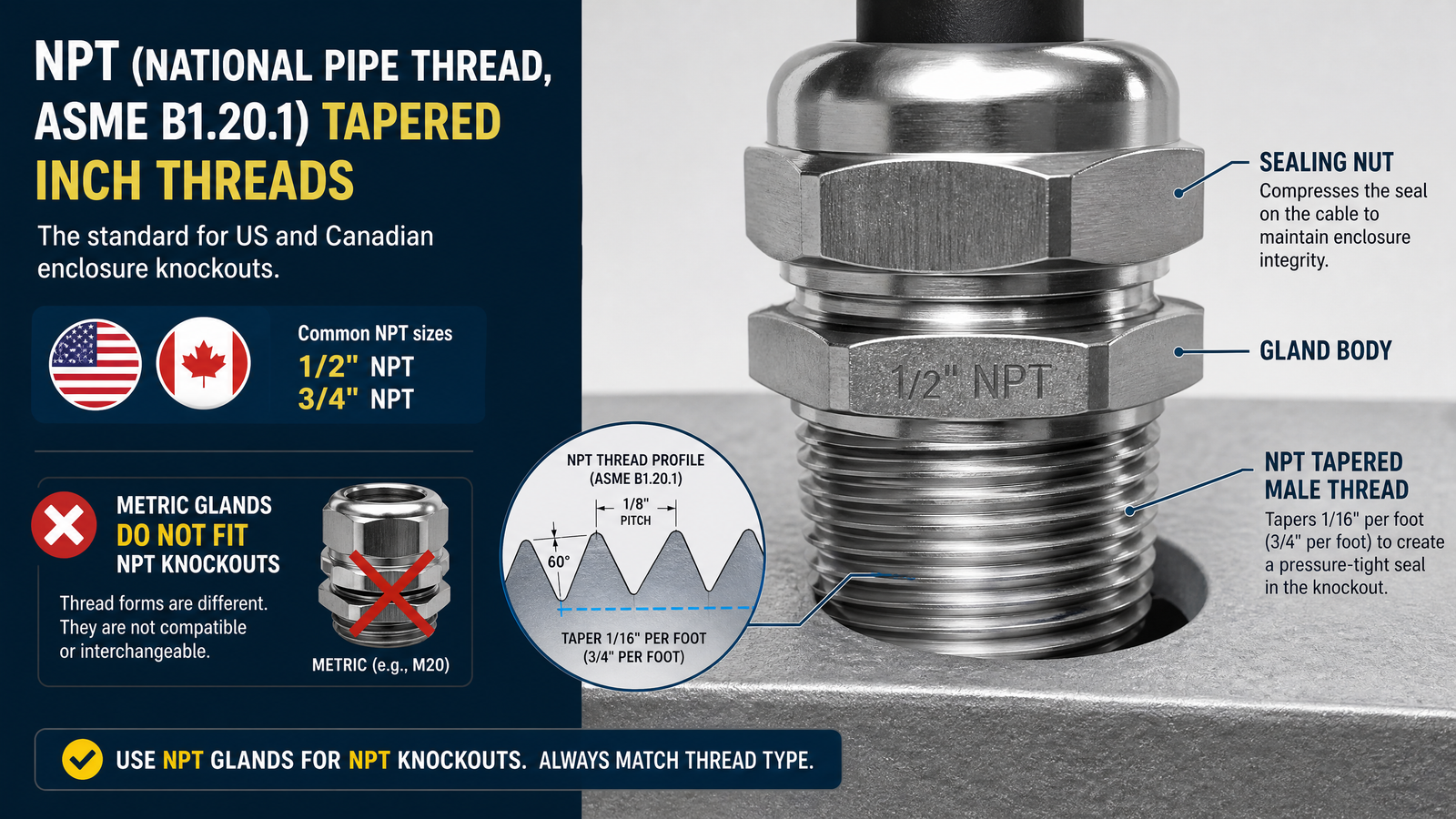
Thread type is where many export orders go wrong. In the US and Canada, enclosure knockouts and conduit entries are commonly threaded in NPT — National Pipe Thread, per ASME B1.20.1 — a tapered inch thread in sizes such as 1/4″, 3/8″, 1/2″, 3/4″, and 1″. A metric M20 gland will not seal in a 3/4″ NPT knockout; forcing it is unsafe and a code violation.
Two related reads will save you most thread mistakes: our guide to metric vs. PG vs. NPT thread conversion explains how the systems compare, and the cable gland size chart maps thread sizes to cable clamping ranges in both systems.
If you are sourcing for the US market, you want gland series that are manufactured with true NPT options rather than adapted metric threads:
Verification takes five minutes if you know what to ask for. Follow these steps before you commit to an order:
One trap deserves emphasis: a material grade statement such as “UL 94 V-2 nylon” is not a product listing. It describes the plastic’s flammability class. Always ask for the finished-gland listing under UL 514B.
Buying factory-direct, documentation is your main protection. Put this checklist in your RFQ:
| Document | Why it matters |
|---|---|
| UL certificate with file number | Confirms the listing exists and belongs to the factory you are buying from |
| UL 514B test report or listing category page | Shows which gland series, thread sizes, and cable ranges are covered |
| Product marking drawing | Verifies the mark location, size, and wording match what ships |
| Material certificates (e.g., UL 94 for plastics) | Documents flammability and material claims separately from the product listing |
| IP rating test report | Confirms sealing claims such as IP68 under a defined test method |
| RoHS and REACH declarations | Required by many distributors and OEM compliance teams |
A reputable factory will tell you plainly whether a given series carries a UL file or not — certification is per product, per file, and per factory. Ask the question early: “Can you provide the UL 514B file number for this NPT gland series?” If the answer is that certification is still in progress, then the product is not Listed today, regardless of how the sales sheet reads.
Jixiang Connector manufactures brass, nylon, and stainless steel gland ranges with NPT options and documents CE, TUV, RoHS, REACH, and IP68 test reports under its QC system. For projects that mandate UL-listed glands, confirm the UL file and supporting documentation with our export team before ordering, so certification questions are settled before your goods ship.
UL certification for cable glands comes down to three ideas. First, listing is product-level: a real UL 514B file held by the factory, not a material grade or a printed logo. Second, North America means NPT: specify inch threads such as 1/2″ NPT and confirm the gland series is manufactured for them. Third, verification is your job: check the file number in UL Product iQ and put the document checklist into your RFQ before you commit.
Doing this homework at sourcing time is cheaper than reworking an enclosure or explaining a red tag to a customer. If you need NPT gland options with documented test reports, talk to our export engineers — they can confirm what documentation is available for the series and thread size you need.
It means a specific gland product from a specific factory has been tested against a safety standard — normally UL 514B for conduit, tubing, and cable fittings — and the factory is subject to follow-up inspections. The listing is identified by a UL file number you can verify online.
Functionally yes. ETL is the mark of Intertek, a separate OSHA-accredited NRTL that tests to the same standards, including UL 514B. What matters is that the file is real, current, and covers the exact product and thread size you are buying.
UL 514B covers general conduit, tubing, and cable fittings such as standard cable glands. UL 1203 covers explosion-proof and hazardous-location equipment. A UL 514B listing does not support a hazardous-location claim.
NPT (National Pipe Thread, ASME B1.20.1), a tapered inch thread in sizes such as 1/4″, 3/8″, 1/2″, 3/4″, and 1″. Enclosure knockouts and conduit entries in the US are commonly NPT, so export glands should be manufactured with true NPT options.
Nylon glands can be Listed under UL 514B when the complete product passes evaluation. Note that a “UL 94 V-2 nylon” statement only describes the plastic’s flammability class — always ask for the finished-product UL file number rather than accepting a material claim.
Learn how the IP68 rating on cable glands works: what IEC 60529 actually tests, how the two-seal waterproofing mechanism blocks water, and why installation errors cause most leaks.
Read More
When it comes to protecting electrical cables and ensuring long-lasting performance in harsh environments, brass cable glands are a top choice. These sturdy, reliable connectors offer IP68 waterproof protection, making them suitable for a wide range of industrial, outdoor, and marine applications. Whether you’re a professional installer or a DIY enthusiast, installing brass cable glands […]
Read More
How cable glands protect CCTV cameras, junction boxes and NVR cabinets: IP68 sealing, nylon vs brass, multi-hole entries, and hazardous area options.
Read More