Blog
What Is The Difference Between BW and CW Cable Glands
BW and CW cable glands both terminate SWA armoured cable, but they are built for different environments. Learn the key differences, IP ratings, and how to choose.
Read More
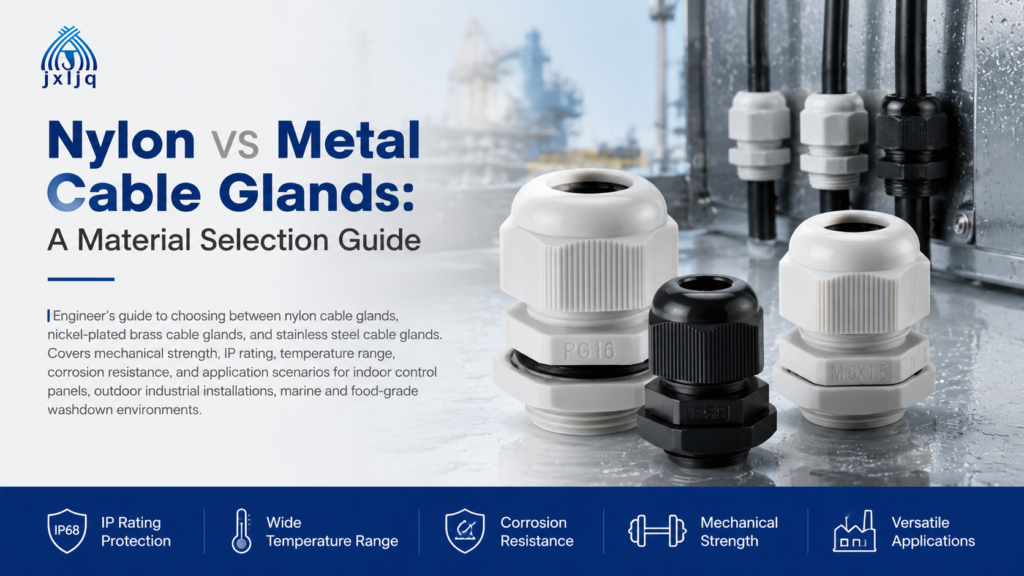
Both nylon vs metal cable gland can pass an IP68 water-ingress test on the bench, but the material you specify decides how the gland behaves in the field over the next five to ten years. The right choice is not a brand preference or a price rule of thumb — it follows from the actual environment the gland has to survive.
This guide walks through the three materials engineers actually choose between (nylon, brass, and stainless steel), the engineering parameters that change between them, and the application scenarios where each one fits. Use it as a starting point for material selection, then narrow down to a specific size in our waterproof cable gland catalog.
Most cable gland selection charts start with thread standard (metric, PG, NPT) and IP rating. Those two parameters decide whether the gland fits the enclosure and whether it survives submersion. Material sits one layer deeper — it decides whether the gland keeps performing after two years in a coastal solar farm, after five years on a vibrating motor, or after one freeze-thaw cycle outdoors.
The same gland body shape, the same thread, the same IP68 test outcome — different material, different field life. Treat material as a primary selection parameter, not a tiebreaker.

Across industrial wiring, control panels, solar PV, EV charging infrastructure, and outdoor lighting, almost every cable gland ships in one of three material families. Each has a clear place.
Modern nylon cable glands are molded from PA66 (polyamide 66), often UV-stabilized for outdoor use. The material is electrically insulating, lightweight (about one-fifth the weight of a comparable brass gland), corrosion-free, and inexpensive enough for high-volume deployments. Operating range is typically -40°C to +100°C continuous, with short excursions to 120°C possible.
Standard nylon threads and seal rings are well suited to control panels, indoor distribution boxes, instrumentation, solar combiner boxes, and light commercial work. Nylon does not provide a conductive path, so it cannot ground armored cable — that is a structural constraint, not a defect. See our standard nylon cable gland for a typical size range (M12 to M63, PG7 to PG48, NPT 1/4″ to 2″).
Brass cable glands use a copper-zinc alloy body, almost always finished with nickel plating to slow oxidation. Brass is conductive, which means it can carry earth continuity from armored cable braid back to the enclosure — a requirement in power distribution and hazardous-area installations. The material tolerates much higher tightening torque than nylon without thread deformation and stays stable through repeated maintenance cycles.
Nickel-plated brass is the most common choice for general industrial machinery, outdoor panels exposed to rain and sun, EMC-sensitive equipment (because the conductive body shields the cable), and any installation that calls for grounded armored cable termination. Working temperature commonly spans -40°C to +120°C. For routine projects that mix indoor and outdoor runs, brass is usually the safe default.
Stainless steel cable glands use 304 or 316 stainless for the body and lock nut, with an engineering-plastic or silicone seal inside. 316 (marine grade) is the standard for salt-air, chemical washdown, food-processing, and offshore use. The material carries the same benefits as brass — conductivity, mechanical strength, thread integrity under repeated service — and adds the highest corrosion resistance of the three options.
The trade-off is cost and weight: a 316 stainless gland costs several times a nylon equivalent and is heavier to install in large quantities. Use it where the environment rules out cheaper materials. Our standard stainless steel cable gland range covers the same thread sizes as the nylon and brass lines, so you can standardize the enclosure cutout across a project.
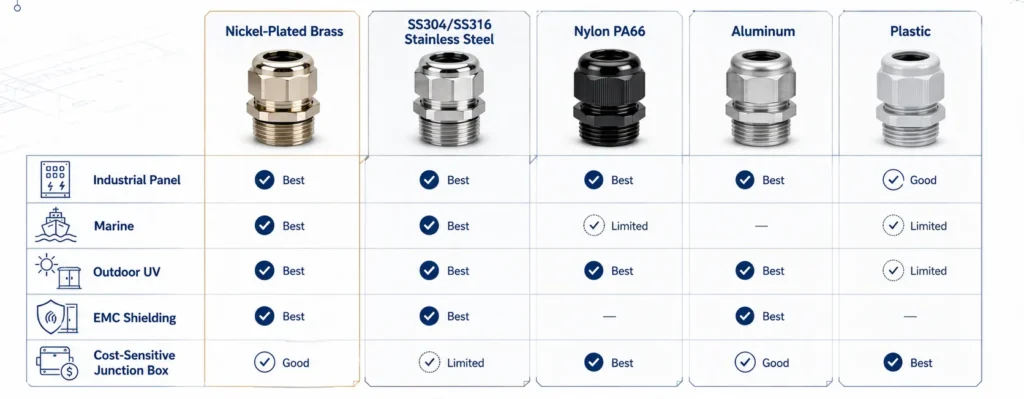
The table below summarizes the parameters that drive the decision on most projects. Values are typical for new, properly rated glands from reputable manufacturers. Always verify against the specific datasheet for the part you intend to order.
| Parameter | Nylon (PA66) | Nickel-plated brass | Stainless steel (304/316) |
|---|---|---|---|
| Protection rating | IP68 (standard) | IP68 (standard) | IP68 to IP69K |
| Continuous temperature | -40 °C to +100 °C | -40 °C to +120 °C | -40 °C to +120 °C (higher with special seals) |
| Mechanical strength | Moderate | High | High to very high |
| Weight (relative) | Lightweight | Heavy | Heavy |
| Electrical behavior | Insulating | Conductive (grounding capable) | Conductive (grounding capable) |
| EMC shielding | No | Yes | Yes |
| Corrosion resistance | Excellent (no metal to corrode) | Good (nickel plating required) | Excellent (316 best for salt / chemicals) |
| Relative unit cost | $ | $$ | $$$ |
| Typical service life | 5-10 years (indoor) | 10-15 years | 15-20+ years |
Avoid the temptation to pick one material for the entire facility. Different parts of a project face different stresses, and forcing one material across all of them usually means overpaying somewhere and under-specifying somewhere else.
For indoor cabinets, control panels, and signal wiring, nylon cable glands cover the bulk of the requirement: they are insulating (so there is no ground loop through the gland body), lightweight for back-panel installations, and inexpensive enough to use on every entry point. Nylon is also the right choice when workers will be handling many glands at the same height without specialized tools — the threads do not over-tighten the way nylon can when installers use a wrench with too much force on a brass gland.
For outdoor wiring that sees rain, direct sun, and seasonal temperature cycling, nickel-plated brass is the most common engineering choice. The body can carry a fault or induced current safely to ground, the threads survive decades of thermal cycling, and the cost is acceptable for typical project sizes. Many solar combiner and EV charger OEMs specify brass for exactly this reason. UV-stabilized nylon is acceptable for sheltered outdoor positions, but on rooftops or on exposed racking, brass avoids the long-term polymer aging question.
Coastal plants, offshore platforms, fertilizer and chemical facilities, and food-processing lines that get hit with hot water and sanitizing chemicals every day need stainless steel cable glands. Use 316 grade whenever chlorides or aggressive cleaners are present. The high initial cost is recovered through longer service intervals and lower replacement risk in environments where a gland failure is expensive to access.
The most common real-world pattern is a hybrid: brass or stainless on the outdoor and EMC-sensitive sections, nylon on the indoor control and distribution side. Engineers who standardize this way reduce their inventory to two or three material families while still matching each environment to the right gland.
A few patterns show up repeatedly in failed installations. Most of them are avoidable at the specification stage.
Choosing nylon for an entire plant to save 30% on glands is rarely the cheapest outcome. Outdoor runs degrade faster, indoor runs are over-specified, and field replacements pile up. Match the material to the harshest zone and accept the higher indoor cost.
Armored cable (SWA, SWB, STA) depends on the gland body to make the earth bond from the armor back to the enclosure. Nylon cannot carry that bond. Specifying nylon on an armored run creates both a safety risk and a code-compliance issue on most industrial and commercial installations.
Standard PA66 without UV stabilization chalkes and embrittles after extended sun exposure. If nylon is the right material for cost or insulation reasons outdoors, verify the datasheet explicitly lists UV stabilization.
Brass and stainless tolerate higher torque than nylon, but every material has a limit. Use a torque wrench when the spec calls for one, especially on brass glands into plastic enclosures where a cracked boss is more expensive than the gland itself.
Use this matrix at the start of gland selection to narrow material before you size the gland body. Confirm the result against the actual environment on the data sheet.
| Project condition | Recommended material | Reason |
|---|---|---|
| Indoor control panel, signal wiring | Nylon (PA66) | Insulating, lightweight, cost-efficient |
| Outdoor panel, general industrial | Nickel-plated brass | Durable under UV and thermal cycling |
| Solar PV combiner / inverter | Nickel-plated brass or UV-stabilized nylon | UV exposure; choose based on cost and grounding needs |
| EV charging station | Nickel-plated brass | Mechanical strength and grounding |
| Marine, salt-air, offshore | Stainless steel (316) | Highest corrosion resistance |
| Food / beverage washdown | Stainless steel (316) | Hot water and chemical resistance |
| Chemical plant, fertilizer | Stainless steel (316) | Aggressive chemical compatibility |
| Heavy vibration equipment | Stainless steel or brass | Thread fatigue resistance |
| Hazardous area (ATEX / IECEx) | Brass or stainless with EX certification | Certified body and sealing system |
Once material is settled, three numbers still need to match before the gland is correct: cable outer diameter (measure with calipers, not the printed spec on the jacket), enclosure thread type and size (metric, PG, NPT — they are not interchangeable), and the IP rating required by the application. With material, sealing range, and thread type all confirmed, the gland selection narrows to a single SKU.
If you are at the early sizing stage and want to see all options in one place, browse our full waterproof cable gland range. Send the cable diameter, thread type, and target protection rating, and the team can confirm the right gland in nylon, brass, or stainless to match your environment.
No. Brass is stronger and conducts, but it is heavier, conductive (which can be a disadvantage when isolation is required), and more expensive. For indoor signal wiring and control panels, nylon is usually the better fit. Choose by environment, not by ranking materials globally.
Yes, and it is common practice. Many projects use nylon for indoor panels and brass or stainless for outdoor runs. The key is to keep the thread type consistent so the enclosure cutouts match.
Quality nylon glands with proper sealing rings achieve IP68 in the same way brass glands do. The IP rating is a function of the seal design and the test outcome, not the body material. Always check the test certificate for the specific part.
Both are conductive and provide grounding. Stainless steel (especially 316) has higher corrosion resistance, especially against chlorides, acids, and salt spray. Brass is easier to machine, often cheaper, and adequate for most general industrial environments without aggressive chemicals.
Yes, provided it is UV-stabilized PA66 and rated for the temperature range of the site. For long-term direct sun exposure, many engineers prefer brass or stainless for predictable long-term performance.
Use brass or stainless steel for armored cable. The gland body carries the earth bond from the cable armor back to the enclosure, which a non-conductive nylon body cannot do.
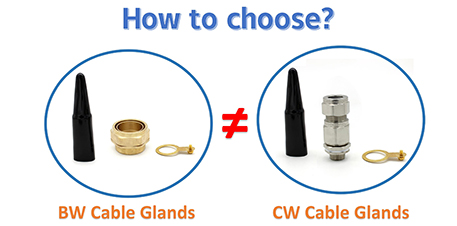
BW and CW cable glands both terminate SWA armoured cable, but they are built for different environments. Learn the key differences, IP ratings, and how to choose.
Read More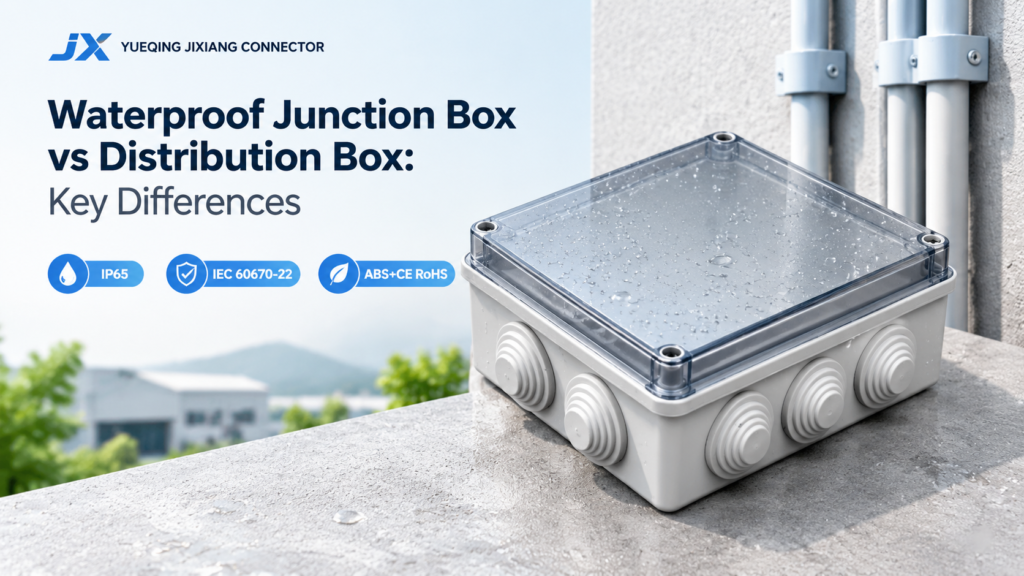
A waterproof junction box joins wires, a distribution box protects circuits. Compare function, standards, IP ratings, sizing and cost before you specify the right enclosure.
Read More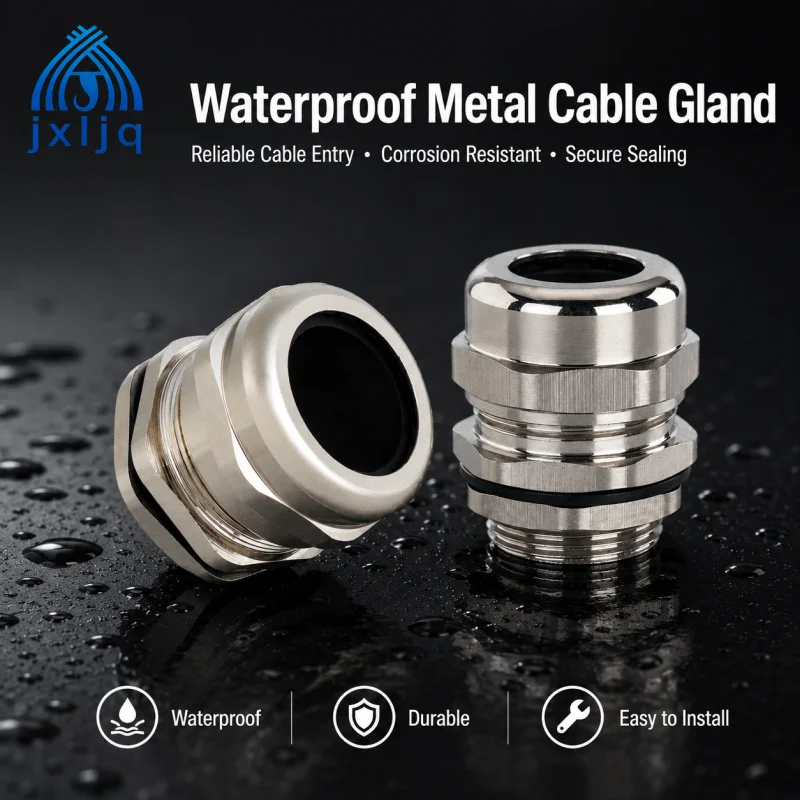
A practical guide to cable gland sealing ranges: measure cable outer diameter correctly, match it to the right gland size, and avoid sealing failures in industrial installations.
Read More