Blog
Custom Junction Box OEM: Openings, Colors, Branding and MOQ
Configuration, setup or tooling: the three cost tiers behind a custom enclosure order, why a custom opening voids the IP rating, and what an RFQ must contain.
Read More
Your blog category
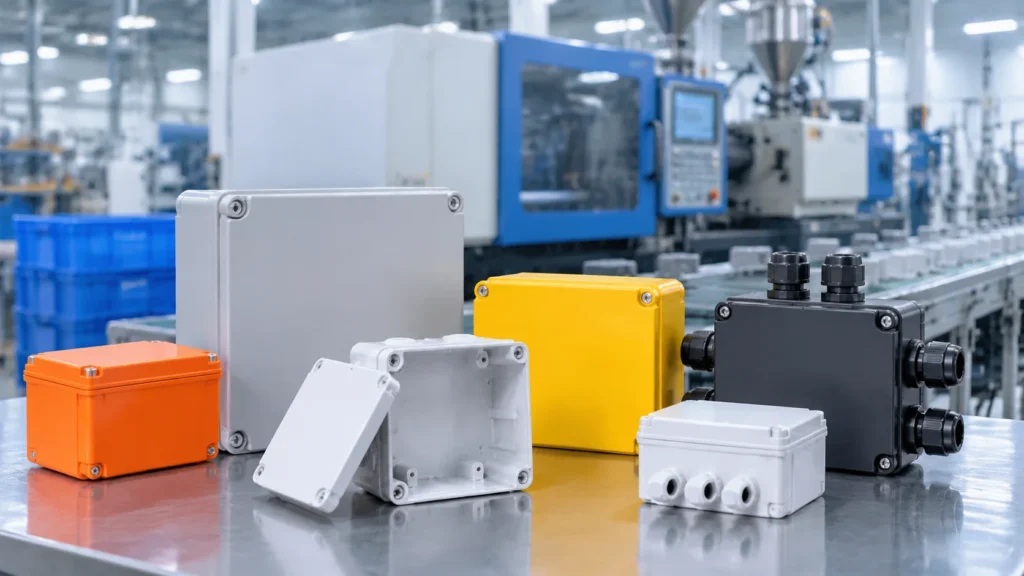
Configuration, setup or tooling: the three cost tiers behind a custom enclosure order, why a custom opening voids the IP rating, and what an RFQ must contain.
Read More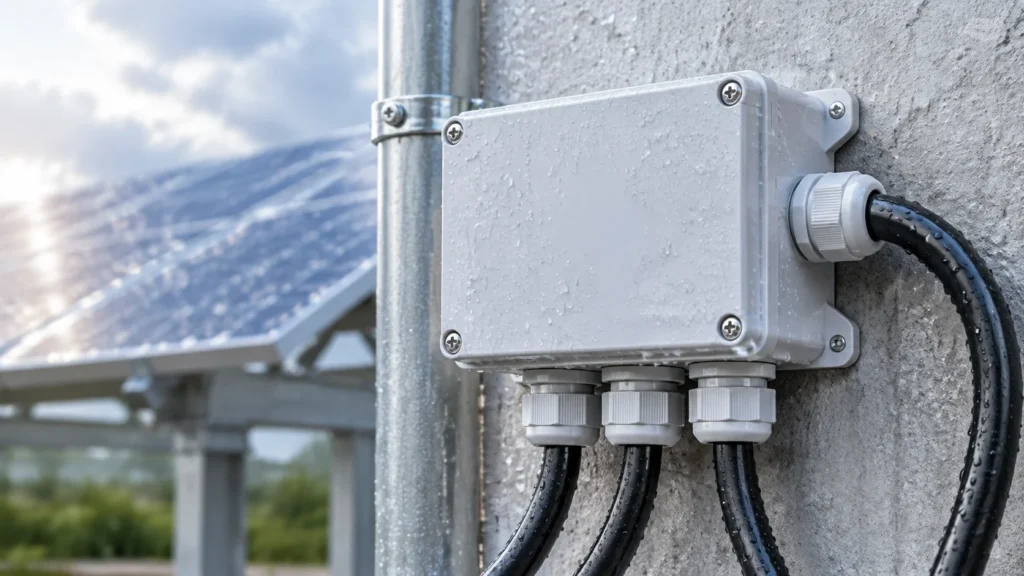
Four seals decide whether a waterproof junction box stays dry. The eight-step sequence, gland range matching, drip loop and cross-pattern cover torque that keep them intact.
Read More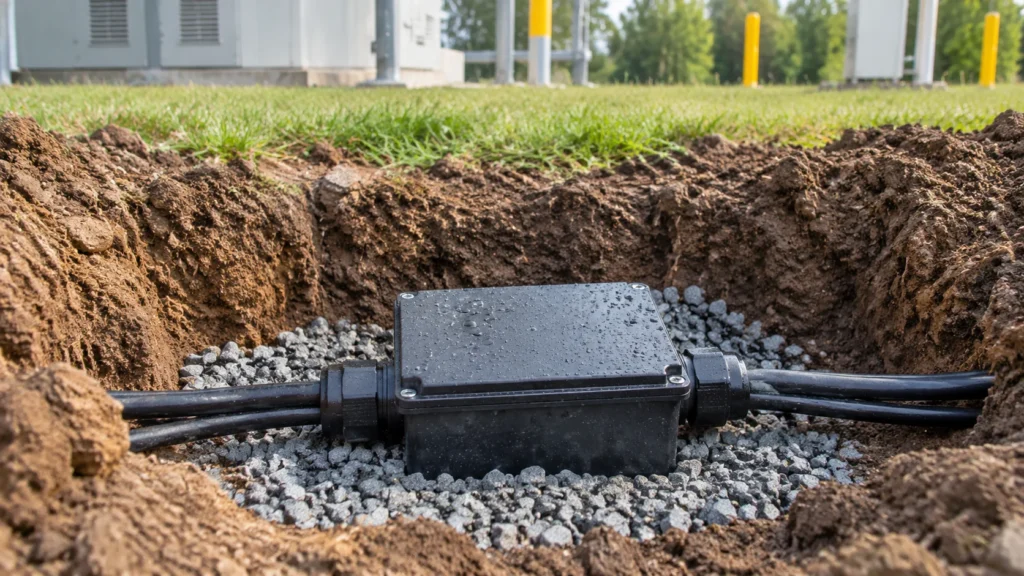
NEC 314.29, the gravel-pit exception, cable depth rules and the conduit convection loop that fills a buried IP68 box with water. What to build instead of burying a splice.
Read More
A junction box joins strings; a combiner box fuses them. The voltage, entry and pressure arithmetic that decides which enclosure survives twenty years on a roof or in a field.
Read More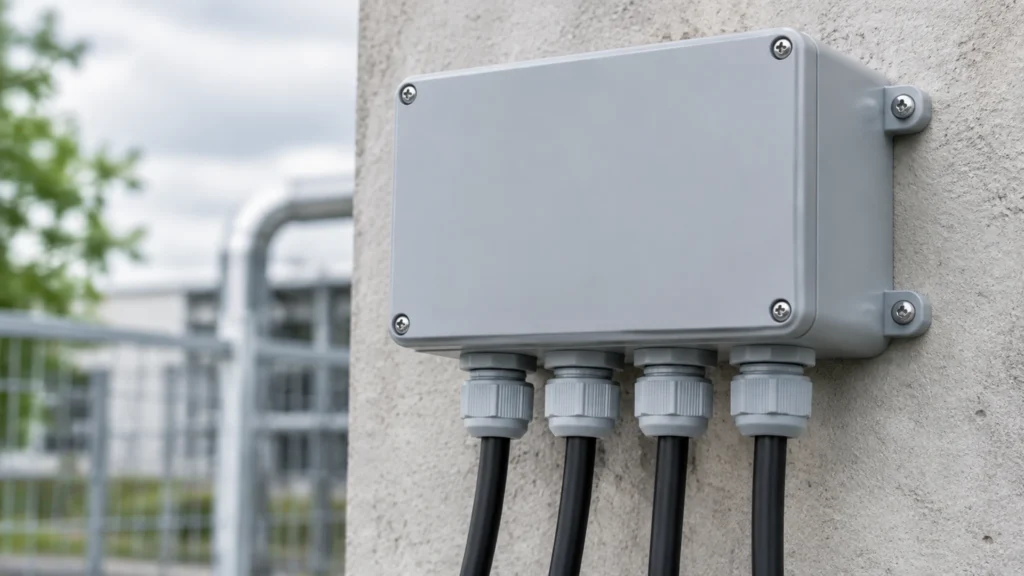
Wire-count tables answer the wrong question. Split the real limit into cable entries, terminal positions and NEC 314.16 fill volume, with a worked example that fails at the third cable.
Read More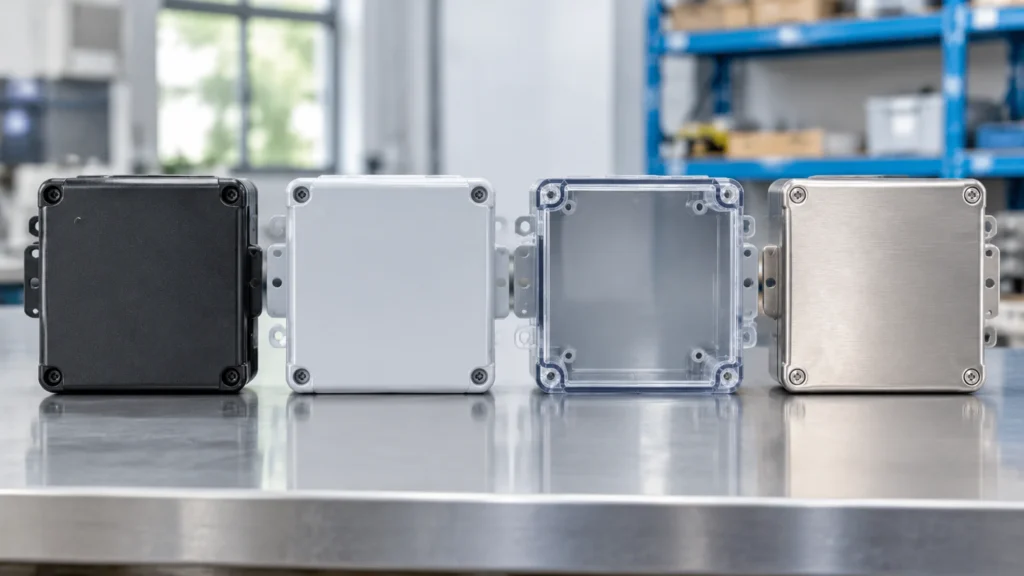
Plastic is cheap, metal is dear” is not a material spec. A field-failure comparison of PA66, ABS, polycarbonate and stainless steel covering moisture uptake, heat deflection, UV and gasket geometry.
Read More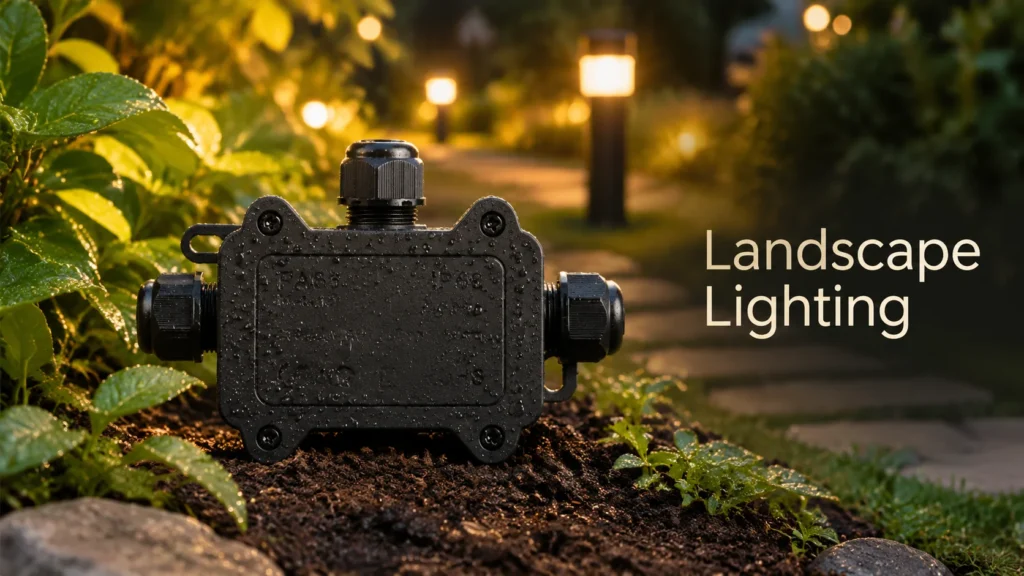
Size a landscape lighting junction box from the circuit up: voltage drop, cable OD, terminal capacity, opening count and burial rules, with real ordering data.
Read More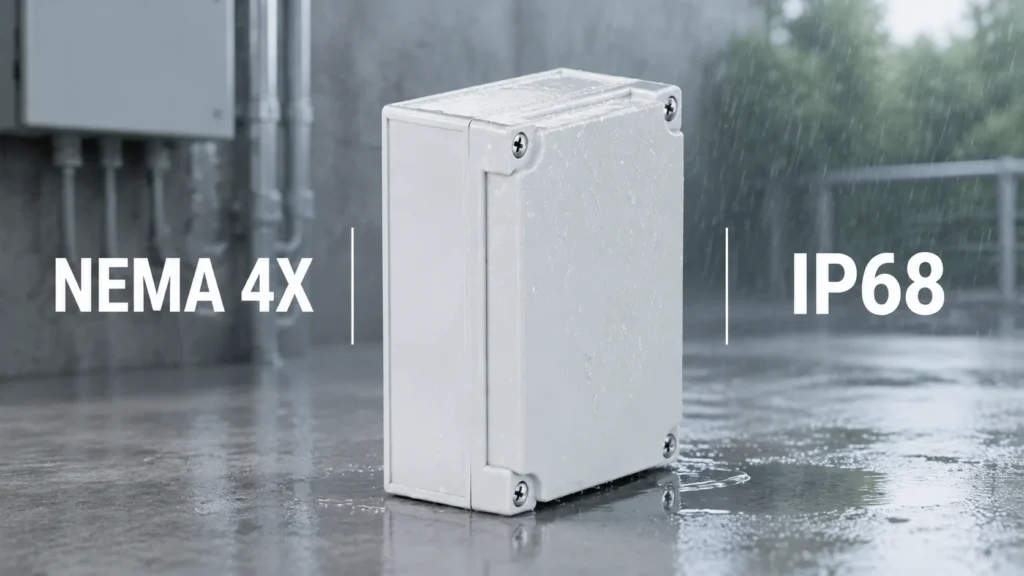
NEMA 4X stops at IP66, while IP68 is a supplier-declared immersion test. See the correct cross-reference, the test methods behind both codes, and the spec line that stops rejections.
Read More