Blog
UL Listed Cable Glands: What UL 514B Means for North America
What “UL Listed” really means for cable glands: UL 514B scope, Listed vs Recognized marks, NPT threads for the US market, and the documents to request before ordering.
Read More

For engineers and technical procurement specialists in Europe and Australia, selecting the right cable gland is critical to ensure both electrical safety and long-term system reliability. The IP68 Nylon Cable Gland offers a specific combination of waterproof performance, electrical insulation, and lightweight material properties that are essential in many industrial applications. Understanding its features, proper selection criteria, and application boundaries is vital to avoid installation failures, project delays, or unnecessary costs. This article provides practical guidance to help professionals make informed decisions.
An IP68 Nylon Cable Gland is a cable entry device designed to secure and seal electrical cables as they enter enclosures or equipment housings. Made from high-quality PA nylon material, it provides strong electrical insulation, corrosion resistance, and a lightweight solution for industrial and outdoor installations.
IP68 denotes the Ingress Protection rating, which ensures:
These characteristics make IP68 Nylon Cable Glands suitable for outdoor installations, wet environments, and industrial automation projects, provided the installation follows manufacturer specifications.
Understanding IP ratings is essential for proper selection:
| Rating | Dust Protection | Water Protection | Typical Applications |
|---|---|---|---|
| IP66 | Dust-tight | Powerful water jets | Indoor or semi-outdoor cabinets |
| IP67 | Dust-tight | Short-term immersion | Equipment cleaning, temporary water exposure |
| IP68 | Dust-tight | Long-term immersion | Outdoor enclosures, underground or marine systems |
Understanding the material properties helps engineers choose the right solution:
| Material | Strength | Corrosion Resistance | Electrical Insulation | Typical Cost | Suitable Environment |
|---|---|---|---|---|---|
| Nylon | Moderate | High | Excellent | Low | Indoor/outdoor dry or wet conditions |
| Brass | High | Medium | Conductive | Medium | Industrial heavy-duty, marine-adjacent |
| Stainless Steel | Very High | Very High | Conductive | High | Harsh chemical, marine, high temperature |
Key Insights:
Selecting the right cable gland requires matching the material and IP rating to the intended application:
| Application | Environment | Recommended Material | Notes |
|---|---|---|---|
| Electrical Control Cabinets | Indoor/outdoor, moderate exposure | Nylon | Lightweight, cost-efficient |
| Outdoor LED Lighting Systems | UV and rain exposure | Nylon | Use UV-stable PA material |
| Solar PV Installations | Outdoor, sometimes harsh | Nylon | Verify temperature range |
| Industrial Automation Equipment | Indoor/outdoor, dry/wet | Nylon | For heavier loads, consider brass |
| Telecommunications Enclosures | Outdoor telecom boxes | Nylon | Ensure correct IP68 installation |
| EV Charging Equipment | Outdoor or semi-outdoor | Nylon | Confirm cable diameter and sealing |
Practical Tip: In environments with high mechanical stress, vibration, or extreme temperatures, engineers should evaluate brass or stainless steel alternatives.
| Factor | Nylon | Brass | Stainless Steel |
|---|---|---|---|
| Mechanical Strength | Moderate | High | Very High |
| Corrosion Resistance | High | Medium | Very High |
| Electrical Insulation | Excellent | Conductive | Conductive |
| Cost | Low | Medium | High |
| Outdoor/UV Stability | Good | Medium | Excellent |
| Ideal Use | Indoor/outdoor moderate stress | Industrial heavy-duty, vibration | Harsh chemical, marine, high temp |
| Mistake | Impact | Corrective Action |
|---|---|---|
| Incorrect cable diameter | Seal failure, water ingress | Verify manufacturer specifications |
| Wrong thread type | Loose fitting, IP compromise | Select correct Metric, PG, or NPT thread |
| Over-tightening or under-tightening | Seal damage or reduced strain relief | Follow torque recommendations |
| Ignoring environmental factors | Premature material degradation | Consider UV, chemical, and temperature resistance |
Avoiding these errors is essential for maintaining IP68 performance in real-world conditions.
An IP68 Nylon Cable Gland is a waterproof cable entry device made from PA nylon, providing electrical insulation and protection against dust and water immersion.
IP68 offers full dust protection and long-term water immersion protection, whereas IP66 resists water jets and IP67 is rated for temporary immersion.
Yes, provided the nylon material is UV-stabilized. Verify manufacturer specifications for long-term outdoor use.
Check the manufacturer’s recommended cable range and select the correct Metric, PG, or NPT thread. Proper installation torque is critical.
CE and RoHS certifications are essential, and IP68 compliance must be documented for waterproof assurance.
Yes, they are suitable for moderate stress applications, offering insulation and corrosion resistance, but heavy machinery may require brass glands.
IP68 Nylon Cable Glands provide a balance of waterproofing, electrical insulation, and cost efficiency for a variety of industrial and outdoor applications. When selecting a gland:
For projects requiring IP68-rated Nylon Cable Glands, reviewing detailed specifications from a specialized nylon cable gland manufacturer can help confirm compatibility before procurement:
JIXIANG Nylon Cable Gland
This ensures safe, reliable, and compliant installations in European and Australian industrial applications.
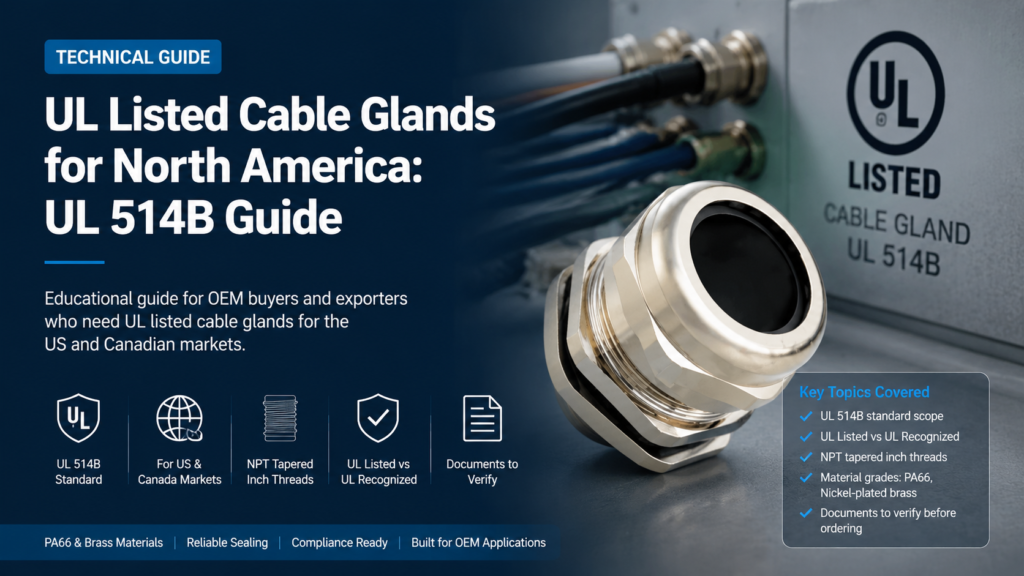
What “UL Listed” really means for cable glands: UL 514B scope, Listed vs Recognized marks, NPT threads for the US market, and the documents to request before ordering.
Read More
The cable gland questions buyers ask most, answered in one place: sizing, thread standards, materials, IP ratings, armoured and EMC glands, torque and ordering terms.
Read More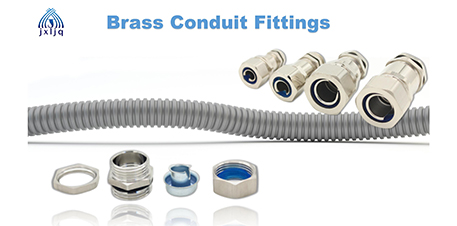
What brass conduit fittings are, why nickel-plated brass is used, the types, key specifications, applications, installation steps and how to choose the right fitting.
Read More