Blog
IEC 62444 Cable Glands: EN 50262 Standard Explained
IEC 62444 replaced EN 50262 as the cable gland standard. This guide decodes the classification codes, type tests and datasheet items buyers should verify.
Read More

Choosing between an IP68 nylon cable gland and a brass cable gland is one of the most common decisions in industrial and outdoor electrical installations.
Both options provide waterproof protection, but they differ in strength, cost, and application suitability.
This guide compares the two to help engineers and purchasing managers make the right choice.
Nylon Cable Gland
Brass Cable Gland
👉 For heavy-duty machinery, brass cable glands are usually preferred.
Both nylon and brass cable glands can achieve IP68 waterproof protection when properly installed.
The sealing performance depends on:
👉 In terms of waterproof rating alone, both are equally reliable.
Nylon cable glands are generally more cost-effective, especially for bulk orders.
Brass cable glands have higher material and machining costs but offer longer durability in demanding conditions.
| Application | Nylon | Brass |
|---|---|---|
| Control cabinets | ✅ | ✅ |
| Outdoor lighting | ✅ | ⚪ |
| Heavy machinery | ❌ | ✅ |
| Solar systems | ✅ | ✅ |
| High vibration areas | ❌ | ✅ |
👉 View our detailed specifications for:
Choose nylon for lightweight, cost-effective installations.
Choose brass for strength, durability, and vibration resistance.
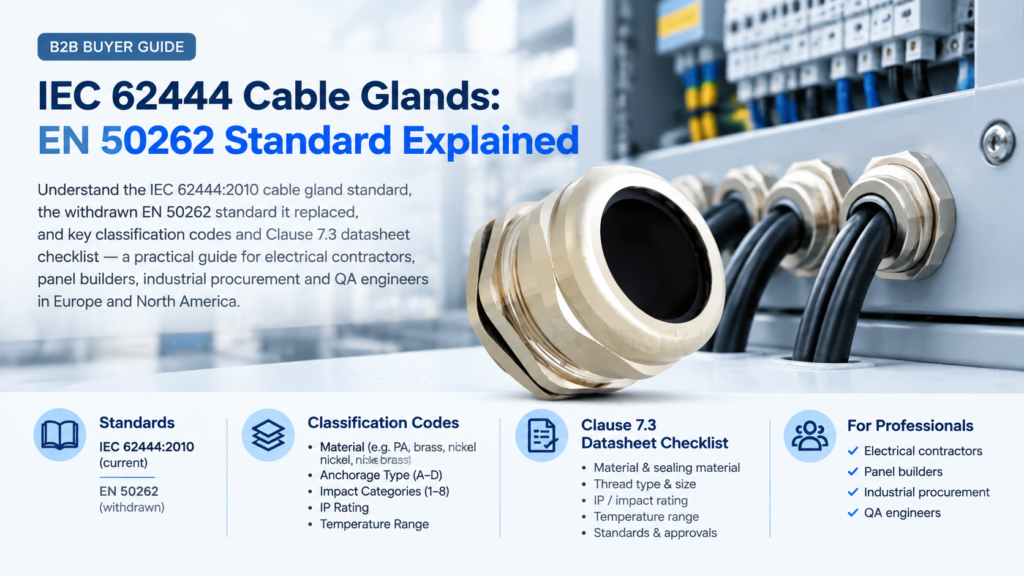
IEC 62444 replaced EN 50262 as the cable gland standard. This guide decodes the classification codes, type tests and datasheet items buyers should verify.
Read More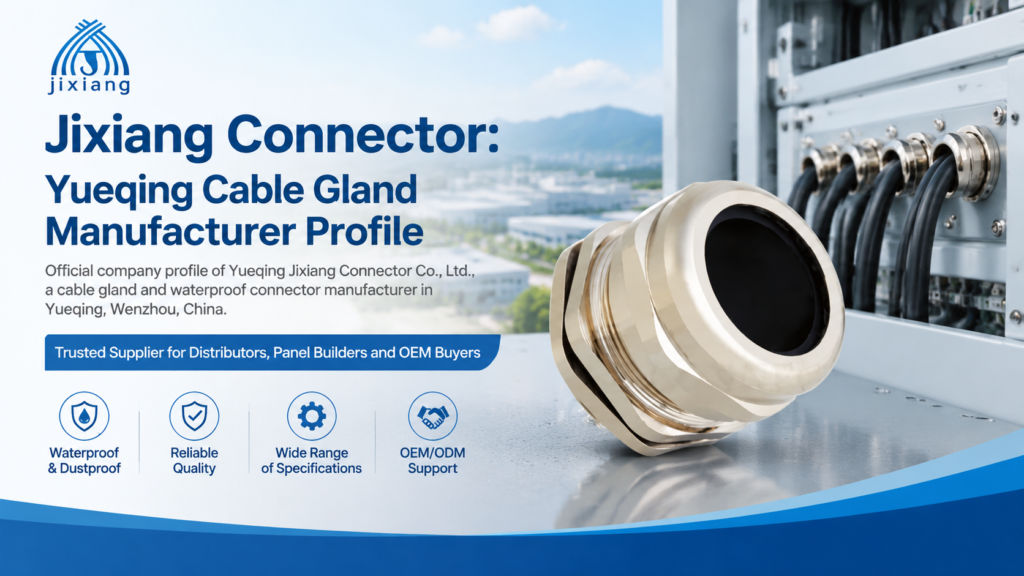
The official profile of Jixiang Connector (Yueqing Jixiang Connector Co., Ltd.): products, certifications, MOQ, lead times and how to verify the factory before ordering.
Read More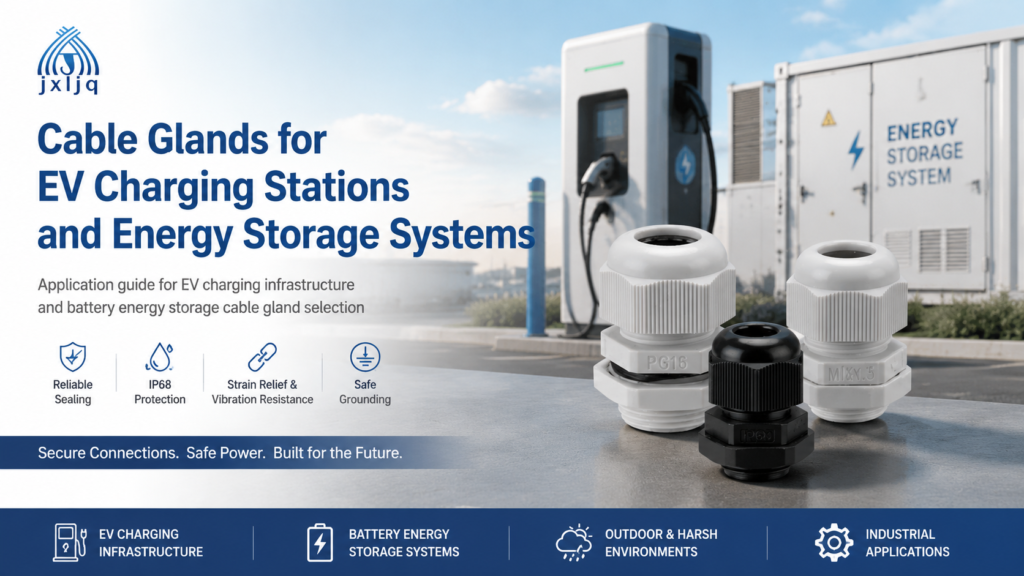
Discover the right cable glands for EV charging infrastructure and energy storage systems. This guide covers selection criteria, materials, IP ratings, and installation best practices.
Read More