Blog
IEC 62444 Cable Glands: EN 50262 Standard Explained
IEC 62444 replaced EN 50262 as the cable gland standard. This guide decodes the classification codes, type tests and datasheet items buyers should verify.
Read More

Even the best IP68 cable gland can fail if installed incorrectly. Installation mistakes are one of the main causes of water ingress and cable damage.
Using a cable outside the recommended clamping range can compromise sealing performance.
Both can damage seals or reduce waterproof effectiveness.
Using the wrong thread (Metric, PG, or NPT) can lead to poor enclosure sealing.
UV exposure, temperature range, and chemicals should be considered when selecting materials.
👉 Refer to our IP68 Nylon Cable Gland installation recommendations or contact our technical team.
Correct installation ensures that IP68 cable glands perform as designed and protect electrical systems effectively.
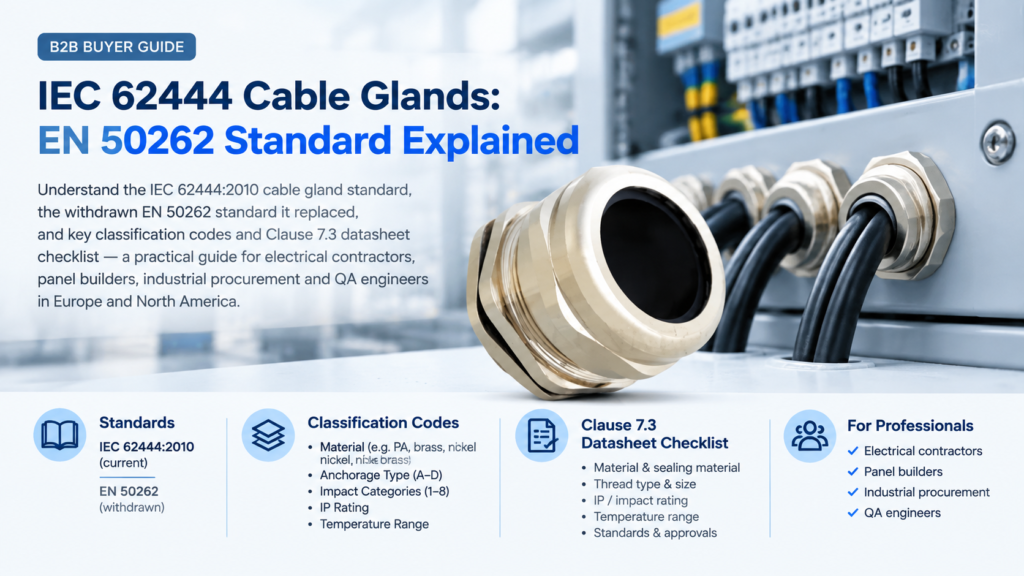
IEC 62444 replaced EN 50262 as the cable gland standard. This guide decodes the classification codes, type tests and datasheet items buyers should verify.
Read More
Compare 304 vs 316 stainless steel cable glands by chemistry, corrosion resistance and cost, and learn when to specify each grade for marine or industrial duty.
Read More
Introduction In electrical and industrial installations, protecting cables from water, dust, and environmental damage is critical. One of the most commonly used solutions is the IP68 nylon cable gland.This article explains what an IP68 nylon cable gland is, how it works, and why it is widely used in industrial and outdoor applications. What Does IP68 […]
Read More