Blog
Cable Gland Accessories: Lock Nuts, Earth Tags & Sealing Washers
Cable gland accessories explained: locknuts, earth tags, sealing washers, reducers, blanking and vent plugs — and when each one is required.
Read More
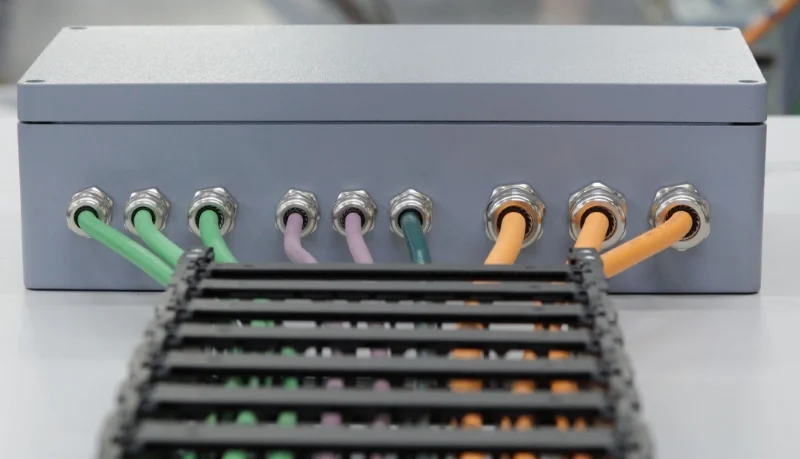
Choosing between a brass cable gland and a stainless steel cable gland is not just a cost decision. It directly affects long-term sealing reliability, corrosion resistance, and system safety in industrial electrical installations.
In real-world projects, many failures do not come from the cable gland design itself, but from wrong material selection under harsh environmental conditions—such as marine corrosion, chemical exposure, or continuous outdoor operation.
This guide explains the key engineering differences between brass and stainless steel cable glands, helping you make a practical selection based on environment, performance requirements, and lifecycle cost.
Brass and stainless steel are the two most commonly used metal materials in industrial cable gland manufacturing, but they are optimized for different operating conditions.
Brass cable glands are typically made from nickel-plated brass, offering good machinability and stable performance in general industrial environments. Stainless steel cable glands, usually 304 or 316 grade, are designed for more demanding corrosion-resistant applications.
At the material level, brass is an alloy of copper and zinc, occasionally with small amounts of other metals, and it is usually nickel-plated to reduce tarnishing and surface corrosion. Stainless steel, by contrast, is an iron-based alloy mixed with chromium and nickel—the chromium content is what gives grades such as 304 and 316 their rust resistance.
| Property | Brass Cable Gland | Stainless Steel Cable Gland |
|---|---|---|
| Strength | Medium | High |
| Corrosion Resistance | Moderate | Very High |
| Cost | Lower | Higher |
| Electrical Conductivity | Yes | Yes |
| Best Use Case | General industrial | Harsh / marine environments |
From an engineering perspective, the key difference is not just material strength, but environmental adaptability over time.
Corrosion resistance is often the deciding factor when selecting between brass and stainless steel cable glands.
In indoor industrial environments, brass performs well because exposure to moisture and salt is limited. However, in marine, offshore, or chemical environments, brass can gradually suffer surface degradation due to salt spray or corrosive gases.
Stainless steel, especially 316 grade, provides significantly higher resistance in such environments and maintains structural stability over long service periods. It also offers higher resistance to petroleum products and many acids than brass, and it can be passivated in citric or nitric acid solutions to further improve surface protection. In aggressive marine conditions such as fast-moving currents, higher grades of stainless steel clearly outperform brass.
| Environment Type | Brass Performance | Stainless Steel Performance |
|---|---|---|
| Indoor Control Panels | Good | Excellent |
| Coastal / Marine | Limited | Excellent |
| Chemical Plants | Moderate | Excellent |
| Outdoor Installations | Acceptable | Excellent |
In practice, stainless steel is preferred when failure is not an option, especially in offshore energy systems or critical infrastructure.
Mechanical performance becomes important in applications involving vibration, heavy equipment, or structural stress.
Brass cable glands offer sufficient mechanical strength for most standard industrial panels. However, in environments with continuous vibration or mechanical impact, stainless steel provides higher structural integrity and longer fatigue resistance.
Key differences include:
From a lifecycle perspective, stainless steel reduces maintenance frequency in demanding installations.
Both brass and stainless steel cable glands can operate across wide temperature ranges, but their long-term behavior differs.
Stainless steel maintains more stable mechanical properties under extreme temperature cycling, making it more suitable for outdoor systems exposed to seasonal variation.
Brass performs reliably in standard industrial temperature conditions but may show slightly higher thermal expansion under continuous cycling stress.
In outdoor enclosures, especially those exposed to sun, rain, and seasonal temperature swings, stainless steel provides more consistent long-term sealing stability.
Both brass and stainless steel are conductive materials, meaning grounding and electrical continuity must be considered at system design level.
Brass is often preferred in general industrial installations due to its easier machining and compatibility with standard enclosure systems. Stainless steel, while harder, is commonly used where environmental durability is more important than installation convenience.
Important engineering considerations include:
Neither material is inherently “electrically safer”—performance depends on system-level design.
Cost is often the first factor in procurement, but it should be evaluated alongside lifecycle performance.
Brass cable glands typically offer better cost efficiency for general industrial applications where environmental stress is controlled. Stainless steel cable glands require higher initial investment but provide better long-term durability in harsh environments.
Part of the price gap comes from manufacturing difficulty. Stainless steel is harder than brass and has a higher melting point, which makes it more difficult to cast and machine. That is why stainless steel cable glands carry a higher unit price even before considering the raw material itself.
| Factor | Brass | Stainless Steel |
|---|---|---|
| Initial Cost | Lower | Higher |
| Maintenance Cost | Moderate | Low |
| Service Life in Harsh Environments | Limited | Long |
| Total Lifecycle Cost | Efficient in stable environments | Efficient in harsh environments |
In engineering terms, stainless steel is a lifecycle investment, while brass is a cost-optimized industrial solution.
The correct selection depends on evaluating environmental and mechanical conditions rather than price alone.
A simple engineering decision logic:
For detailed specifications and product selection based on application requirements, you can review material options here:
Brass Cable Gland Category
Stainless Steel Cable Gland Category
Many cable gland failures come from selection mistakes rather than product defects.
Common issues include:
| Mistake | Consequence | Correct Approach |
|---|---|---|
| Brass in marine use | Rapid corrosion | Use stainless steel |
| Over-spec stainless steel | Unnecessary cost | Match to environment |
| Ignoring vibration | Loosening/seal failure | Evaluate mechanical stress |
Correct selection always starts from application environment, not material preference.
One of the most practical differences between brass and stainless steel cable glands is hygiene. Stainless steel is 100% lead-free, which makes it the preferred choice where contact with food, beverages, or clean production lines is a concern.
Stainless steel withstands harsh wash-downs and resists microbes and bacteria, helping keep production lines running in a normal, uncontaminated state. This is why stainless steel cable glands are used more widely than brass in the beverage industry, food manufacturing, and pharmaceutical facilities.
If your application requires frequent sanitization or strict hygiene compliance, stainless steel cable glands are the safer, more audit-friendly option.
Stainless steel is better in harsh environments such as marine, offshore, and chemical applications. However, brass is sufficient for general indoor industrial use where corrosion risk is lower.
Brass is suitable when cost efficiency is important and the environment is controlled, such as industrial control panels or indoor electrical systems.
Stainless steel performs better in long-term outdoor exposure, especially in coastal or high-humidity environments.
No material is completely corrosion-proof, but stainless steel significantly reduces corrosion risk compared to brass in aggressive environments.
It is generally not recommended. Marine environments require higher corrosion resistance, making stainless steel a safer choice.
Evaluate environmental conditions first, then consider mechanical stress and lifecycle cost. Material selection should always follow application requirements.
Yes. Stainless steel is 100% lead-free and resists microbes and bacteria, which is why stainless steel cable glands are widely used in food, beverage, and pharmaceutical production environments.
Choosing between brass and stainless steel cable glands should always be based on environmental conditions, mechanical stress, and lifecycle expectations, not just initial cost.
Brass remains a strong option for general industrial applications where conditions are stable and cost efficiency matters. Stainless steel is the preferred solution for harsh environments where long-term reliability, corrosion resistance, and hygiene compliance are critical.
For engineers and procurement teams, the most effective approach is to match material selection with real application conditions rather than relying on generic assumptions.

Cable gland accessories explained: locknuts, earth tags, sealing washers, reducers, blanking and vent plugs — and when each one is required.
Read More
A practical guide to cable gland torque specifications and sealing points, covering nylon, brass, and stainless steel torque values by thread size.
Read More
What brass conduit fittings are, why nickel-plated brass is used, the types, key specifications, applications, installation steps and how to choose the right fitting.
Read More