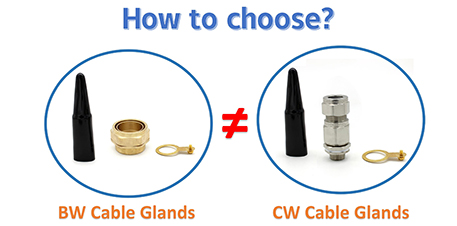
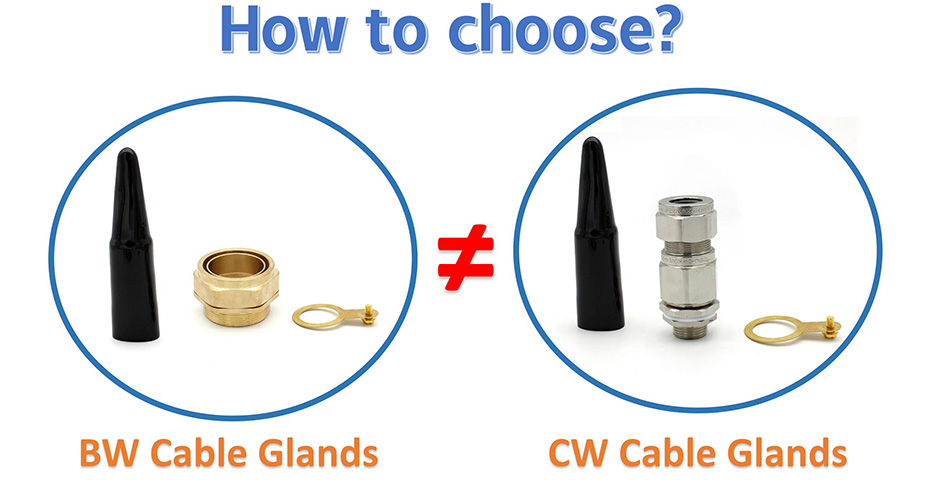
If you have ever specified or installed steel wire armoured (SWA) cable, you have almost certainly come across the letters BW and CW on cable gland datasheets. The two types look similar, share the same size designations, and are both made to BS6121, yet they are built for completely different environments. Choose the wrong one and you can end up with a gland that passes an inspection today but lets water creep into the cable over the next few months. This guide explains the real difference between BW and CW cable glands, helps you match each type to the right application, and answers the questions buyers ask most often.
What Is a BW Cable Gland?
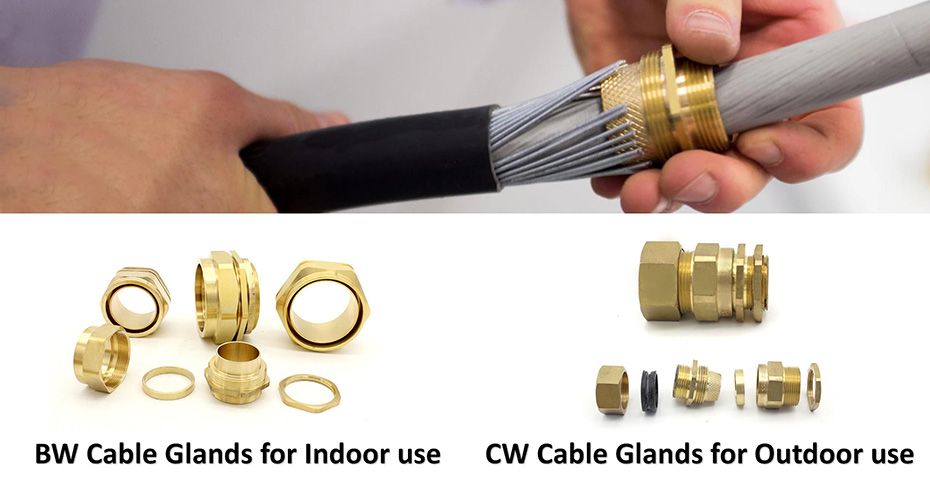
A BW cable gland is a two-part armoured cable gland made to BS6121 for terminating SWA cables in dry indoor locations. The letters come from the BS 6121 type designation: B means armour clamp only, and W means it is intended for steel wire armoured (SWA) or aluminium wire armoured (AWA) cable.
Inside the gland, a tapered cone and ring grip the exposed armour wires. That clamping action does two jobs: it holds the cable securely so it cannot be pulled out of the enclosure, and it creates the electrical path that bonds the armour to earth through the gland body. What the BW design does not do is seal against the outer sheath of the cable. Because the cable sheath passes through without a compression seal, water and dust have an open route along the armour wires.
That is why BW glands are usually rated only to about IP54 — protected against dust and splashing water, but not weatherproof. In practice they belong inside switchgear cabinets, control panels, distribution boards, and other dry, sheltered locations where the termination is protected by the enclosure itself.
What Is a CW Cable Gland?
A CW cable gland is a four-part armoured cable gland, also manufactured to BS6121, that adds one crucial feature the BW type lacks: a compression seal on the outer sheath of the cable. In the BS 6121 designation, C means armour clamp plus a seal on the outer sheath, and W again refers to wire armoured cable.
The additional sealing ring grips the cable sheath and closes the gap that water would otherwise use to travel along the armour. As a result, CW glands achieve IP66 and IP67 protection — dust-tight and resistant to powerful water jets, with IP67 adding protection against temporary immersion. Typical CW glands also operate across a wide temperature range, roughly -20 °C to +80 °C, which makes them suitable for demanding industrial environments.
Because of the sheath seal, CW glands are approved for indoor and outdoor use. They are the standard choice for plant rooms, pump stations, outdoor distribution equipment, motor terminations, and any location where the gland may be exposed to rain, wash-down, condensation, or dust.
Key Differences Between BW and CW Cable Glands
The easiest way to compare the two types is side by side. Both are brass glands for SWA cable that provide mechanical retention and electrical continuity through the armour, but they differ in construction, sealing, protection rating, and the environments they are designed for.
Feature
BW Cable Gland
CW Cable Gland
Construction
Two-part (armour clamp only)
Four-part (armour clamp + outer sheath seal)
Standard
BS6121
BS6121
Sheath seal
No seal on outer sheath
Compression seal on outer sheath
Typical IP rating
IP54 (dust and splash)
IP66 / IP67 (dust-tight, water jets, immersion)
Applications
Dry indoor use
Indoor and outdoor use
Cable types
SWA / AWA armoured cable
SWA / AWA armoured cable
Thread options
Metric, NPT, BSP, PG
Metric, NPT, BSP, PG
Relative cost
Lower
Higher
In short, the difference comes down to one question: does the installation need a weatherproof seal on the cable sheath? If the answer is yes, choose a CW gland. If the termination lives in a clean, dry enclosure, a BW gland will do the job at a lower cost.
BW or CW: How to Choose the Right Cable Gland
Matching the gland type to the environment is more important than matching it to the cable size. Both types terminate the same SWA cables, so sizing is driven by the cable’s outer diameter and the enclosure thread — not by whether you pick BW or CW.
Choose a BW cable gland when:
The termination is inside a dry switchgear cabinet, control panel, or distribution board.
The enclosure provides its own protection against water and dust.
The installation is sheltered from rain, condensation, and wash-down.
Budget is a priority and the environment is genuinely dry.
Choose a CW cable gland when:
The gland will be exposed to rain, humidity, or condensation.
The equipment may be cleaned with water jets or high-pressure wash-down.
The cable run goes outdoors, underground, or through a plant room with wet floors.
You want one gland type that can be used across the whole site, indoor and outdoor.
When in doubt, a CW gland is the safer default. It works indoors and outdoors, and the small price difference is rarely worth the risk of a failed termination.
Common Mistakes to Avoid
The most frequent error in the field is using a BW gland outdoors or in any wet environment. Because a BW gland does not seal the outer sheath, water can track along the armour wires, past the bedding, and into the cable run. The failure is often slow: a few months later the circuit starts tripping on the RCD, or corrosion appears when the gland is finally unscrewed. The cable then has to be recovered and the whole run re-terminated, which costs far more than the few cents saved on the gland.
A second mistake is assuming both types can be used interchangeably on the same cable. They can terminate the same cable, but they cannot both handle the same environment. If the datasheet for the location requires IP66 or better, only a CW (or higher-rated) gland will comply.
A third issue is missing accessories. An earth tag is required when the gland is fitted to a non-metallic enclosure, because the armour needs a solid path to earth even though the gland body has no metal enclosure to touch. If you are not sure how to terminate the armour correctly, our step-by-step guide on how to install brass cable glands walks through the full process.
Accessories That Work With Both Types
BW and CW glands share the same accessory family, which makes stocking and site work simpler:
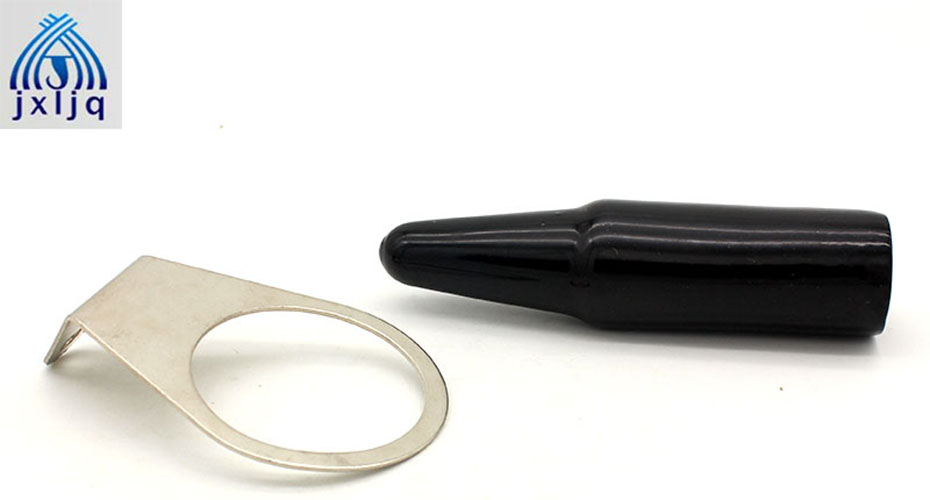
Earth tag (banjo): slides over the gland thread and provides the earth bonding point when the enclosure is non-metallic.
PVC shroud: a protective sleeve that guards the gland against corrosion and improves the IP rating of the assembly.
Locknut: secures the gland from inside the enclosure.
Reducer or adaptor: steps down between thread sizes when the gland thread does not match the enclosure entry.
These accessories are available in the same sizes as the glands themselves, so a CW20 gland takes a CW20 shroud and earth tag. For outdoor and corrosive environments, a shroud is strongly recommended to protect the brass and the seal over the long term. If you are working on applications that demand even higher ingress protection, you may also want to review our guide to IP68 nylon cable glands for a comparison of the options available.
BW vs CW Cable Glands: FAQ
Can a CW cable gland be used indoors?
Yes. A CW gland is fully suitable for indoor use and is often preferred because it provides a better seal and future-proofs the installation if conditions change. The only trade-off is a slightly higher cost than a BW gland.
Can a BW cable gland be used outdoors?
No. A BW gland has no seal on the outer sheath and is typically rated only IP54. Used outdoors, water can travel along the armour wires and enter the cable run, leading to insulation faults, RCD tripping, and corrosion. Outdoor terminations require a CW gland or a gland with an even higher IP rating.
What does BW and CW stand for in cable glands?
They are BS 6121 type designations. B means armour clamp only, C means armour clamp plus a seal on the outer sheath, and W means the gland is for wire armoured cable (SWA or AWA).
Are BW and CW cable glands the same size?
They share the same size designations, such as 20S, 20, 25, 32, 40, 50, 63, and 75, which refer to the entry thread size. Because both types are selected by the cable’s outer diameter and the enclosure thread, the same sizing chart generally applies to both.
Do BW and CW glands provide electrical continuity?
Yes. Both types provide mechanical retention and electrical continuity through the armour wires via the internal cone and clamping ring. The difference between them is the outer sheath seal and the resulting IP rating, not the earthing function.
What is the IP rating of a CW cable gland?
CW glands typically achieve IP66 or IP67. IP66 means dust-tight and protected against powerful water jets; IP67 adds protection against temporary immersion. BW glands, by comparison, are usually rated only to IP54.
Conclusion
The difference between BW and CW cable glands is simple once you know what to look for. BW glands clamp the armour and provide earthing continuity for dry indoor installations, while CW glands add a compression seal on the outer sheath and deliver IP66/IP67 protection for indoor and outdoor use. Selecting the correct type for the environment is what keeps an SWA installation safe, compliant, and reliable for years.
If you are planning a project and need help choosing between our BW cable gland and CW cable gland ranges — or need custom sizes, threads, and packaging — contact our team for a quick quotation. We also provide free samples so you can verify the fit before you commit.
Introduction Even the best IP68 cable gland can fail if installed incorrectly. Installation mistakes are one of the main causes of water ingress and cable damage. Mistake 1: Incorrect Cable Diameter Selection Using a cable outside the recommended clamping range can compromise sealing performance. Mistake 2: Over-Tightening or Under-Tightening Both can damage seals or reduce […]
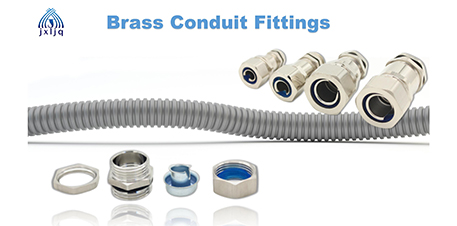
What brass conduit fittings are, why nickel-plated brass is used, the types, key specifications, applications, installation steps and how to choose the right fitting.
BW, CW and A2 are positions in the BS 6121 cable gland type code, not rival models. This guide decodes the letter system and shows how to specify the right armored gland type.
We use cookies to enhance your browsing experience, serve personalised ads or content, and analyse our traffic. By clicking "Accept All", you consent to our use of cookies.