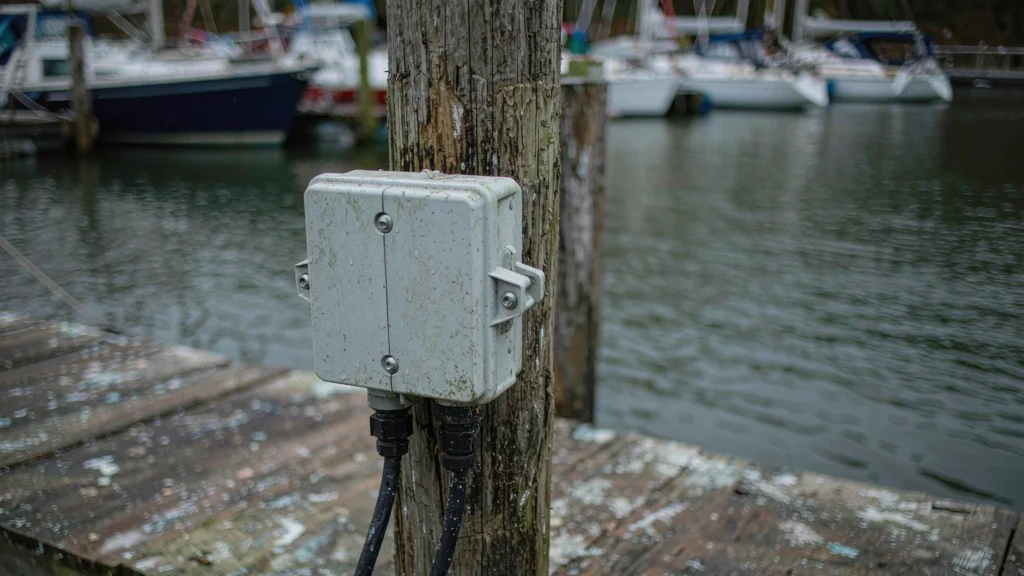
A marine junction box has to survive a chemical attack, not just a wet day. Salt spray leaves chloride on every surface, and chloride does two things rain never does: it holds a conductive film across the plastic between terminals, and it strips the oxide layer off brass and steel until the metal underneath starts to pit. That is why a waterproof junction box that behaves perfectly on a loading dock can be scrap on a jetty eighteen months later.
This guide covers what fails on coastal and dock wiring, how to zone a site around the splash line, which housing and gland belong in each zone, and why the cable entry — not the box — decides whether the assembly stays sealed.
What Salt Water Does That Fresh Water Does Not
Three mechanisms separate a coastal failure from an inland one, and each calls for a different countermeasure.
Chloride film. Seawater carries roughly 19 g of chloride per litre. When spray dries on a plastic interior, it leaves a hygroscopic salt residue that pulls moisture out of the air every night. The surface between two terminals becomes a weak conductor, and the failure shows up as tracking or a low-resistance reading rather than as water in the box.
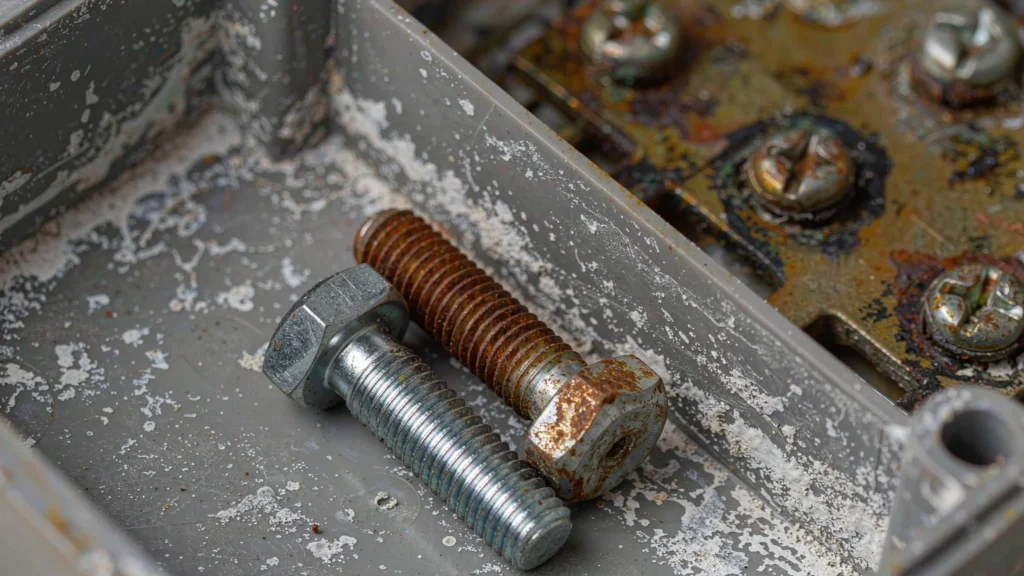
Galvanic attack. Two dissimilar metals plus an electrolyte is a battery. A chrome-plated brass gland, a stainless lid screw and a salt-wet surface form exactly that cell, and the least noble metal corrodes first.
Salt crystallisation. Salt grows as it crystallises in a joint, pushing a repeatedly wetted and dried gasket apart from inside its own groove — a failure mode freshwater sites do not produce.
Above and Below the Splash Line
No single rating covers a whole dock. The useful unit of specification is the zone, not the site, because a pedestal at chest height and a piling box at high-water mark see completely different loads.
Zone
What the box actually meets
Sensible rating
Housing
Cabin, locker, under-deck
Condensation, occasional drip
IP65
ABS or PA66
Deck or wall, above the rail
Driving spray, UV, knock damage
IP67 + IK08
UV-stabilised ABS, PA66 or PC
Dock pedestal, above high water
Wave splash, sun, fender strikes
IP67 + IK08
PC preferred, 316 where metal is required
Splash zone at high-water mark
Repeated short immersion
IP68 with a stated depth and duration
316L, GRP, or a sealed metal enclosure
Continuously submerged
Constant hydrostatic head
IP68 to the actual depth plus margin
316L, super-duplex, GRP — not thermoplastic
The practical rule: a plastic box belongs anywhere the site gets wet and then drains. The moment water can stand against the lid for hours, the material question changes, not just the rating.
Material Choice at the Coast
Material
Strength at the coast
Failure mode to watch
ABS
Cheap, moulds cleanly, good above the splash line with a UV-stabilised grade
Stress cracking at screw bosses; softens in sustained heat
PA66, flame retardant
Better heat and chemical resistance, V-0 grades available
Moisture uptake lowers impact strength; still not an immersion material
Polycarbonate
Best impact and UV performance of the three, transparent lids possible
Stress cracking with solvent cleaners and some sealants
316 stainless
The only realistic metal for chloride service; weldable, repairable
Pitting and crevice corrosion in stagnant seawater; needs passivation after welding
GRP / polyester
Handles continuous immersion and heavy impact
Bulk, weight, and a gasket face that is harder to keep flat
Why Plastic Wins Above the Splash Line
A thermoplastic box removes the galvanic problem at the entry entirely: a brass gland threaded into a plastic wall has no metal-to-metal couple with the housing, so there is nothing to sacrifice. What you accept in exchange is UV exposure and lower impact resistance, which is why the impact rating matters as much as the IP number on an exposed deck. The material comparison in detail is covered in our junction box material guide.
Where 316 Is Not Optional
Stainless is not a coating; it is a passive oxide layer that needs oxygen to rebuild. In a splash zone the layer rebuilds every time the box dries. Under permanent immersion in stagnant seawater it cannot, and chloride pits it — so above the waterline 316 earns its price on fasteners, hinges and gland bodies rather than on the whole housing.
The Gland Decides the Rating
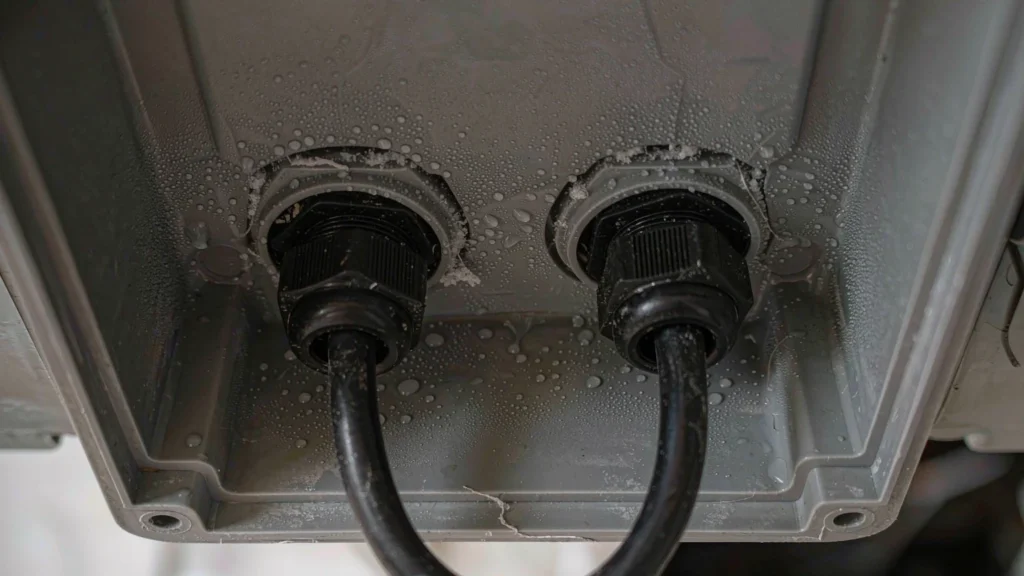
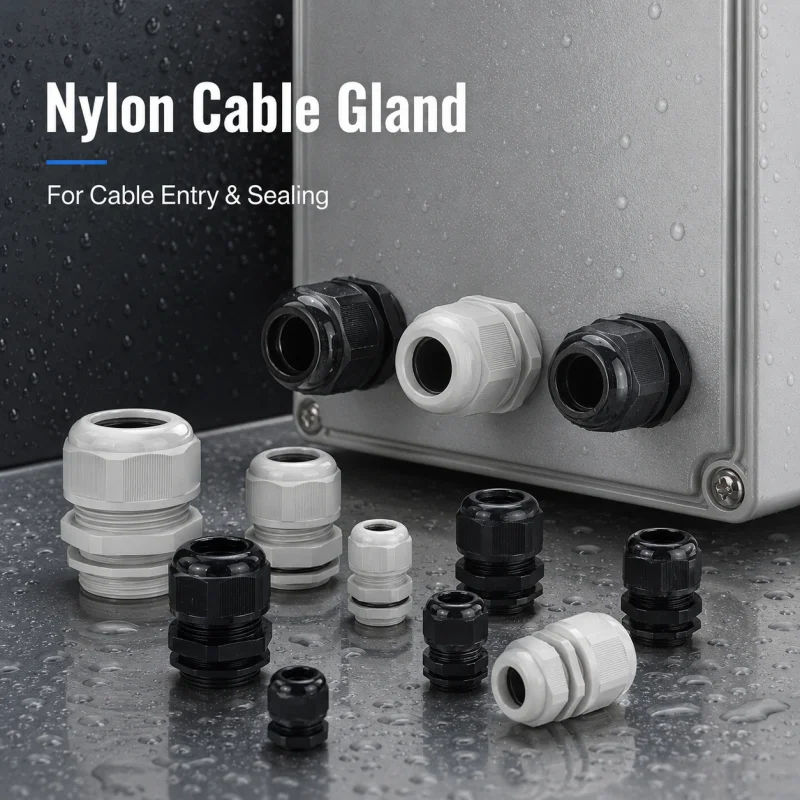
The box is a moulded part with one seal line; the entries are where field assembly introduces variation. On marine work, the gland carries three jobs: seal against the cable jacket, grip the cable so wave movement does not lever the terminal, and bond the armour or screen if the cable has one.
The TJ marine cable gland is a chrome-plated brass body with an NBR clamping ring, rated -40 °C to +110 °C with a 120 °C static maximum, and certified IP68, ISO 9001 and TUV. Its data sheet is also honest about a detail most listings hide: within the bayonet range the rubber gasket reaches IP54, and IP68 applies when the gland is fully tightened onto a cable inside the clamping range. That is not a weakness — it is what the bayonet construction does, and it tells you the gland must be set, not merely screwed on. Where the vessel or yard specifies JIS practice, the JIS marine cable gland covers unarmoured cable from JIS-10 to JIS-75 on a PF entry thread.
Four rules protect the assembly: every entry faces down, every cable leaves a drip loop below the gland, every gland takes exactly one cable, and every unused entry is closed with a screw plug rather than tape. Background on gland types and thread practice sits in our guide to marine cable glands.
Galvanic Couples You Cannot See
The dangerous joint on a coastal box is rarely the one you specified; it is the fastener someone added on site. A zinc-plated lid screw in a 316 housing becomes the anode and disappears in a season. A brass gland against an aluminium bracket eats the bracket. A stainless screw over-torqued into a plastic boss cracks it — an installation failure dressed up as a material one. Specify the fastener with the enclosure and supply the screws together.
Conductor and Terminal Practice
Once chloride is inside the box, an untinned stranded conductor wicks moisture along the strands and corrodes from the cut end. Tinned copper, a terminal with a plated contact surface, and a torque set to the terminal maker’s figure cover most of the risk. Never rely on silicone grease or tape to fix a joint that is already loose.
One counter-intuitive point: a perfectly sealed box on a coast still fills with water, because day-night temperature swings pump moist air past the gasket and it condenses on the cold lid. That mechanism and its remedies are set out in condensation in sealed junction boxes; on marine sites a breathable vent plug is often the difference between a dry terminal and a green one.
Inspection Cycle by Zone
Zone
Interval
What to check
Cabin and locker
Annual
Gasket set, condensation, terminal torque
Deck and pedestal
6 months
Gland tightness, drip loop, UV chalking, lid screw condition
Splash zone
Quarterly
Salt crust inside, gasket compression set, pitting on fasteners
Submerged
Per yard schedule
Seal integrity, cable jacket swelling, insulation resistance
Where the Standard Range Fits
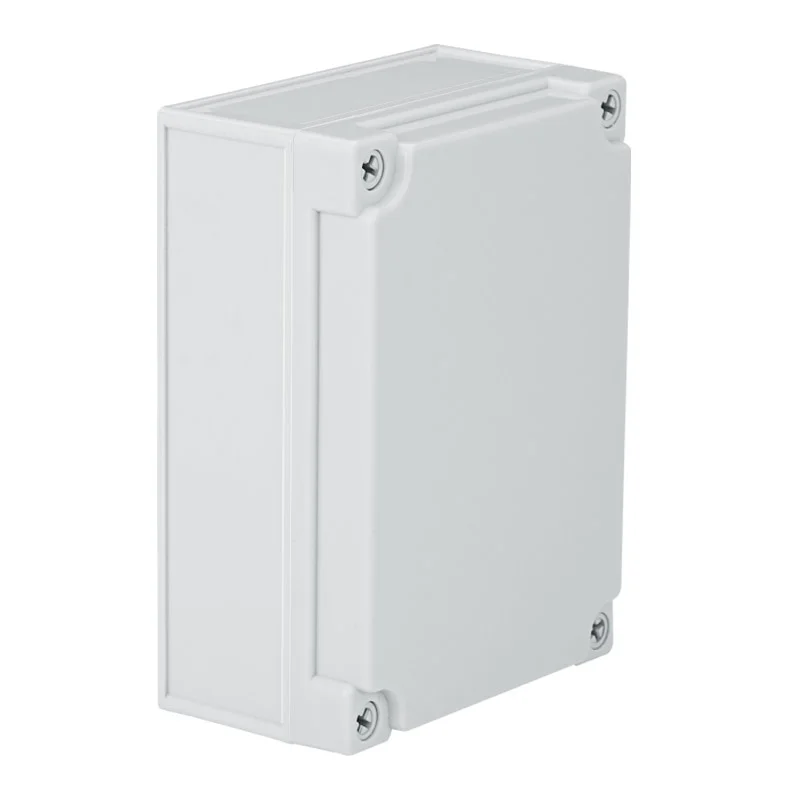
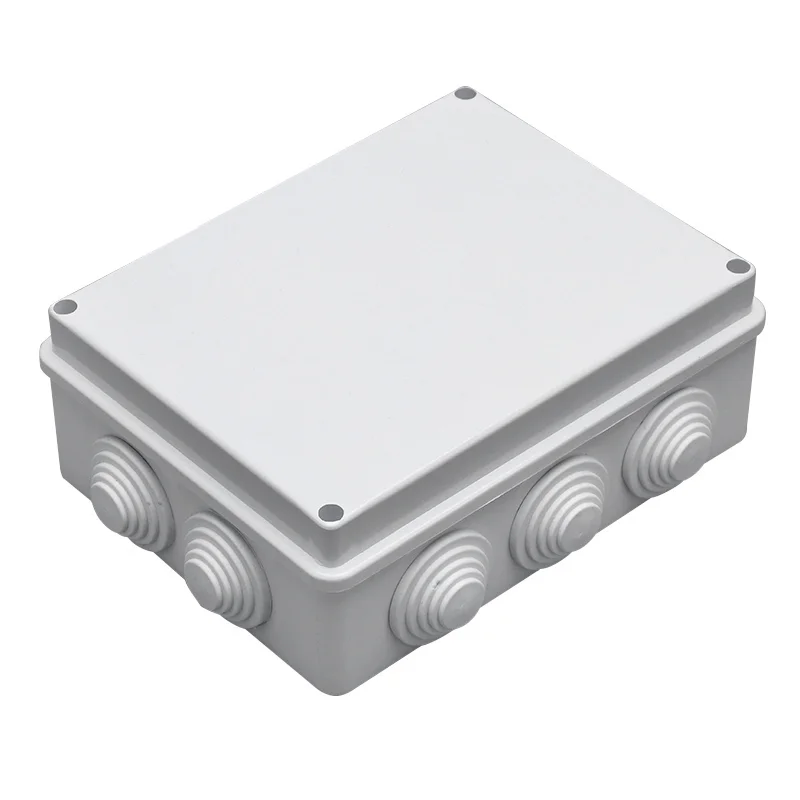
The JX-AG high-end waterproof junction box is the part most dock and deck jobs actually need: IP67 to 1 m immersion, IK08 impact, RoHS compliant, in fifteen sizes from 95×65×55 mm to 280×190×180 mm. It suits pedestals, deck walls, pontoon lighting and shore-power control above the splash line, where the box gets soaked and drains. It is not the part for permanent immersion, and no datasheet should be read to promise that.
Conclusion
Coastal wiring fails on chloride and on field assembly, in that order. Zone the site, pick the material for the zone rather than for the whole project, and treat the gland and the fastener as part of the enclosure specification. A marine junction box that is right for the pedestal and honest about its limits will outlast a more expensive one installed without those decisions.
FAQ
Can a plastic junction box be used at the coast?
Yes, above the splash line. UV-stabilised ABS, PA66 or polycarbonate handles spray, sun and salt residue well and removes the galvanic couple at the cable entry. It should not be used where water stands against the lid for extended periods.
Is IP67 enough for a dock?
For a pedestal or wall box above high water, IP67 plus IK08 covers spray, washdown and the short immersion the rating describes. It does not cover repeated or prolonged immersion, which needs IP68 with a declared depth and duration.
Why does a marine cable gland state two IP ratings?
Because the bayonet construction seals in two stages. Within the bayonet range the gasket gives IP54; fully tightened onto a cable inside the clamping range it gives IP68. The lower figure is the condition you get if the gland is only hand-set.
Do I need stainless screws with a plastic box?
You need screws that will not become the anode. Stainless is the safe choice in chloride service, but check the boss depth and use the maker’s torque, because an over-driven screw cracks a thermoplastic boss and creates a path the gasket cannot close.
What causes a green film on terminals inside a sealed box?
Chloride plus condensation. Moist air enters on the daily temperature cycle and condenses on the lid; salt residue already inside the box dissolves into it. Venting the enclosure and tinning the conductors addresses the cause rather than the symptom.
Discover the right cable glands for EV charging infrastructure and energy storage systems. This guide covers selection criteria, materials, IP ratings, and installation best practices.
Learn what an EMC cable gland is and how it keeps a shielded cable’s braid grounded to the enclosure to block electromagnetic interference in automation, telecom, and signal systems.
1. IP68 Nylon Cable Gland Overview: What It Is and Why It Matters An IP68 Nylon Cable Gland is a cable entry sealing component used to secure and protect electrical cables as they pass into enclosures, junction boxes, or industrial equipment. Its primary function is not only to fix the cable in place but also […]
We use cookies to enhance your browsing experience, serve personalised ads or content, and analyse our traffic. By clicking "Accept All", you consent to our use of cookies.