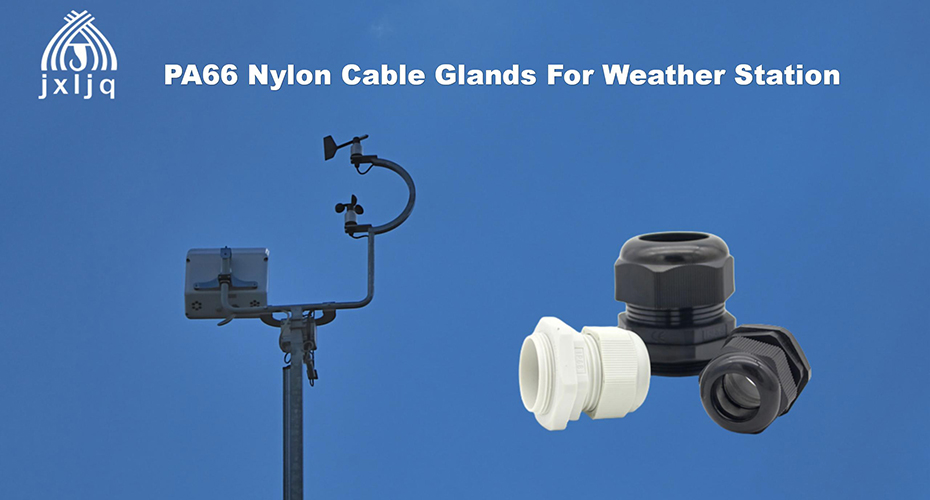
A weather station is a collection of instruments that measure atmospheric conditions — wind speed and direction, temperature, humidity, rainfall, air pressure, and solar radiation — to study the weather and climate of a specific location. The equipment is used in agriculture, gardening, industry, and research, and nearly all of it sits outdoors on poles, masts, rooftops, or open fields. That means every cable entering a sensor, data logger, or control box must be sealed against years of rain, snow, dust, UV exposure, and temperature extremes. PA66 nylon cable glands are the most widely specified solution for this job, and this guide explains exactly where and how they are used in a weather station.
What a Weather Station Needs from Its Cable Glands
Weather station hardware is exposed to conditions that few other electronics face. The enclosure and its cable entries must survive:
Rain, snow, and flooding. Entries need IP66, IP67, or IP68 sealing so water cannot reach the electronics, even during heavy storms or partial immersion.
UV radiation. Components sit in direct sunlight for years, so the gland material must not become brittle or crack.
Extreme temperatures. Stations operate from arctic cold to desert heat, typically -40 °C to +60 °C or wider, so seals must stay flexible and effective across the range.
Coastal salt spray. Stations near the sea are exposed to corrosive salt air, which rules out materials that rust.
Wind and vibration. Sensor cables must be held firmly so gusts and tower vibration cannot pull conductors out of their terminals.
Low maintenance. Remote stations are expensive to visit, so every component must work for years without service.
PA66 nylon meets all of these requirements. It is mechanically strong, stable under heat, resistant to chemicals and corrosion, electrically insulating, and light enough to keep enclosure weight down.
Where Cable Glands Are Used in a Weather Station
A modern automatic weather station uses glands at several distinct points, each with its own cable type and sealing requirement.
Sensor cable entries
Wind speed and direction sensors, rain gauges, temperature and humidity probes, barometric sensors, and pyranometers all run signal cables back to the data logger. These thin, shielded sensor cables need a gland that seals around the jacket without crushing it and holds the cable against wind and vibration. A standard nylon cable gland with the correct clamping range does this reliably, and because the gland body is insulating, there is no risk of creating an unwanted electrical path with the metal mast.
Data logger and control box entries
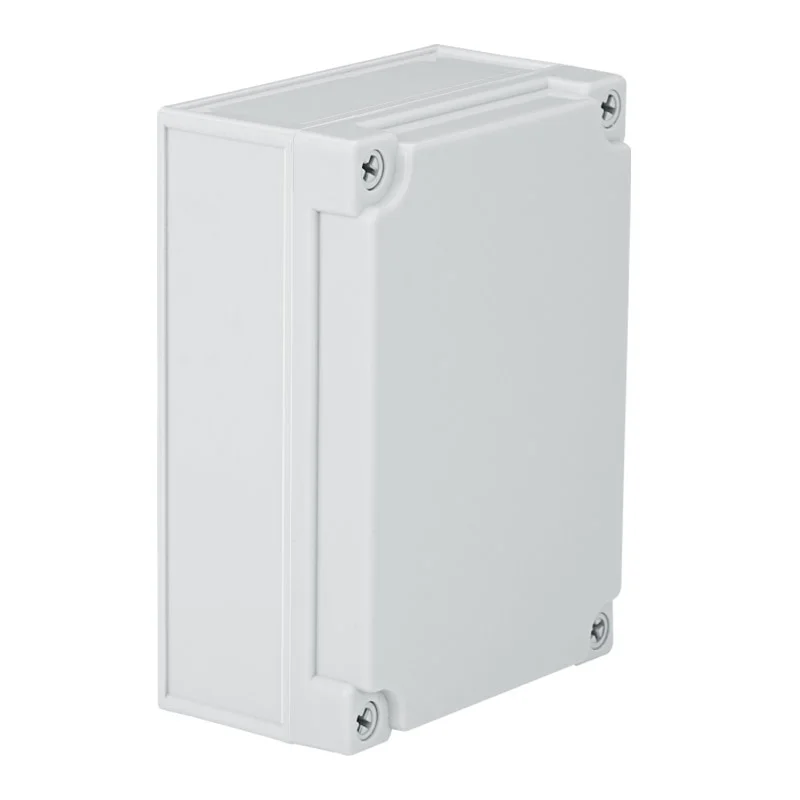
The data logger, communications module, and battery controller live inside a weatherproof control box, often with a thick wall. Here a longer thread nylon cable gland ensures the gland reaches fully through the wall and seats the locknut securely, which is important for thick-walled enclosures and cabinets with internal insulation or liners.
Compact and angled entries
Where several sensors terminate in a small junction housing, or where the cable approaches the box at an angle, a 90 degree elbow nylon cable gland changes direction at the entry point. This avoids forcing an unsupported bend in the cable close to the fitting, which can strain the jacket and eventually crack the seal.
Multiple cables through one opening
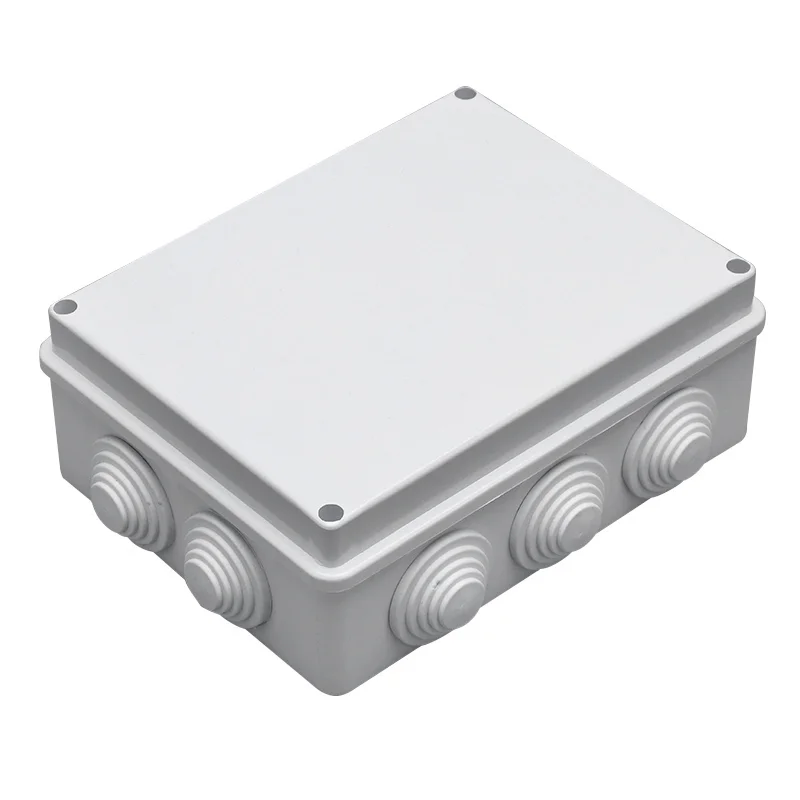
Data logger boxes often carry many signal cables into a single enclosure. Rather than drilling a hole per cable, a multi-hole gland insert lets several cables pass through one opening while keeping the IP rating intact. Our guide to multi-hole cable glands explains how to select and install them for this exact situation.
Why PA66 Nylon Is the Right Material
Nylon PA66 gets its name from its two monomers, hexamethylenediamine and adipic acid, each containing six carbon atoms. As an engineering plastic, PA66 offers a combination of properties that suits weather station hardware:
Mechanical strength and rigidity. The gland resists impact, torque, and pull-out forces without cracking.
Heat stability. PA66 keeps its mechanical properties over a wide temperature range, with working temperatures roughly from -40 °C to +100 °C in static use.
Chemical resistance. It withstands fuels, solvents, salts, and the atmospheric pollutants found at industrial monitoring sites.
Corrosion-free. Unlike metal, nylon never rusts, which is essential for coastal weather stations exposed to salt spray.
Electrical insulation. The insulating body adds safety and prevents galvanic corrosion between the gland and the enclosure.
Light weight. Less weight on masts and poles means simpler mounting and lower transport cost.
Choosing the Right Gland for Each Entry
Weather station installers typically work through a short checklist when specifying glands:
Match the cable diameter. Measure the actual outer diameter of each sensor cable and select a gland whose clamping range covers it, leaving a small margin.
Match the thread. Confirm whether the enclosure entry is Metric, PG, or NPT, and the exact size such as M12, M16, M20, or M25.
Confirm the IP rating. For outdoor weather stations, specify IP68 for the wettest condition the station will face, including heavy rain and condensation.
Use the right gland type. Standard glands for most entries, longer-thread versions for thick walls, elbow glands for angled routes, and divided-structure glands when cables are already terminated and cannot be threaded through.
Seal unused openings. Fill spare holes with a screw plug so the enclosure maintains its protection rating.
If you are weighing the sealing performance and standards behind these ratings, our guide to IP68 nylon cable glands in outdoor enclosures explains how the protection is achieved in practice.
Preventing Condensation Inside Sealed Enclosures
One issue installers often overlook is condensation. A sealed control box heats up in the sun during the day and cools at night, and the pressure change can draw moist air in or form droplets inside the enclosure. For weather stations that must stay accurate and reliable for years, a breathable vent plug balances internal and external pressure while blocking liquid water, keeping the electronics dry without opening the box.
Installation Tips for Weather Stations
Tighten to the correct torque. Over-tightening a nylon gland can crack the body or crush a thin sensor cable jacket; tighten until the seal grips firmly but not more.
Leave service loops. Allow slack in sensor cables so connectors can be unplugged and re-terminated during maintenance without pulling the gland.
Route cables downward. Where possible, enter the enclosure from the bottom or use drip loops so water runs off rather than pooling at the entry.
Use strain relief. For cables subject to wind movement, ensure the gland clamps the jacket so force is not transmitted to internal terminals.
Applications Across Station Types
The same gland selection logic applies whether the station is a compact agricultural unit on a farm, a smart-city station on a building roof, or a research-grade station at a remote mountain site. Agricultural stations terminate soil moisture and air temperature probes and face dust and irrigation spray; urban stations run many signal cables into a single pole-mounted box and face heat, UV, and pollution; research stations at high altitude face snow, ice, and strong winds. In every case, IP68 PA66 nylon glands at each cable entry keep the electronics sealed and the measurements accurate, and the same products, threads, and accessories apply across all of them.
PA66 Nylon Cable Glands for Weather Stations: FAQ
Why are PA66 nylon cable glands used in weather stations?
PA66 nylon glands provide IP66/IP67/IP68 sealing, resist UV, corrosion, and chemicals, withstand a wide temperature range, and are lightweight and insulating. These properties match the outdoor, all-weather exposure of weather station equipment.
What IP rating do weather station cable glands need?
IP68 is the recommended rating for weather station enclosures. It is dust-tight and protects against continuous immersion, covering heavy rain, flooding, condensation, and wash-down conditions at coastal or exposed sites.
What thread sizes are available for weather station glands?
PA66 nylon cable glands are available in Metric (M12 to M63), PG (PG7 to PG48), and NPT thread options. The choice depends on the enclosure entry or knockout of the sensor housing or control box.
Can one gland carry multiple sensor cables?
Yes. Multi-hole gland inserts allow several cables to pass through a single opening while maintaining the IP rating, which is useful for data logger boxes with many signal entries.
Do nylon cable glands withstand extreme cold and heat?
Yes. PA66 nylon glands typically operate from about -40 °C to +100 °C in static use, with short-term resistance up to about 120 °C, which covers most weather station climates from arctic to desert.
How do I choose the right gland size for a sensor cable?
Measure the outer diameter of the sensor cable and select a gland whose clamping range covers it with a small margin, then confirm the thread size of the enclosure entry. For multiple cables, use a multi-hole insert sized to each cable.
Conclusion
A weather station only works if its electronics stay dry, connected, and stable for years in the open. PA66 nylon cable glands deliver that reliability at every cable entry: they seal against rain, snow, dust, and salt spray, hold sensor cables firmly against wind and vibration, and never rust or degrade under UV exposure. Selecting the right gland type and size for each entry — standard, long-thread, elbow, multi-hole, or with a breathable vent — is what keeps a station accurate and maintenance-free.
If you are specifying cable glands for a weather station or outdoor monitoring project, contact our team with your cable sizes, thread types, and enclosure requirements. We supply PA66 nylon cable glands in Metric, PG, and NPT threads with OEM/ODM support, and we provide free samples so you can verify the fit before you commit.
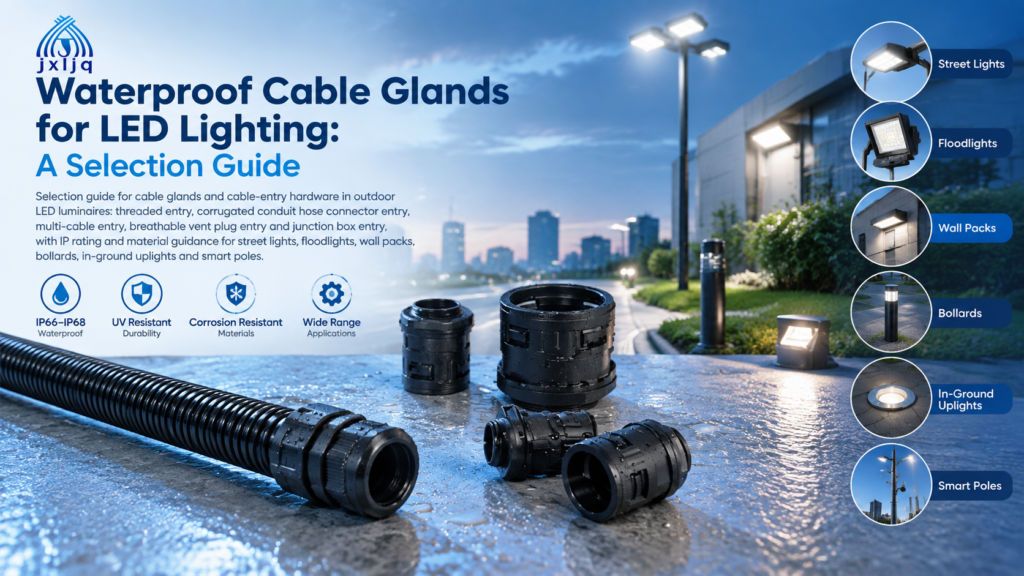
How to choose a waterproof cable gland for LED lighting: five cable-entry paths, a fixture-type selection table, IP rating rules, materials and condensation control for outdoor luminaires.
Six cable gland case studies from real installations: the failure, the root cause, and the corrected specification — plus five tests for verifying project claims.
Compare 304 vs 316 stainless steel cable glands by chemistry, corrosion resistance and cost, and learn when to specify each grade for marine or industrial duty.
We use cookies to enhance your browsing experience, serve personalised ads or content, and analyse our traffic. By clicking "Accept All", you consent to our use of cookies.