Blog
What Is The Difference Between BW and CW Cable Glands
BW and CW cable glands both terminate SWA armoured cable, but they are built for different environments. Learn the key differences, IP ratings, and how to choose.
Read More
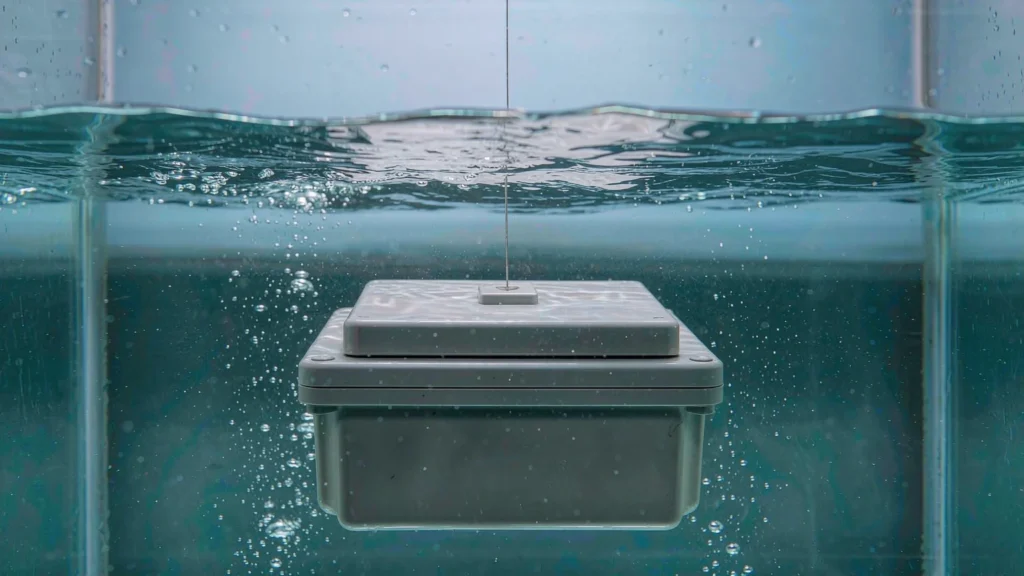
An IP68 depth rating looks like a number you can compare with another one. It is not. Two junction boxes can both carry IP68 while one is rated for 3 m over 24 hours and the other was never tested below 1.2 m for 30 minutes — and both labels are technically correct, because IEC 60529 refuses to fix the depth or the duration for the digit 8.
This guide covers what that digit actually commits a supplier to, the pressure arithmetic behind a depth figure, why duration is the harder axis than depth, and what to write into a waterproof junction box purchase order.
Nearly every second digit in IEC 60529 comes with fixed conditions. IPX5 is a 6.3 mm nozzle at 12.5 litres per minute for three minutes. IPX7 is 30 minutes with the water surface 850 mm above the top of the enclosure and 1,000 mm above its lowest point. You can compare two IPX7 products because the test is the same test.
Digit 8 is the exception. For IPX8 the standard states that conditions are agreed between manufacturer and user, and they are expected to be more severe than IPX7. It goes further: water may enter an IPX8 enclosure provided it does so in a manner that produces no harmful effects. Read that twice. “IP68” and “nothing gets in” are two different claims, and only the manufacturer can tell you which one you are buying.
Fresh water adds roughly 9.81 kPa per metre of head, just under 0.1 bar. A box at 1.5 m sees about 0.15 bar of external pressure; a car tyre holds ten times that.
| Depth | kPa | bar | Typical situation |
|---|---|---|---|
| 1 m | 9.8 | 0.10 | Puddle, temporary flooding |
| 1.5 m | 14.7 | 0.15 | The retail convention |
| 3 m | 29.4 | 0.29 | Pool niche, deep sump |
| 5 m | 49.1 | 0.49 | Marine hull penetrations |
| 10 m | 98.1 | 0.98 | Below a wharf deck at low tide |
| 50 m | 490 | 4.91 | Well pump housings |
That is uncomfortable for anyone shopping on depth. If a gasket cannot hold 0.15 bar, it was already broken before it got wet. What destroys boxes is time and temperature: an elastomer under continuous compression creeps and takes a permanent set, which a 30-minute soak never exercises.
It is a convention, not a clause. It spread because IPX7’s figures are the only familiar reference point and because an IPX8 declaration should exceed IPX7, so suppliers round up to the next tidy number. The arithmetic problem is that “IP68, 1 m, 30 min” cannot be distinguished from a plain IPX7 result, which caps expectations at the shallowest condition that could pass.
The immersion test uses fresh water, at rest, near ambient temperature. Everything outside that is a different question:
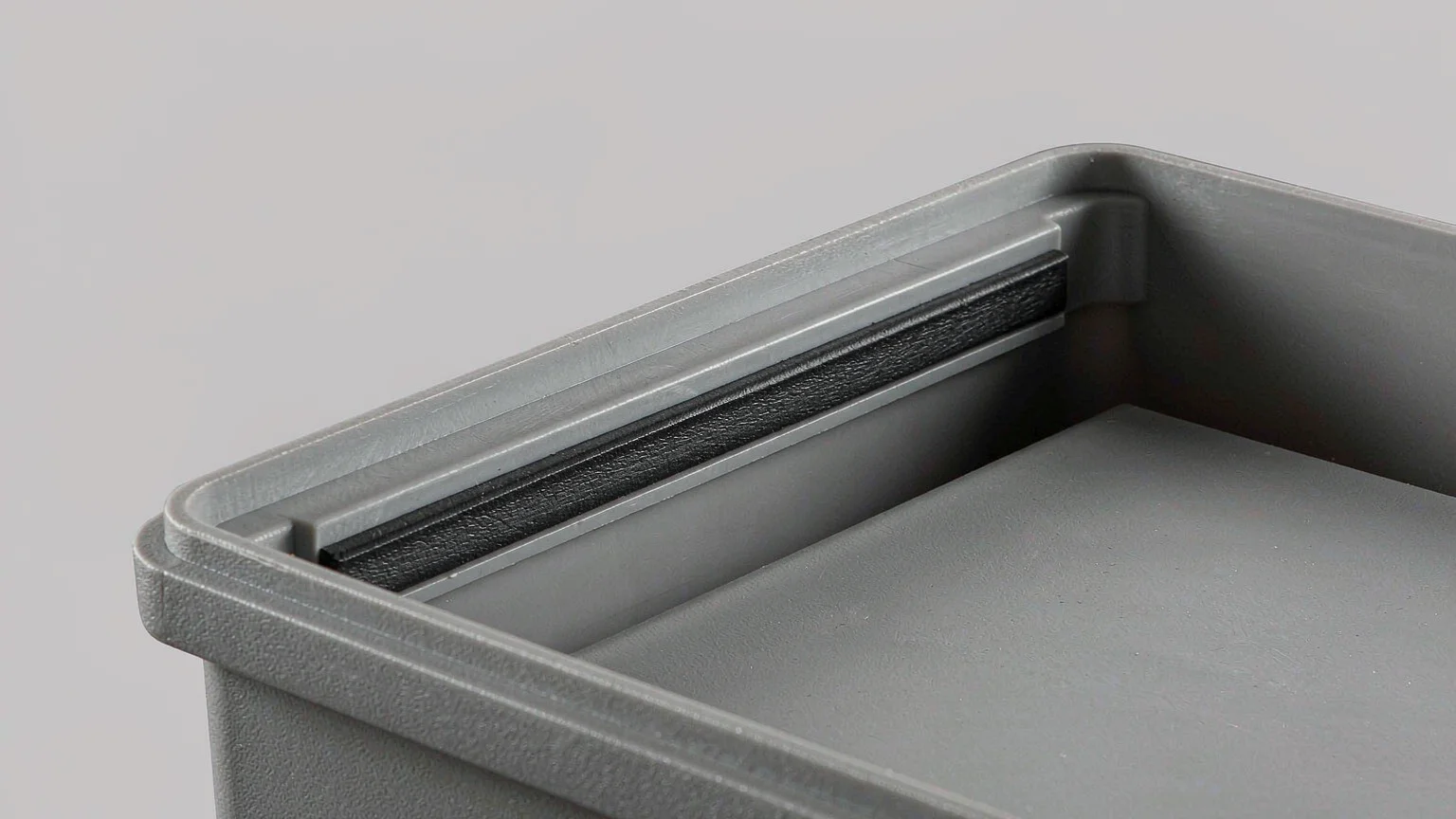
A result describes one specimen in one configuration. Ask whether it was a bare shell with blanking plugs or an assembly with glands and cable; if cable was fitted, at the minimum or maximum of the clamping range; whether the lid was closed to a stated torque; and whether the sample was conditioned first or tested new. A shell test proves the mould seals, not that your installation does — and the difference is usually the cable entry.
| Datasheet says | What it tells you | Ask next |
|---|---|---|
| “IP68” | Dust-tight and immersion-rated, nothing more | Depth, duration, water temperature |
| “IP68, 1.5 m / 30 min” | The retail convention, not clearly beyond IPX7 | Why this condition, and what margin exists |
| “IP68, 3 m / 24 h” | A real engineering statement with both axes fixed | Report, sample configuration, pass criteria |
| “IP68, no water inside” | An acceptance criterion, not just a code | Put that exact sentence on the PO |
Match the number to the installation, not to a competitor’s catalogue. For the first two rows a deeper figure buys nothing; for the third and below it buys little unless duration is stated too. If the box is going into the ground, the direct burial rules matter more than the digit.
| Installation | Realistic depth | What governs |
|---|---|---|
| Wall, pole, eave | 0 m | Rain and jets — IP65 or IP66, not depth |
| Buried above the water table | 0.3–1 m, intermittent | Soil water and drainage |
| Buried below the water table | Water table head, years | Duration first, then depth |
| Flood-prone pit or soakaway | 0.5–2 m, days | Duration and silt |
| Pool or fountain niche | 1–3 m, permanent | Chlorine plus duration |
| Marine, below the waterline | 3–10 m | Salt, duration, galvanic pairs |
| Sump or well | 10–50 m | Now pressure genuinely matters |
You do not need a tank to find a bad seal. Plug every entry, apply about 0.3 bar of pressure or vacuum, and watch the gauge for 60 seconds. A drop means the lid gasket, a gland thread or a blind plug is leaking, and you learn it with dry electronics still inside. It is fast enough to run on every unit rather than on a sample.
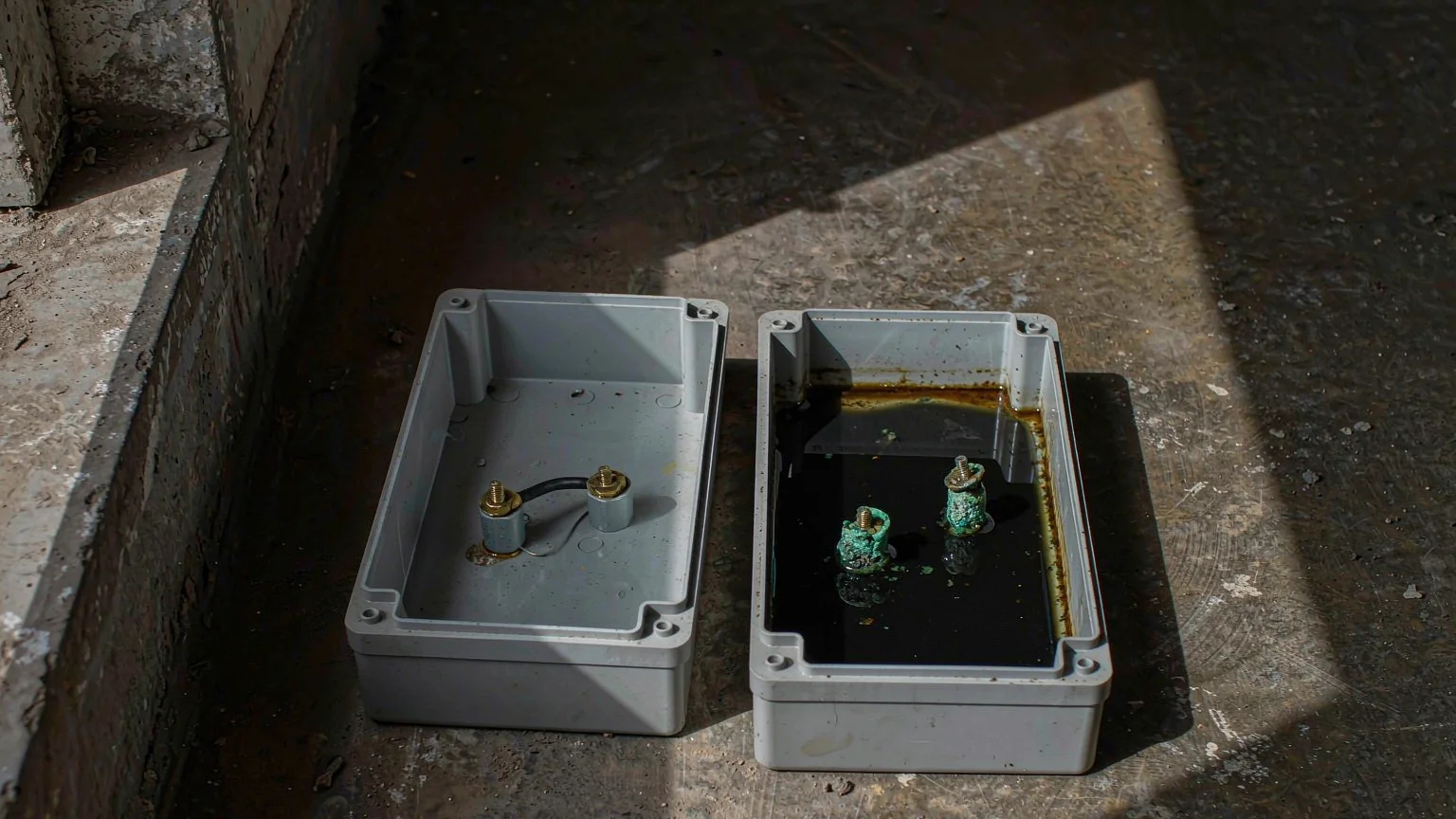
The second check is arithmetic. A box closed at 60 °C in the sun and then plunged into 20 °C water develops roughly −0.17 bar of internal differential — the same magnitude as 1.7 m of water pushing inward. That is why a box which passed a 1 m soak can still be wet after a season outdoors: nothing leaked in, the enclosure pumped. The breathable vent plug exists for exactly that case, and a deeper rating does not solve it.
Seven lines convert a marketing badge into a specification:
Each of these is answerable by a supplier who has tested the product and unanswerable by one who has not. The rating matrix behind the IP code is worth reading alongside them.
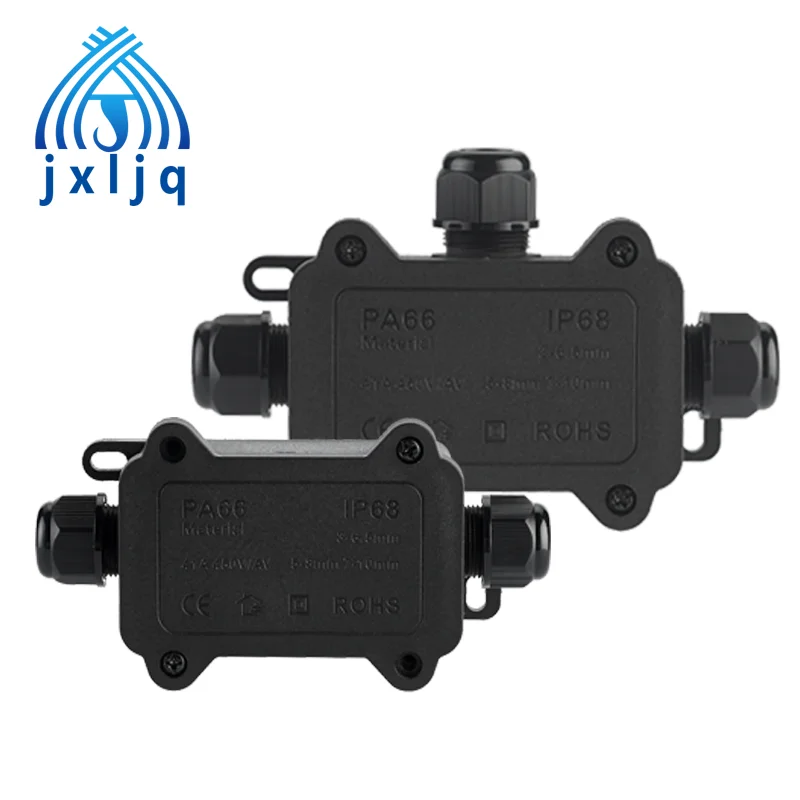
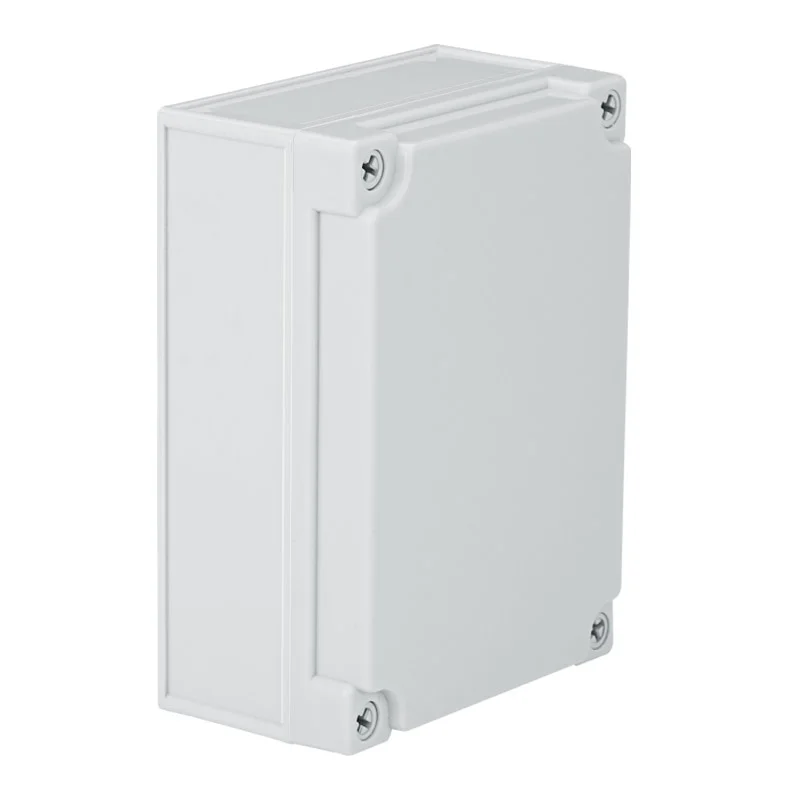
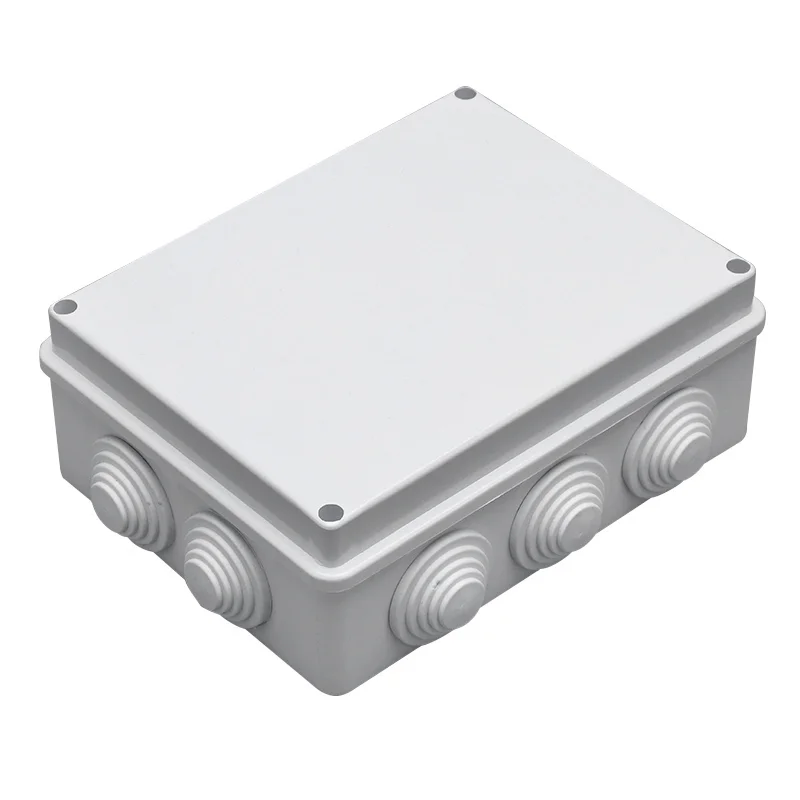
It is more useful to state our own numbers plainly than to imply a uniform IP68. The JX-AG series is IP67 with immersion to 1 m, IK08 and RoHS, in 16 sizes from 95×65×55 mm to 280×190×180 mm. JX-RA is ABS with PVC stoppers at IP55 or IP65 by size, CE and RoHS. The F1-2T/3T/4T mini boxes are rated IP68 — and the datasheet gives the code without the depth and duration behind it, so ask us for the test condition instead of assuming one. The vent plug is rated to 3–5 m with a water entry pressure above 5 bar.
If your installation sits below 1 m for weeks rather than minutes, a standard moulded enclosure is the wrong starting point, and no depth number on a datasheet will fix that.
An IP68 depth rating is not a score, it is a contract, and only the supplier knows the terms. Ask for depth and duration together, ask what sample was tested, and write the acceptance criterion yourself. Then check whether the number is doing any work: outdoors, the failure mode is usually a temperature differential across a gasket rather than metres of head, and a pressure decay check finds it faster than a tank.
There is no answer in the standard. IEC 60529 leaves depth and duration to the manufacturer, so only the specific product’s declaration is meaningful.
It is dust-tight and rated for continuous immersion under agreed conditions. The standard allows water to enter if it causes no harmful effect, so confirm which criterion the supplier used.
For the declared duration, often 30 minutes because that is the IPX7 figure. Immersion over days or weeks is a separate requirement driven by compression set.
Not on the strength of the rating alone. Burial adds soil load, a water table that can sit above the box for months, and cable entry direction.
You can screen for leaks with a pressure decay test at about 0.3 bar, which is fast and dry. Conformity testing needs a controlled laboratory immersion at the declared conditions.
BW and CW cable glands both terminate SWA armoured cable, but they are built for different environments. Learn the key differences, IP ratings, and how to choose.
Read More
A metric junction box size chart for the JX-AG and JX-RA ranges, plus the four measurements — conductor count, volume, bend radius and gland depth — that decide which model to order.
Read More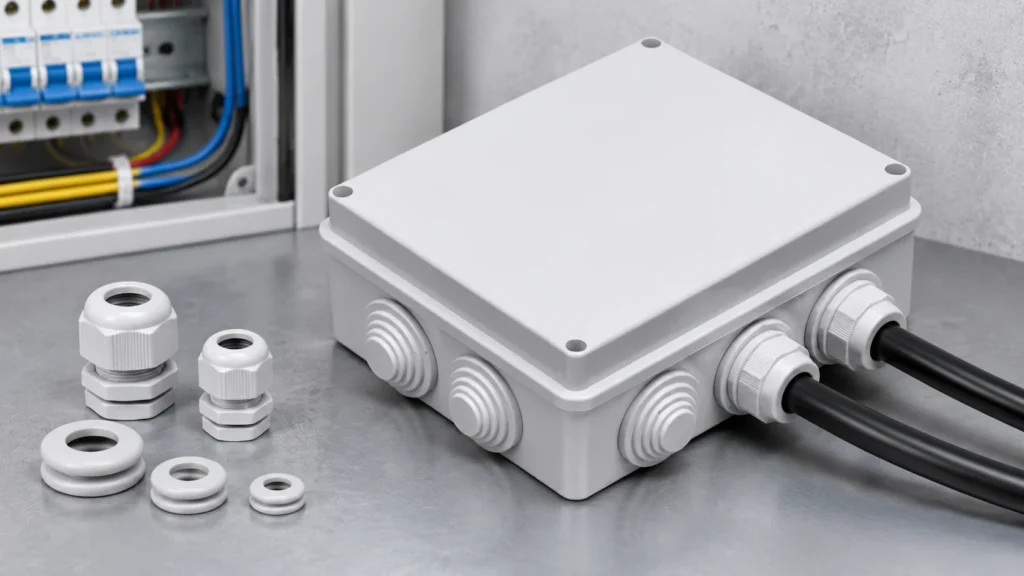
Cable entry, not the box, is usually where a waterproof enclosure fails. Compare knockouts, grommets, stoppers and gland threads, and check the hole before you order.
Read More