Blog
EMC Cable Gland Grounding: 360° Shield Termination Guide
Practical EMC cable gland grounding guide: 360° shield termination steps, panel preparation, common mistakes, and continuity checks.
Read More
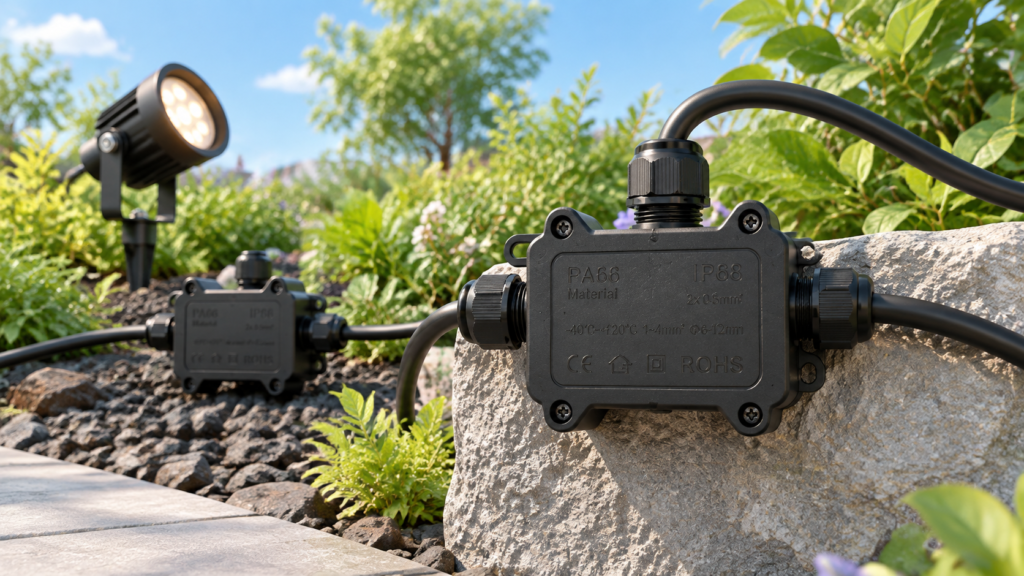
An outdoor electrical connection is only as reliable as the box that protects it. Rain, dust, condensation and temperature swings slowly destroy poorly sealed splices, and a failed connection usually means digging, rewiring or replacing fixtures. The shortcut to avoiding this is choosing a waterproof junction box that matches your environment, cable count, cable size and electrical load before you buy. This selection guide explains the five decisions that matter most and shows how to apply them to real projects, from garden lighting and CCTV to solar and water-pump wiring.
If you only need a fast answer: choose an IP68 box with flame-retardant housing for outdoor and wet-area use, pick a 2-way, 3-way or 4-way model that covers your number of incoming and outgoing cables plus one spare entry, verify the terminal rating matches your wire gauge and load, and seal every entry with a cable gland sized to the actual cable diameter. The sections below walk through each step in detail so you can specify the right product the first time.
A junction box is a protective enclosure where cables are spliced, terminated or connected to terminals, sensors and small devices. A waterproof junction box adds a sealed housing with a gasketed cover and sealed cable entries, so no water or dust can reach the live connections inside. IP68 is the ingress protection rating defined by IEC 60529: the “6” means total protection against dust, and the “8” means the enclosure can be immersed in water continuously under conditions declared by the manufacturer (in practice, deeper than the 1-metre limit used for IP67).
You need an IP68-rated box rather than an indoor or lightly protected one whenever the connection point is exposed to weather, splashing, standing water, condensation or high-humidity areas such as:
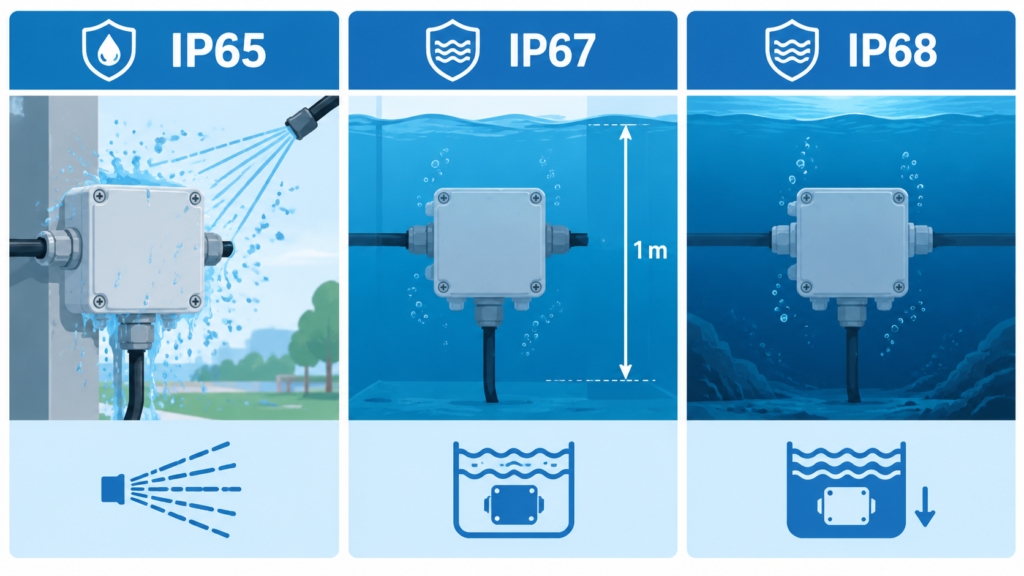
The IP rating is the single most important specification because it defines where the box can be used. The table below summarises the ratings most commonly seen on plastic junction boxes so you can match the product to the exposure.
| Rating | Dust protection | Water protection | Typical use |
|---|---|---|---|
| IP55 / IP65 | Dust-tight (6) or protected (5) | Low-pressure jets or splash | Sheltered outdoor, industrial and communication enclosures |
| IP66 | Dust-tight | Powerful water jets | Hosed-down equipment and heavy-rain areas |
| IP67 | Dust-tight | Temporary immersion up to 1 m for 30 min | Flood-prone areas and wet outdoor projects |
| IP68 | Dust-tight | Continuous immersion beyond 1 m, per manufacturer declaration | Exposed outdoor, underground-risk and long-life installations |
For most permanently exposed outdoor wiring, IP68 is the safest choice because it leaves the largest safety margin against heavy rain, pooling water and condensation. If you are comparing the two most common ratings for this product type, the IP67 vs IP68 comparison explains the practical difference between temporary and continuous immersion in more detail.
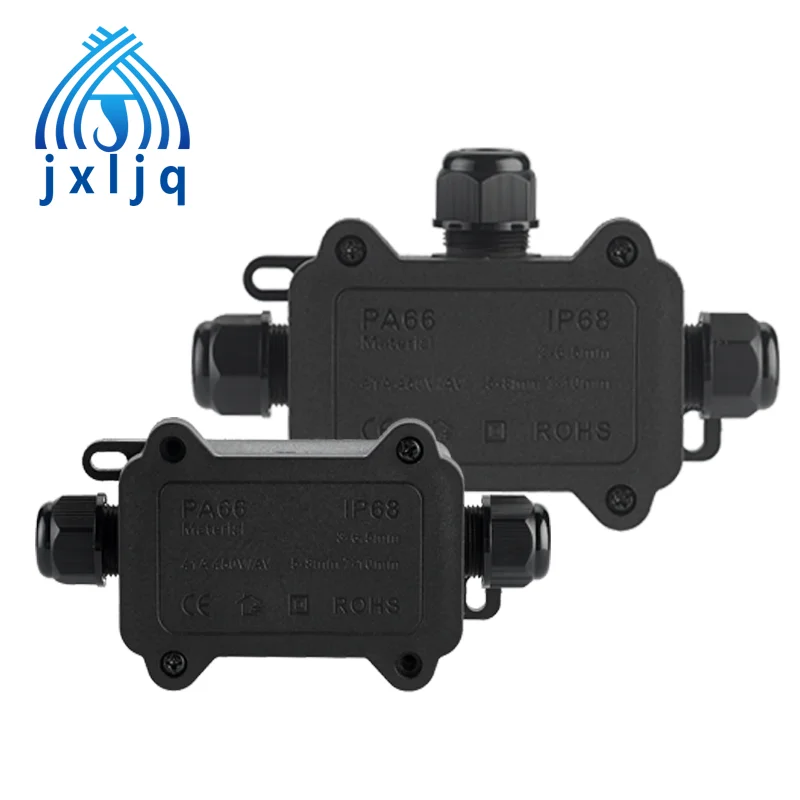
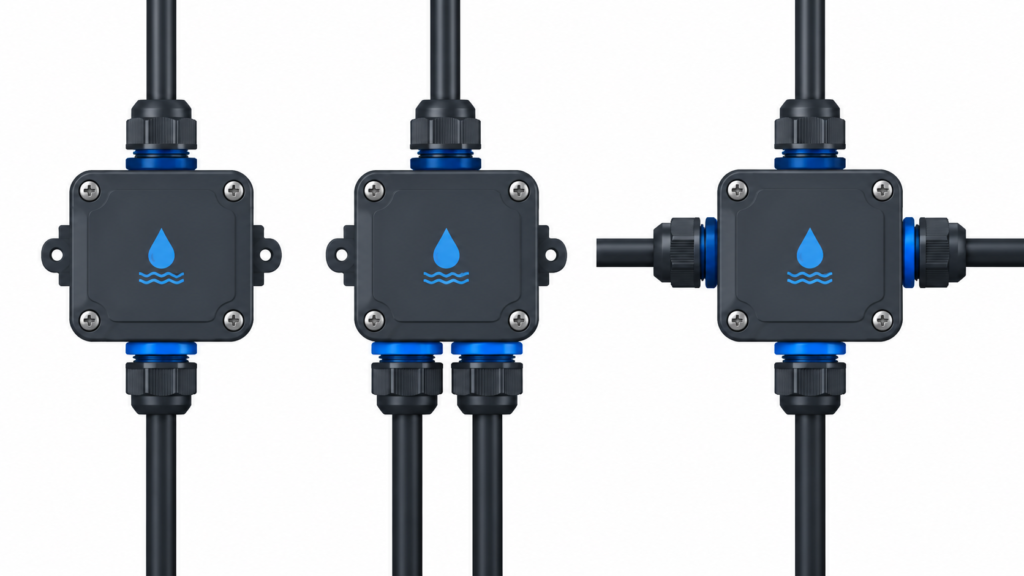
Waterproof junction boxes are described by their number of openings, commonly 2-way, 3-way or 4-way. A 2-way box handles one cable in and one cable out (a simple splice or one fixture connection), a 3-way box suits a daisy-chain of lights or sensors, and a 4-way box works well for a central junction feeding multiple branches.
To select the configuration, count every incoming and outgoing cable at the connection point, then add at least one spare opening for future additions or maintenance. Choosing a 3-way or 4-way box when you only need two entries now is cheap insurance: it avoids replacing the whole enclosure when a light, sensor or branch is added later. The general guidance on sizing for small enclosures is covered in what a small-size waterproof junction box is used for.
The openings of a waterproof junction box are not universal: each model accepts a defined cable outer diameter range, and the internal terminals accept a defined wire cross-section and load. Three figures must be checked together:
Write down the cable OD and load before comparing models, and use a box whose documented range sits inside your values with margin rather than at the very edge of the range.
Housing material decides how the box survives years of sun, heat, cold and mechanical handling. For IP68 outdoor junction boxes, the most common engineering choices are:
Sealing quality matters as much as the shell: look for a continuous silicone or rubber O-ring/gasket between the cover and the base rather than a glued-on seal, and confirm the screws compress the cover evenly. Temperature range is a practical check too—a box rated to sub-zero temperatures and more than 100°C on the housing and seal avoids cracking and gasket hardening in outdoor installations. For installations where the box is washed, verify the rating resists the cleaning method used on site.
The housing rating is only as strong as its weakest entry. A hole drilled straight through the wall, or an oversized entry with a loose-fitting cable, will let water in no matter how high the box rating is. Three rules keep the seal intact:
For a complete outdoor system, the pairing of the enclosure and its entries is covered in our guide to waterproof cable glands and IP68 junction boxes for outdoor wiring systems.
Most projects fall into one of three profiles. Matching the profile to the right series saves both money and installation effort:
| Series | Rating | Housing | Ways / sizes | Best matched to |
|---|---|---|---|---|
| F1-2T/3T/4T Mini | IP68 | Flame-retardant nylon, silicone O-ring | 2 / 3 / 4-way, cable 3–10 mm | Garden lighting, CCTV, solar, pumps |
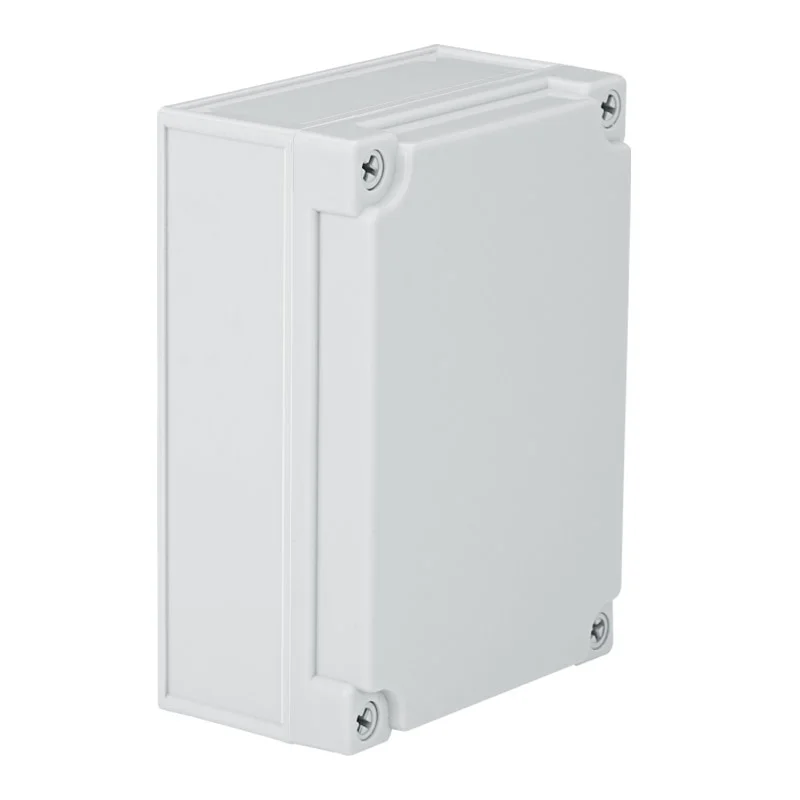
| JX-AG High-end | IP67, IK08 | Premium ABS, RoHS | 95×65×55 to 280×190×180 mm | Power distribution, marine, outdoor control |
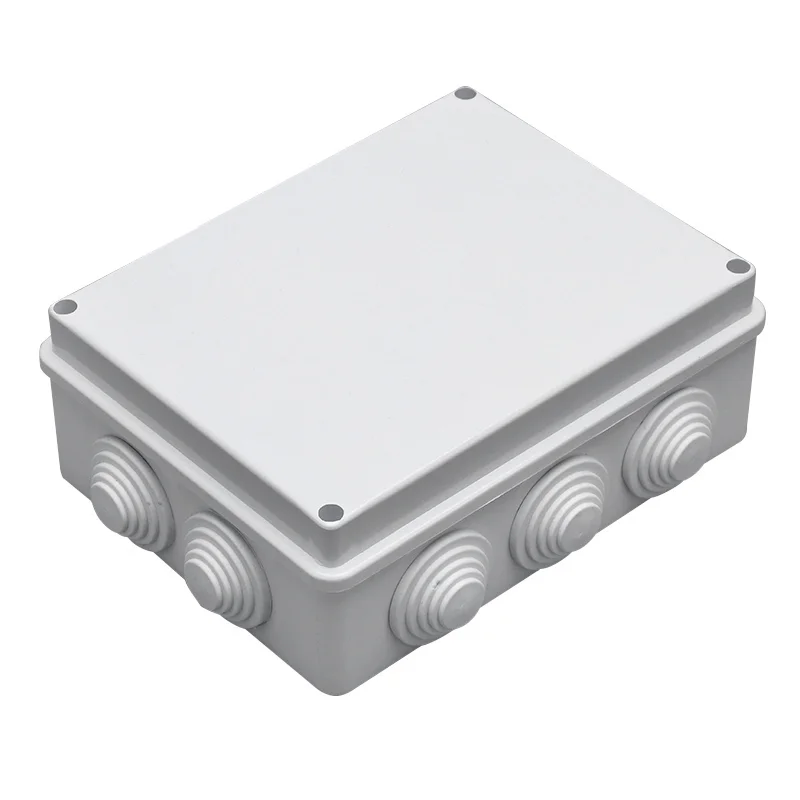
| JX-RA | IP55 / IP65 | ABS body, PVC stoppers, CE & RoHS | 50×50×50 to 400×350×120 mm | Communication, industrial, DIN-rail enclosures |
All three series are available with OEM/ODM services, including custom sizes, cable-entry configurations, colours and packaging, so a standard model can be adapted to the exact cable set of a project when volumes justify it.
Selecting an IP68 waterproof junction box is a five-step process: define the environment and required IP rating, count the ways and cable entries with one spare, verify cable OD and terminal rating against your load, choose a flame-retardant housing with a quality silicone seal, and seal every entry with a matched cable gland. When these checks line up, the connection point stays dry, accessible and safe for years of outdoor service.
If you are sourcing junction boxes for a specific project and want help matching the model, cable range and entry configuration, our team can recommend the right series from the full waterproof junction box range or adapt a standard model to your cable set. Contact us with your cable sizes and quantities for a recommendation and sample support.
IP67 enclosures withstand temporary immersion in up to 1 metre of water for about 30 minutes, while IP68 enclosures are rated for continuous immersion under conditions declared by the manufacturer (normally deeper than 1 metre). For permanently exposed outdoor wiring, IP68 provides the larger safety margin; IP67 suits locations that may be briefly flooded.
It depends on the number of ways. A 2-way box takes one cable in and one out, a 3-way box suits a daisy-chain of fixtures or sensors, and a 4-way box handles a central junction feeding multiple branches. Count your cables and add one spare way for future expansion.
Compact IP68 mini boxes typically accept cables from 3 mm up to 10 mm through interchangeable sealing plugs (for example 3–6.5 mm, 5–8 mm and 7–10 mm). Larger enclosures accept bigger glands, so check the documented cable range against the actual cable OD before buying.
An IP68 rating means the enclosure resists continuous immersion, but direct burial also involves soil pressure, drainage and access for maintenance. Confirm the manufacturer’s depth and pressure declaration, seal all entries with compatible glands, and consider a protective arrangement or inspection access for buried installations.
Yes. The box rating is only valid when every cable passes through a sealed entry that matches its diameter. Using cable glands or the factory sealing system, and plugging unused openings, is what keeps an IP68 junction box genuinely waterproof.
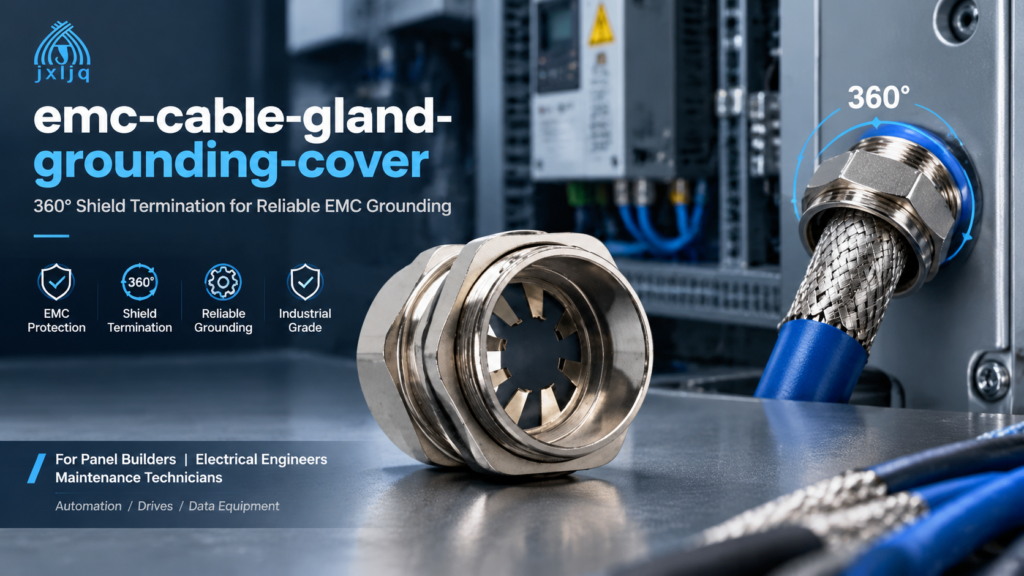
Practical EMC cable gland grounding guide: 360° shield termination steps, panel preparation, common mistakes, and continuity checks.
Read More
IP67 and IP68 are both dust-tight, but they differ in water immersion protection. Learn when to choose each rating for cable glands.
Read More
Learn how the IP68 rating on cable glands works: what IEC 60529 actually tests, how the two-seal waterproofing mechanism blocks water, and why installation errors cause most leaks.
Read More