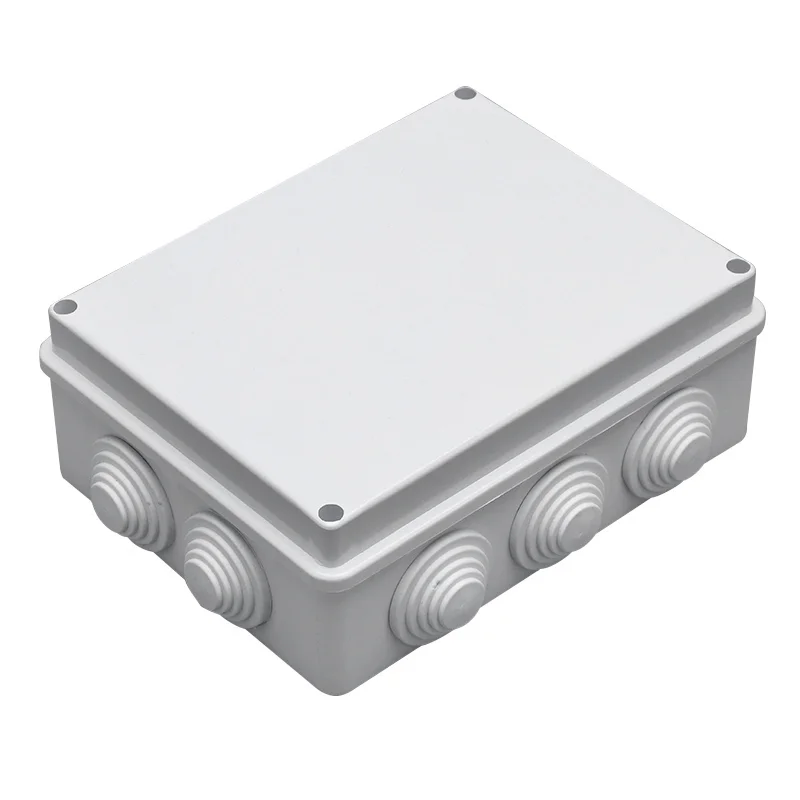
Most outdoor junction box maintenance plans are a line in a facilities spreadsheet: inspect every six months. Then the same box is inspected in year one and not again until something trips. A junction box maintenance plan that ignores the site is a plan nobody follows, because the interval is either obviously wasteful or obviously too late. This guide sets the inspection interval from what actually degrades inside a sealed enclosure, and gives the four measurements that decide whether the box survives another year.
Why “Every Six Months” Is Not a Schedule
Six months is a compromise between a coastal dock and a shaded plant room, which means it is wrong for both. A box ten metres from the sea collects chloride film on every fastener twice a year; a box inside a covered plant room may not change measurably in five. Worse, calendar intervals hide the mechanism: the parts inside a sealed box do not age at a constant rate — they age when the temperature moves, when the sun shines, and when someone opens the lid.
Four Clocks Running Inside a Sealed Box
Every enclosure carries four independent degradation processes, each with its own rate. Gasket compression set depends on time at temperature and on how many times the lid has been opened. Fastener preload decays through plastic creep and thermal expansion mismatch. The polymer skin degrades under UV dose, which is a function of latitude and shading, not months. And the water inventory depends on how often the internal pressure cycles. Whichever clock runs fastest on your site sets the interval — not the average of all four.
Set the Interval From the Environment
Site tier
Interval
Fastest clock
Check this first
Coastal, within about 500 m of the sea
6 months
Salt film and crevice corrosion
Screws and the floor of the gasket groove
Industrial or chemical plant
6 months
Seal swelling and polymer attack
Gasket hardness at the outer edge
Desert or any site with over 25 K daily swing
12 months
Pressure cycling and UV
Vent function and gasket set
Tropical, humid, full sun
12 months
UV plus condensation
Yellowing and water inventory
Inland temperate, shaded, indoor plant room
24 months
Creep only
Free gasket thickness
Buried or in a wet pit
12 months, plus after any flood
Hydrostatic head on entries
Cable entries, not the lid
Shift one tier down after any intervention, any flood, or any service visit where the lid was opened and not re-torqued. Those events reset the clock whether or not the box looks different.
Gasket Compression Set: The One-Way Door
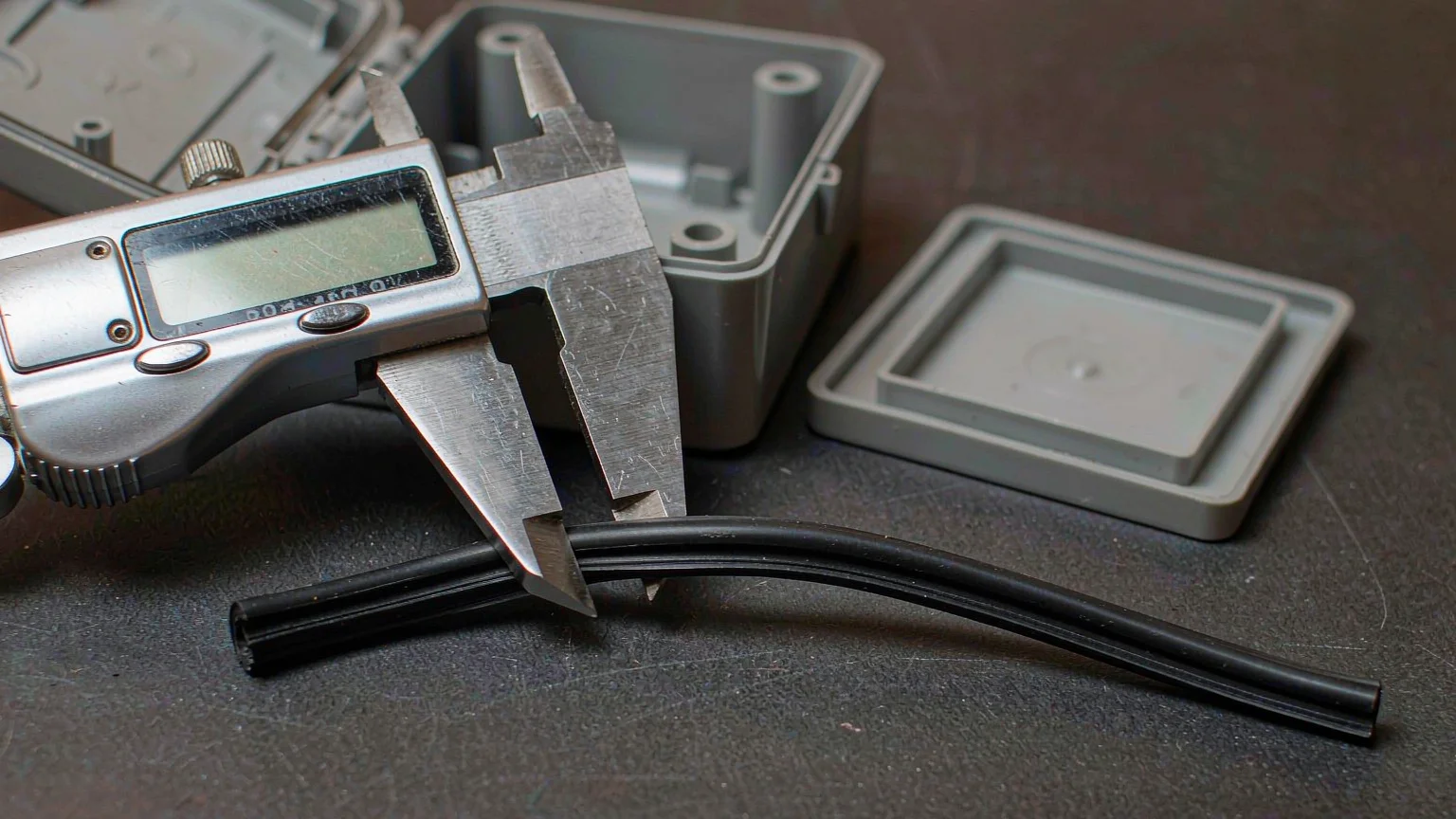
This is the measurement most maintenance plans omit, and the one that predicts failure. A seal works because the gasket is squeezed between the lid and the groove, and it keeps working only while the material still wants to spring back. Compression set is the amount of squeeze it never recovers. Pull the gasket, let it rest, measure its free thickness with a caliper, and compare it with the groove depth.
Free thickness after service
Groove depth
Remaining compression
Action
4.0 mm (new)
2.8 mm
30%
Baseline — record it
3.6 mm
2.8 mm
20%
Re-torque and re-measure next visit
3.2 mm
2.8 mm
12.5%
Order a replacement gasket now
3.0 mm
2.8 mm
6.7%
Replace — it will not hold below about 0 °C
The numbers are illustrative, but the logic is not: once remaining compression falls below roughly 10%, the seal depends on a material that has already stopped pushing back. Silicone O-rings, as fitted on the F1 series mini junction box, hold their set better than most flat gaskets, but they still take a set.
Fastener Preload and Plastic Creep
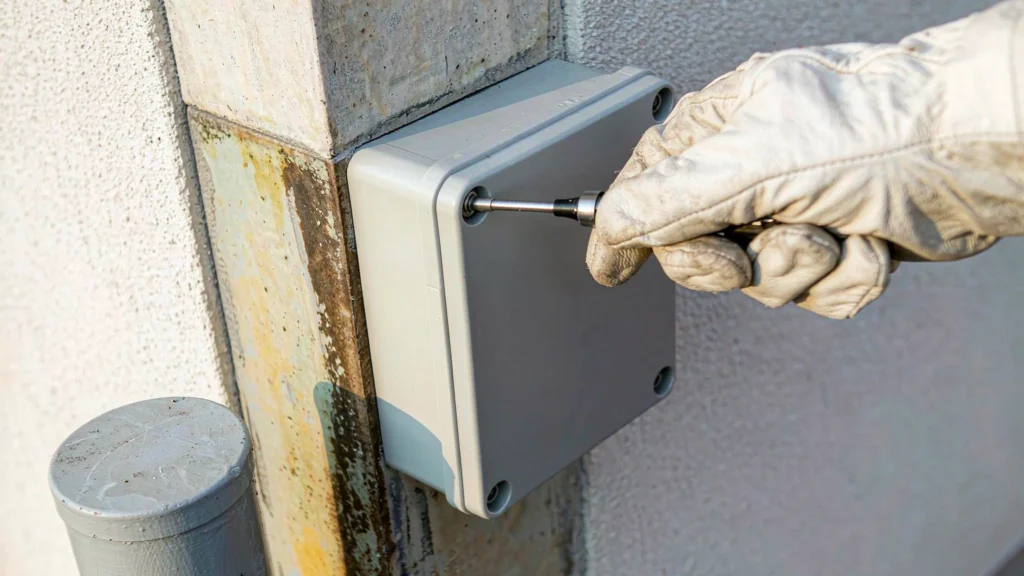
Lid screws in a plastic boss do not come loose by rotating. They lose preload because the boss creeps under sustained load, and because the plastic expands further than the steel screw as the box heats. Mark each screw head with a paint line at commissioning. If the line has rotated, something moved; if it has not rotated but the lid lifts under a fingernail, the boss has crept and re-torquing is due. Torque to the value on the assembly drawing — typically under 1 N·m for an M4 screw in a moulded boss.
Water Inventory: Read the Lowest Point
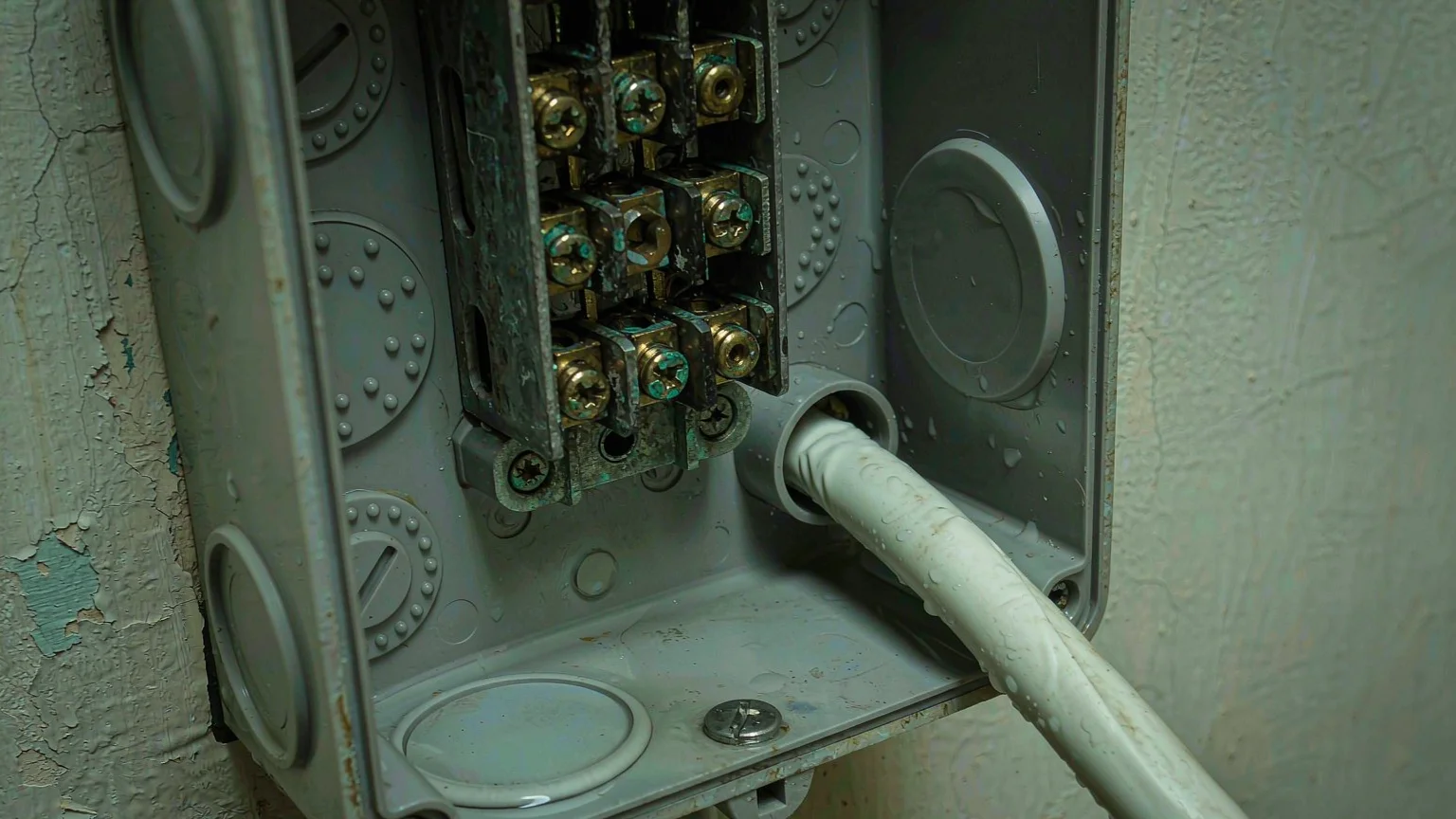
Open the lid and look at the lid first, then the floor. A few droplets on the underside of the lid are condensation and normal in a box that cycles temperature. A pool in the lowest corner, a water line on a wall, or dampness under a terminal block is an entry path, and it is coming through a cable entry, a gasket line or a knockout membrane. Note which, because the fix differs. If the box is mounted where the lid traps water, the condensation physics will keep producing it regardless of the gasket.
The Breather Question
If the box has a breathable vent plug, its membrane is a maintenance item, not a permanent part. Dust, pollen and salt crystals blind the membrane, and a blinded vent converts an equalised box back into a pressure-cycling one — silently. Test by mouth or with a low-pressure gauge: if air will not pass, replace the plug. On a coastal or dusty site, treat the membrane as a two-year consumable.
What to Do With the Lid Open
Do not clean a gasket line with solvent. ABS and polycarbonate stress-crack at moulded corners when attacked by ketones or aggressive alcohols, and the crack starts exactly where the seal needs the flange to stay flat. Water and mild soap, a soft brush, then dry. Do not pressure-wash the joint at close range — a 100 bar jet lifts a gasket out of its groove and drives water past it. And never re-fit a gasket that has taken a set just because it looks intact.
A One-Page Record
Field
What you record
Pass criterion
Free gasket thickness
mm, measured after 10 minutes rest
Remaining compression above 10%
Lid preload
Paint mark rotated yes / no
No rotation and lid does not lift
Lid flatness
0.2 mm feeler under a straight edge
No gap along the gasket line
Water inventory
Dry / drops / pool
Drops on the lid only
Vent airflow
Passes air yes / no
Air passes freely
Entry strain relief
Cable moves at the gland yes / no
No movement under a firm pull
Spares, Not Replacements
The housing is rarely the failed part. In practice the gasket, the screws and the vent membrane account for most of what a maintenance programme actually replaces, which means the spare-parts kit is small: one gasket per box model, a bag of screws, and a vent plug. Keeping that kit on site does more for uptime than a spare enclosure, and it makes the difference between a joint that is reopened correctly and one that is returned as a failure a year later.
Where Our Range Fits
The F1 series uses a silicone O-ring that tolerates repeated opening and a −40 °C to +105 °C range. The JX-RA range gives larger ABS enclosures at IP55 or IP65 for control assemblies, and takes DIN rail or PCB mounting inside. Both are documented well enough to put a gasket thickness and a torque value in your maintenance record — which is the minimum a schedule needs.
Conclusion
Pick the interval from the fastest clock on the site, measure the gasket instead of judging it by eye, and replace the vent membrane on schedule. A box that is inspected on that basis will outlast one that is inspected twice as often with a checklist that only says “check for damage”, and the rest of a junction box maintenance programme is bookkeeping. If yellowing has already started, read the UV service-life article before deciding the housing is finished.
FAQ
How often should an outdoor junction box be inspected?
Six months on a coast or in a chemical plant, twelve months where the daily temperature swing is large or the sun is direct, and twenty-four months in a shaded indoor plant room.
Can I reuse the gasket after opening the lid?
Yes, if it has not taken a set. Measure its free thickness against the groove depth; once remaining compression falls below about 10%, replace it.
What torque should lid screws be tightened to?
The value on the assembly drawing, typically under 1 N·m for an M4 screw in a moulded plastic boss. More torque compresses the gasket permanently rather than sealing better.
Why is there water in an IP68 box?
Almost always through a cable entry or a gasket line that was opened and re-closed, not through the moulding. Pressure cycling also pumps moist air in past a seal that no longer springs back.
Do vent plugs need replacing?
Yes. The membrane blinds with dust, pollen and salt. Test that air passes and treat it as a two-year consumable in dusty or coastal locations.
Can I clean a plastic junction box with solvent?
No. Use water and mild soap. Ketones and aggressive alcohols stress-crack ABS and polycarbonate at moulded corners, which is where the flange has to stay flat.
A metric junction box size chart for the JX-AG and JX-RA ranges, plus the four measurements — conductor count, volume, bend radius and gland depth — that decide which model to order.
JIXIANG explosion proof cable glands are designed for hazardous and explosive environments where maximum safety is required. Our EX cable glands comply with ATEX and international explosion-proof standards, ensuring reliable cable sealing and grounding in oil & gas, chemical, and industrial applications. Product Types Single seal explosion-proof cable gland Double seal armored cable gland (CW […]
A factory visit rarely explains why a box leaks. What to measure in thirty minutes, which five dimensions decide the seal, and what each test report proves.
We use cookies to enhance your browsing experience, serve personalised ads or content, and analyse our traffic. By clicking "Accept All", you consent to our use of cookies.