Ask most suppliers for a CE RoHS junction box and you will receive one PDF with a flag on it. That file is usually worth very little. A European importer needs three separate things — a declaration of conformity, a RoHS position covering ten substances, and a REACH statement dated against the current candidate list — and none is a certificate in the everyday sense.
Below: what each document proves, who may issue it, where the substance risk really sits in a plastic enclosure, and how to check a supplier’s pack in about five minutes. It is written from the manufacturing side, which is why it also says which parts of our own range carry which documents.
First, Decide What You Are Buying
Compliance obligations follow the product’s legal status, and an empty enclosure sits in an awkward place. Three situations cover almost every order:
An empty box supplied as a component to an equipment builder. It performs no electrical function, so the CE duty falls on whoever places the finished assembly on the market. The box supplier’s job is material compliance: RoHS and REACH evidence plus a material declaration.
A box sold as a standalone article with its own model number and packaging. Now you are placing it on the market, and the pack has to stand alone.
A box supplied pre-populated with terminals, DIN rail, a fan or a heater. Components operating above 50 V AC bring the Low Voltage Directive into play and the assembly needs its own assessment.
Agree which applies before the order, in writing. Most document disputes are not about substances — they are about two parties each assuming the other held the CE file. If cable entries are part of the package, note that they follow their own standard family, summarised in our IEC 62444 gland standard article.
The Core Documents in a Compliance Pack
A credible pack for a plastic junction box contains the following. Anything shorter is a summary, not evidence.
Document
What it proves
Issued by
Watch for
EU Declaration of Conformity
The signatory takes legal responsibility for listed legislation and standards
The manufacturer placing it on the market
No directive numbers, no product reference
RoHS declaration
The part meets the ten substance limits
Supplier, on its own responsibility
No directive revision cited
RoHS test report
An accredited lab measured the part or its materials
Third-party laboratory
Report names a different part number
REACH SVHC statement
Presence or absence above 0.1% w/w, against a named list version
This is the point buyers most often get wrong. For the Low Voltage Directive, 2014/35/EU — which covers equipment rated 50 to 1,000 V AC — there is no notified body approval step and no certificate to obtain. The legal instrument is the manufacturer’s own declaration of conformity, supported by a technical file. A “CE certificate” printed by a third party has no standing in market surveillance; the declaration does.
So when you request documents, ask for the declaration plus the list of harmonised standards applied and the technical file index. A supplier who produces both within a few days is organised. One who offers a certificate and changes the subject is not, and the same gap usually shows up in the moulding quality six months later. For the UK market the parallel document is a UKCA declaration, which is not the same file with a different logo. North American buyers need a different conversation again — UL and NEMA questions belong with the rating structure, which is why we keep them separate in our comparison of NEMA 4X and IP68.
RoHS: Ten Substances, and Where They Hide in a Box
Directive 2011/65/EU as amended by (EU) 2015/863 restricts ten substances: lead, mercury, cadmium, hexavalent chromium, polybrominated biphenyls, polybrominated diphenyl ethers, and four phthalates — DEHP, BBP, DBP and DIBP. Limits are 0.1% by weight except cadmium at 0.01%. The resin is rarely the problem; the trouble sits in the small parts and the colour.
Part of the box
Typical risk
Why
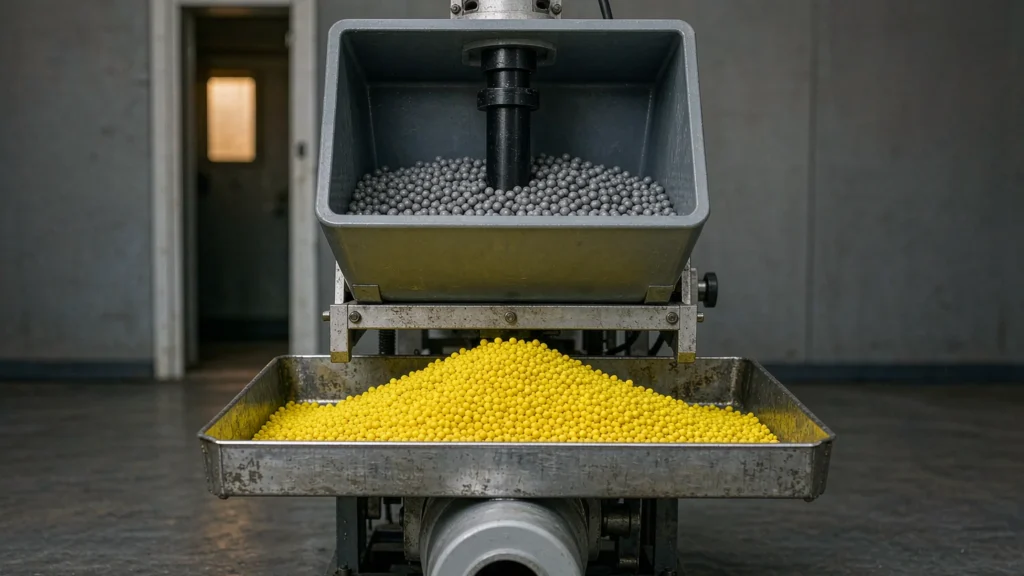
Colour masterbatch
Lead, cadmium pigments
Cheap inorganic pigments; cadmium yellows and reds
PVC stoppers or grommets
Phthalate plasticisers
Flexible PVC needs plasticiser, and four are restricted
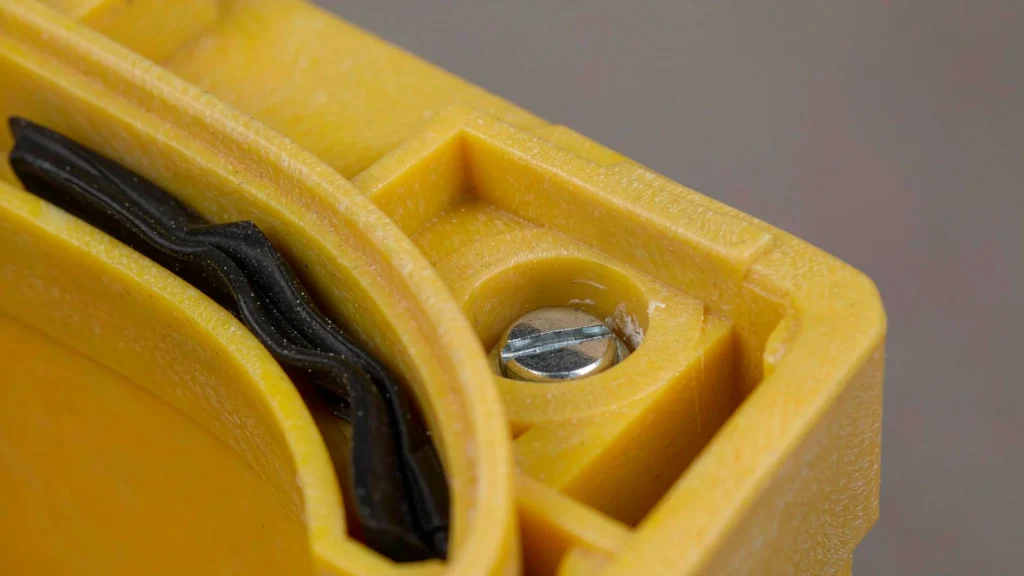
Plated screws and inserts
Hexavalent chromium
Chromate passivation on zinc plating
Recycled or regrind resin
Anything, batch to batch
No traceable input chemistry
Adhesive labels and foam
Phthalates, heavy metals in inks
Rarely listed on the drawing, often forgotten
This is where a full material declaration earns its keep. “Our boxes comply with RoHS” tells you nothing about whether the yellow version uses the same pigment system as the grey one. Ask about colourants, PVC parts and plating specifically, and whether a report covers the exact part number you are ordering rather than the family.
Our own position, stated the way we would want it from a supplier: the JX-RA range is listed with both CE and RoHS, the JX-AG with RoHS, and the F1 datasheet carries IP68, flame-retardant PA6 and a UL94 V-0 rating but no CE or RoHS line. If you need those documents for an F1 order, raise them as a specific request — do not assume they exist because the part is good. Material selection is covered further in our comparison of junction box materials.
REACH: The Date Is the Argument
The candidate list of substances of very high concern is updated roughly twice a year and has grown steadily for well over a decade. Under Article 33 of Regulation (EC) 1907/2006, a supplier must tell the recipient if an article contains a listed substance above 0.1% by weight, and must answer a consumer request within 45 days.
That makes an undated REACH statement close to worthless: a declaration signed three years ago was written against a shorter list. Check three things — the list version or publication date it references, the date of signature, and whether it addresses the specific materials in your part. Where a listed substance is present above the threshold, the supplier must also notify the EU SCIP database, and the notification number is a fair thing to request in the same email.
Three Documents People Forget
Packaging: the sum of lead, cadmium, mercury and hexavalent chromium in packaging is limited to 100 ppm, carton, bag and tape included. Metals: stainless and brass parts should arrive with a mill test certificate naming the grade, because “304” on an invoice is not evidence of 304. Adhesives: any thread-locker or label adhesive should come with a safety data sheet.
How to Check a Pack in Five Minutes
Four checks catch most of the weak documents.
Check
Passes
Fails
Part number
Names your model or family
Names a sibling product
Dates
REACH list version from the last six months
Undated, or older than the last material change
Legislation cited
Current directive numbers
Superseded versions still quoted
Notified body number
Resolves in the EU NANDO database
Quoted but unresolvable
Put It in the Purchase Order
Documents requested after the container is booked are documents you will not get. Three PO lines settle it: the pack listed by name, delivered with the sample and again with each batch; the resin grade and colourant system named in the technical agreement, any change requiring your written approval; and batch-level traceability, so a later substance question can be traced to a lot. On customised orders the same clauses belong in the OEM specification — the process for openings, colours and branding is set out in our guide to custom junction box orders. For how test evidence is generated on our side, the quality control process covers the stages behind those reports.
Conclusion
A CE RoHS junction box pack is four working documents and two supporting ones: declaration of conformity, RoHS position with test evidence, a current REACH statement, a material declaration, plus packaging and metal certificates. What makes it usable is not the letterhead but the part number, the date and the material detail. Ask for those three and the rest sorts itself out. Our waterproof junction box range spans IP55 to IP68 in ABS and PA6, with declarations sent with every sample.
FAQ
Does an empty junction box need a CE mark?
Usually not on its own. An empty enclosure performs no electrical function, so the CE duty sits with whoever markets the finished assembly. The box supplier still owes RoHS and REACH evidence for the materials.
Is a CE certificate the same as a declaration of conformity?
No. For the Low Voltage Directive the declaration of conformity is the legal document, signed by the manufacturer, supported by a technical file. A third-party “CE certificate” has no standing in market surveillance.
How often should RoHS and REACH documents be refreshed?
RoHS documents whenever the material or supplier changes. REACH statements should be reissued against each candidate list update, which happens roughly twice a year.
What if a substance above 0.1% is present?
The supplier must inform the recipient under Article 33, and where the article is placed on the EU market it must also be notified to the SCIP database. Ask for the notification reference.
Can you supply documents before I place an order?
Yes, for the standard ranges. Send the model list and the market, and the applicable declarations go out with the quotation rather than after the deposit.
What an IP67 junction box is really tested for, why IK08 matters on an exposed wall, and the three questions that tell you a semi-submerged site needs a different enclosure.
Specify a mini junction box correctly: 2/3/4-way choice, cable plug ranges, terminal types, IP68 limits for burial, and five installation steps that keep the seal.
We use cookies to enhance your browsing experience, serve personalised ads or content, and analyse our traffic. By clicking "Accept All", you consent to our use of cookies.