The junction box terminal types you choose decide more about a circuit than the box does. A housing protects; a terminal conducts, and it is the only part rated for current, tested for temperature rise and then asked to survive twenty years of cycling with a screwdriver mark on it. Buyers spend hours comparing IP ratings and minutes comparing terminals, which is the wrong way round: a sealed box with a terminal that never suited the conductor class is a joint waiting to overheat.
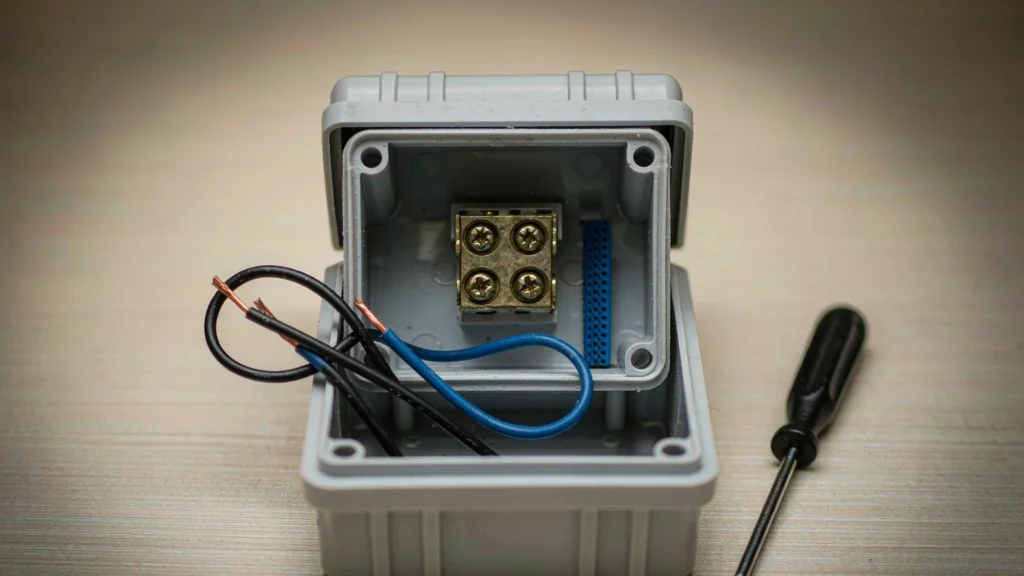
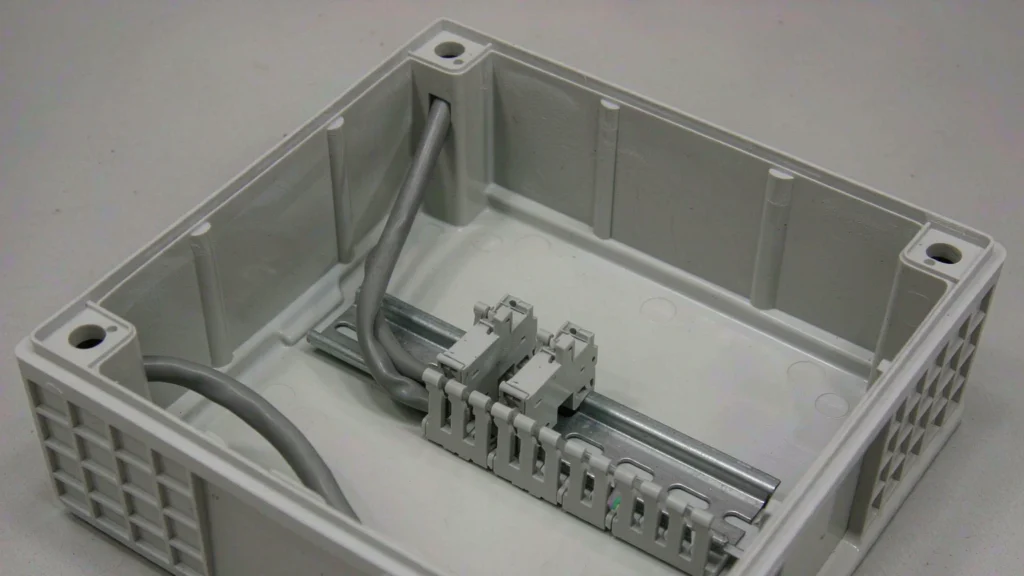
We build moulded connectors with integral terminals and boxes that take DIN-rail blocks, so this covers the four families you meet inside a waterproof junction box.
The Terminal Sets the Rating, Not the Wire
Under IEC 60947-7-1 a rail-mounted block is tested by mounting five blocks in series on a rail, looping 1 to 2 m of conductor of the rated cross-section through them and passing the test current. The rise at the middle block must not exceed 45 K, and a voltage-drop test follows. UL 1059 does the same with three blocks at 25 °C ambient and a 30 K limit. That 45 K is what produces the current printed on the block, not the ampacity table for the cable.
Rated cross-section
Test current, IEC 60947-7-1
1.5 mm²
17.5 A
2.5 mm²
24 A
4 mm²
32 A
6 mm²
41 A
10 mm²
57 A
16 mm²
76 A
25 mm²
101 A
35 mm²
125 A
The same standard also demands a short-time withstand of 120 A per mm² of rated cross-section for one second, which matters in a fault-current path.
The 45 K Is Added to Ambient, and That Is the Trap
Type tests run at 20 ± 5 °C, and the 45 K is a rise rather than a ceiling. In a sealed enclosure sitting at 55 °C in the afternoon, a terminal at rated current reaches roughly 100 °C at the clamping point. Nothing in the datasheet is wrong; the arithmetic is simply done somewhere else.
And the weak link is usually not the terminal. PVC insulation is rated 70 °C and XLPE 90 °C, so a circuit that looks comfortable on a 32 A block at 30 °C ambient is pushing its cable insulation past its own rating at 55 °C. Derate the circuit, or move to a conductor class with a higher temperature rating — both are cheaper than a rewire.
Four Families You Will Meet Inside the Box
Screw-crimp terminals clamp the conductor under a screw or a rising cage: widest conductor range, torque-inspectable, the default in moulded connectors such as our F1 series. Spring and push-in terminals trap the conductor against a spring blade, and the force set in the factory does not relax. Lever connectors open the spring with a cam lever so fine-stranded cable goes in without tools. DIN-rail blocks are separate components clipped to 35 mm rail.
Type
Conductor preparation
Inspection
Best fit
Screw-crimp
Strip; ferrule on fine stranded
Torque wrench
Mixed conductors, field wiring
Spring / push-in
Solid or ferrule only
Pull test
Vibration, thermal cycling
Lever
Strip, solid or ferruled
Lever position
Reusable joints, service access
DIN-rail block
Strip; ferrule on fine stranded
Torque or pull test
Many circuits, grouped returns
Screw Terminals: Torque, Stranded Wire and Cold Flow
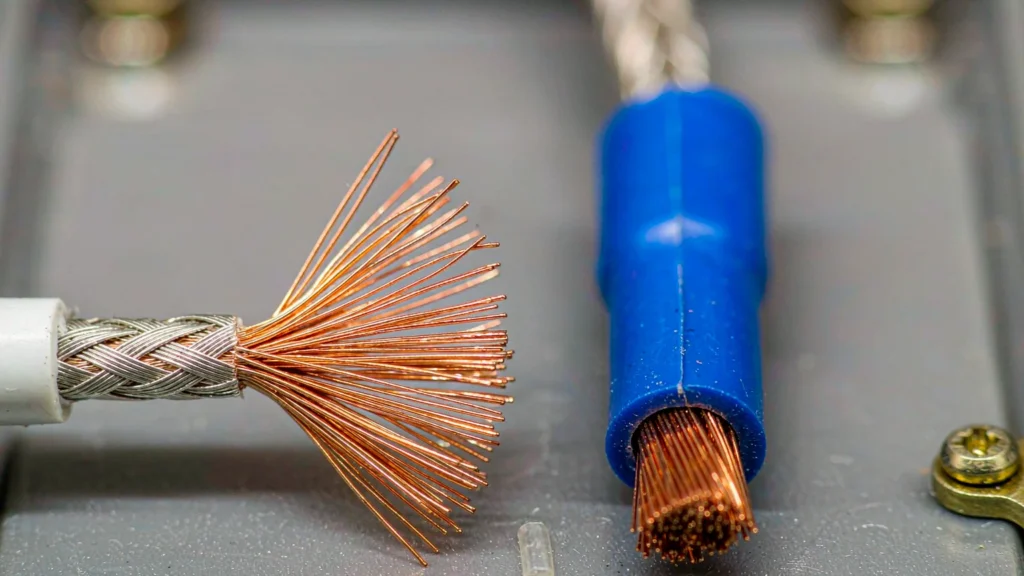
A screw terminal does not loosen because the screw turns. It loses tension because the bundle settles: under clamping pressure and heat the strands flatten, the bundle diameter shrinks, and the screw — which has not moved — is now holding air. That is why re-torque after the first thermal cycle is standard practice on stranded cable, and why a ferrule removes the problem instead of managing it.
The other failure is asymmetric clamping. A screw pressing directly on stranded conductor spreads and can cut the strands; a rising-cage design traps the bundle between two flat faces. If the terminal has a screw and no cage, the ferrule is not optional.
Spring and Push-In Survive Thermal Cycling
Spring terminals exist because of a specific test. IEC 60947-7-1 puts screwless terminals through an ageing sequence of roughly 192 temperature cycles and then repeats the rise and voltage-drop measurements. A spring that loses force cannot pass, and that constant force is why these terminals are standard where a joint sees thousands of small cycles: lighting circuits, rooftop kit, anything with a daily thermal swing.
The trade is that the spring cannot be verified by torque. Push the conductor and confirm it does not move, and accept that a half-inserted fine-stranded wire can look seated. Use ferrules throughout, and never insert a soldered conductor — solder creeps under spring pressure.
Lever Connectors Are Not Terminal Blocks
The lever connector — the Wago 221 pattern that European electricians drop into a box — is a single reusable splice rated as a connector under its own standard, with a printed conductor range and a current rating that applies to that connector alone. It is not a busbar, it does not distribute a supply to six outgoing circuits, and putting it in a waterproof box makes neither part more capable.
Where it wins is service work: open the lever, swap the conductor, close it. Where it fails is current and testability.
Two Ratings in One Box: Ingress and Finger-Safety
The box rating and the terminal rating answer different questions. IP55, IP65 or IP67 describe what gets in from outside; a block’s finger-safe or IP20 designation describes what a test finger reaches from inside. A sealed box with exposed terminal screws is a normal assembly — until condensation, a badly sealed gland or a flooded duct puts water on an energised terminal. That is the mechanism behind most “the box was sealed but the terminals are green” calls, and how many cables fit is usually the upstream cause.
Dissimilar Metals and the Green Terminal
Nickel-plated brass, bare copper, tinned copper and aluminium do not age at the same rate in moisture. The green deposit on an old terminal is copper corrosion product, and it grows fastest where two dissimilar metals meet, where chloride is present and where the joint runs warm. Nickel-plated conductor against nickel-plated clamp is a deliberate pairing: same metal on both faces, no galvanic cell at the contact. The conductor material belongs on the purchase order next to the IP rating.
What Actually Fits in Our Boxes
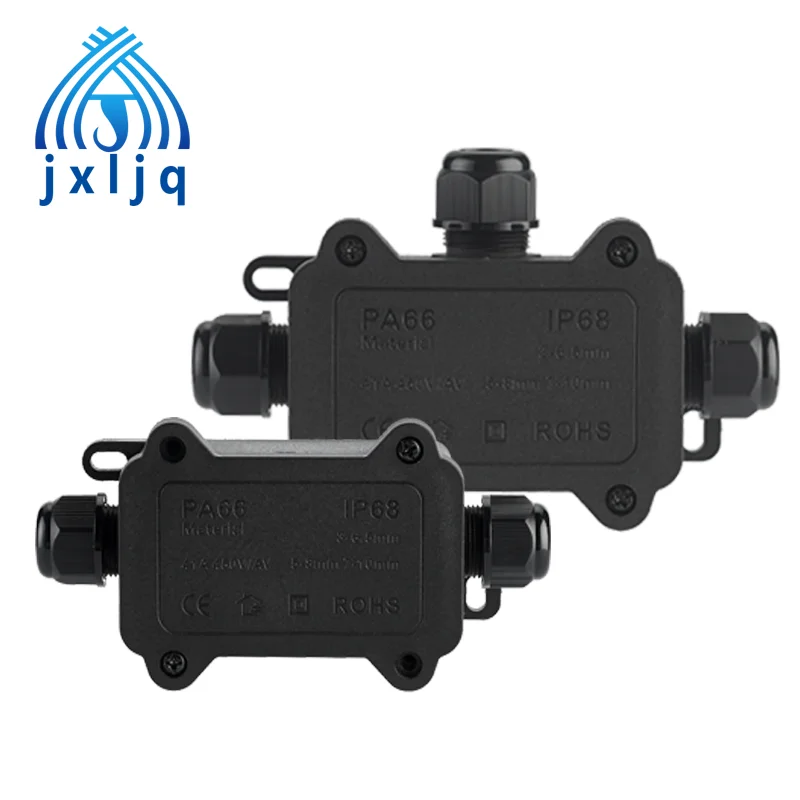
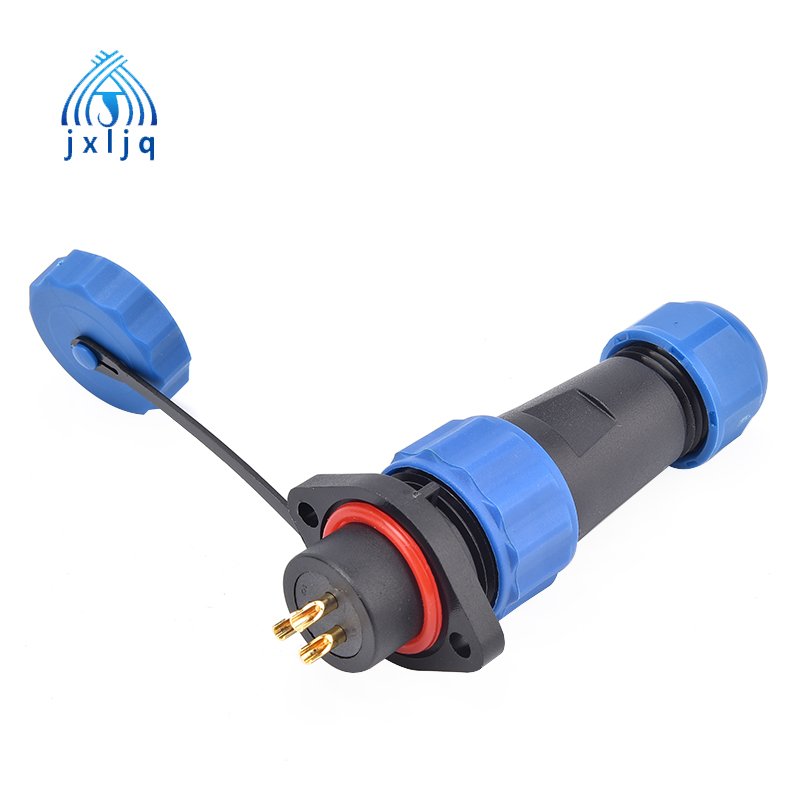
The F1 mini series is a moulded connector rather than a box with a block: nickel-plated 59-1 brass conductors, screw-crimp termination, 0.5 to 4 mm² on the 2-way body and 0.5 to 2.5 mm² on the 3-way and 4-way bodies, 450 V and 16 A or 24 A by model, in a PA6 or PA66 housing with a silicone O-ring and IP68. There is no room for a rail block and no need for one.
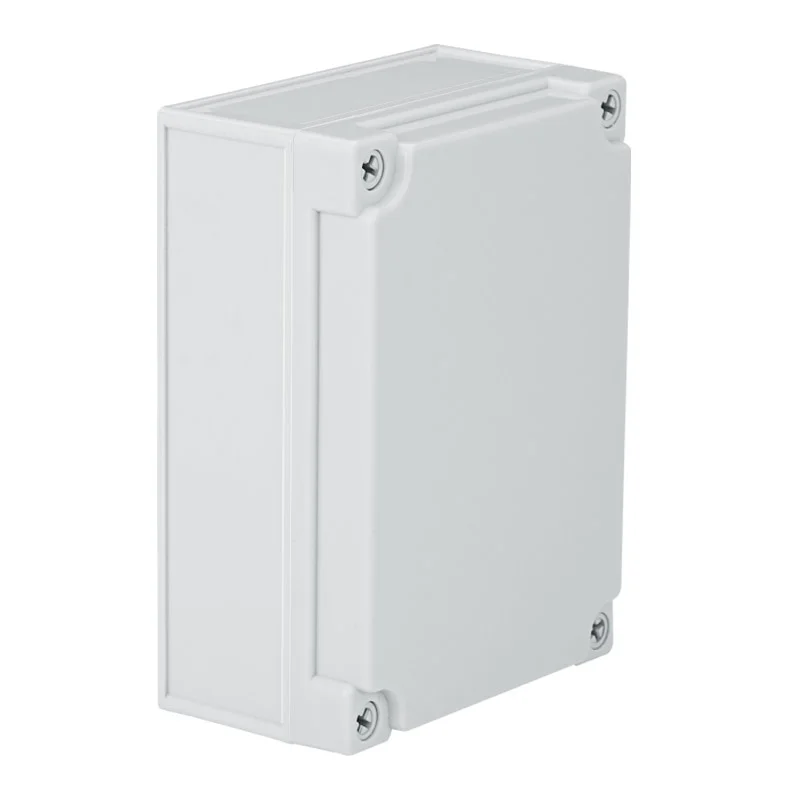
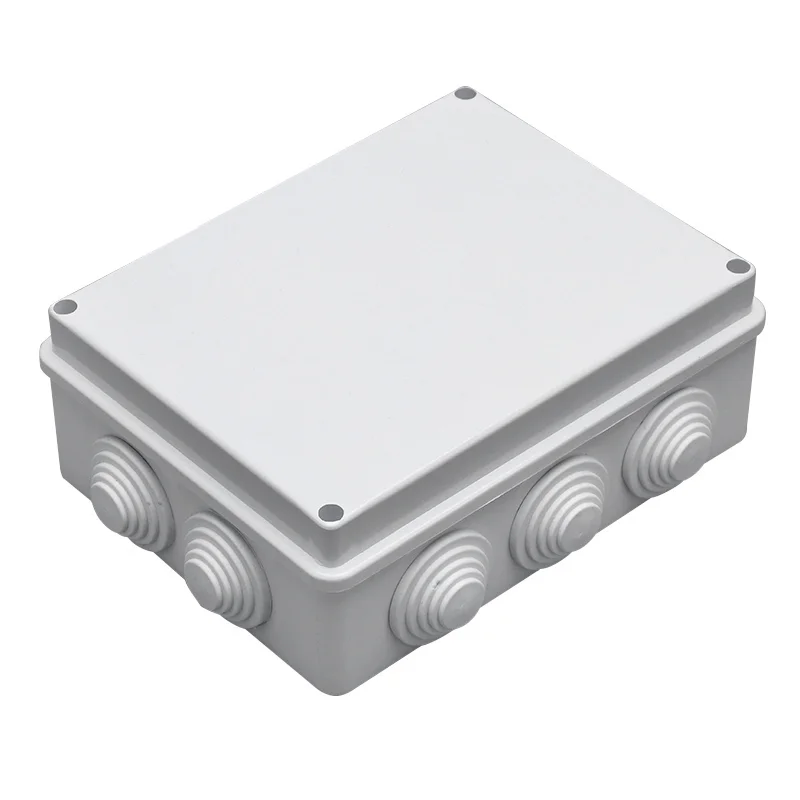
The JX-RA is the opposite case: an ABS housing with internal mounting holes for a PCB or DIN rail, twelve sizes from 50 × 50 to 400 × 350 × 120 mm, IP55 or IP65 by size. If you plan to fit rail terminals, watch the depth column. A 4 mm² rail terminal stands about 45 mm above its rail and a 35 × 7.5 rail adds 7.5 mm, so the stack passes 50 mm before any conductor bends — which rules out the 50 mm deep sizes and makes 70 mm the practical minimum. In a 150 mm long box, allow 18 to 20 modules of 6 mm width once end stops and wire space are taken out. The geometry is worked through in our DIN rail enclosure guide.
Choosing in Five Questions
What conductor class arrives on site — solid, fine stranded, or both?
What ambient will the enclosure see in August, not in the test lab?
Will the joint be opened for service, and by whom?
Is there a fault-current path through this terminal?
Does the assembly get vibration, thermal cycling, or neither?
If the answers point to a small moulded connector, the choice is usually between 2, 3 and 4 ways, which our mini junction box guide covers. If they point to grouped circuits, the answer is rail and blocks.
Conclusion
Junction box terminal types are not a catalogue preference. The temperature-rise limit behind the printed current, the ambient inside a sealed housing and the conductor class on site decide the joint, and the box is then chosen to fit it. Put the conductor material and the ferrule rule beside the IP rating on the order, and most failures blamed on “a bad box” disappear.
FAQ
Can I use a Wago connector inside a waterproof junction box?
Yes, as the splice itself. It carries its own rating, it is not a substitute for a rail block, and it does not change the box’s IP rating.
Do screw terminals need re-tightening after installation?
On stranded cable, re-check after the first thermal cycle. A ferrule removes the need, because the bundle can no longer settle.
Are push-in terminals as safe as screw terminals?
For solid or ferruled conductors, yes — and they hold force better through thermal cycling. They are weaker with bare fine strands, which can be half-inserted and still look seated.
What does 450 V on a mini junction box mean?
It is the rated insulation voltage of the terminal assembly, not a statement about the cable, the load or the enclosure’s ability to isolate a circuit.
Why is my terminal green but the box dry?
Moisture arrived at some point and left, or the box is over-filled and the lid never closed flat. Corrosion is evidence of a past event, not a current leak.
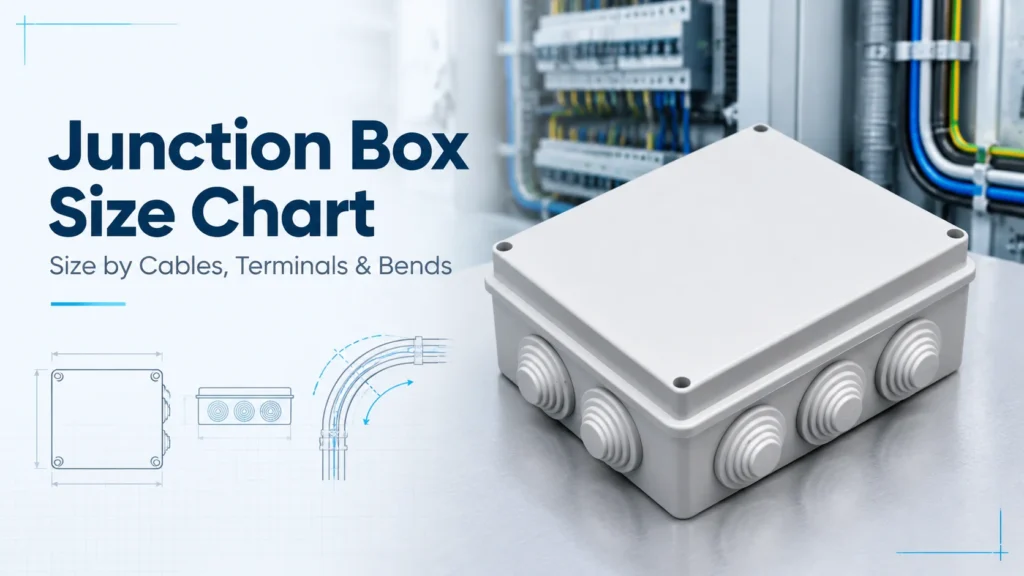
A metric junction box size chart for the JX-AG and JX-RA ranges, plus the four measurements — conductor count, volume, bend radius and gland depth — that decide which model to order.
A waterproof junction box joins wires, a distribution box protects circuits. Compare function, standards, IP ratings, sizing and cost before you specify the right enclosure.
ATEX zones explained in plain terms: Zone 0-2 and 20-22, equipment categories and EPLs, plus how Ex d and Ex e cable glands differ and when a barrier gland is required.
We use cookies to enhance your browsing experience, serve personalised ads or content, and analyse our traffic. By clicking "Accept All", you consent to our use of cookies.