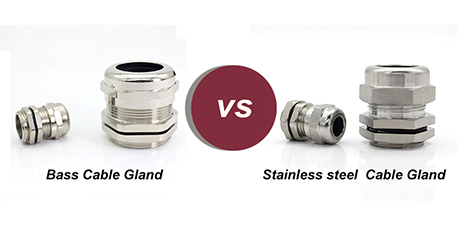
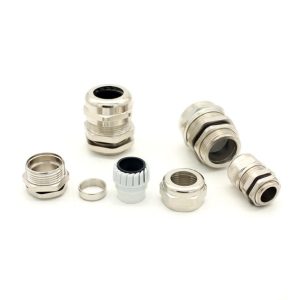
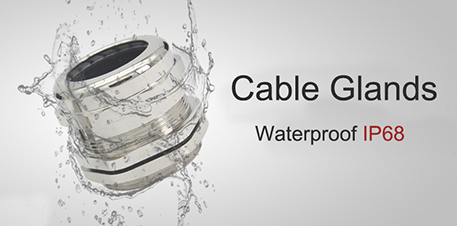
[vc_row][vc_column][vc_column_text]The cable glands made of nickel-plated brass and stainless steel are robust and extremely suitable for industrial widely use.
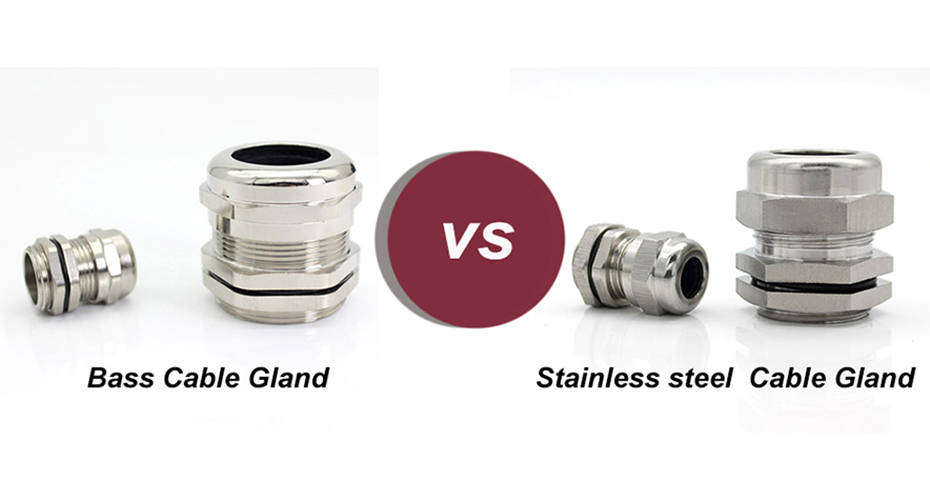
However this article will focus on a comparison of Brass cable glands and Stainless steel cable glands.
Brass cable glands
Brass is an alloy of copper and zinc, and occasionally other metals.
In general, Brass cable glands is plated with nickel to be reduce tarnishing and corrosion.
Stainless steel cable glands
While brass is a copper alloy, stainless steel is an iron alloy mixed with chromium and nickel.
There are many different grades of stainless steel used for making cable gland, such as 304 and 316.
This comparison of Brass cable glands and Stainless steel cable glands has provided us a number of significant differences to consider.
The Difference: An Overview
Cost Effective
Stainless steel cable glands are more expensive than Brass cable glands.
Therefore Brass cable glands is often a more cost-effective option without compromising functionality.
In fact, stainless steel is harder than brass and has a higher melting point, making it more difficult than brass to cast and machine.
Corrosion Resistance
Brass cable glands is generally more corrosion-resistant than Stainless steel cable glands.
While the addition of chromium to steel makes a whole lot of difference to its ability to resist rust, it is still susceptible to corrosion at some degree.
Stainless steel cable glands, on the contrary, has a higher resistance to petroleum products and many acids than brass, and it can be passivated in either citric or nitric acid solutions.
Some grades of stainless steel are also superior to brass in more-aggressive marine environments such as fast-moving currents.
Hygiene
One of the most major differences between brass and stainless steel material is that stainless steel is 100% lead-free.
Stainless steel is extremely hygienic, harsh wash downs, microbes, and bacteria will be resisted to ensure your production line working in a normal state.
Thus Stainless steel cable glands is used more widely than Brass cable glands in beverage industry, food manufacturing industry, etc.
Brass and stainless steel cable glands are perform well in varying conditions.
Both of them are excellent choices of material for your wire job.
If you want more information about brass or stainless steel cable glands, feel free to contact us today.[/vc_column_text][/vc_column][/vc_row]
[vc_row][vc_column][vc_column_text]The application of outdoor lighting can be seen everywhere in our life nowadays. The old-fashioned way to connector wire such as wrap a few layers of insulating glue unable to meet the requirements of outdoor lamps. You will know how importance of cable glands for outdoor lamps in the article. Why need the cable glands for […]
What is the main function of cable joints, what are nylon cable joints, and what are the commonly used classifications? Many people still don’t know. Today, Nylon cable gland manufacturers will answer the above questions for you. Now let’s take a look. Nylon Cable Gland Divided Structure G Thread The main function of nylon cable joint The […]
Have you ever confused what is the IP Rating and how to select suitable IP Rating of Metal Cable Glands? Believe you will get some help after you finish reading this article. It’s necessary to know what is an IP rating mean before select correct Metal Cable Glands. The IP (Ingress Protection) Rating of a […]
We use cookies to enhance your browsing experience, serve personalised ads or content, and analyse our traffic. By clicking "Accept All", you consent to our use of cookies.