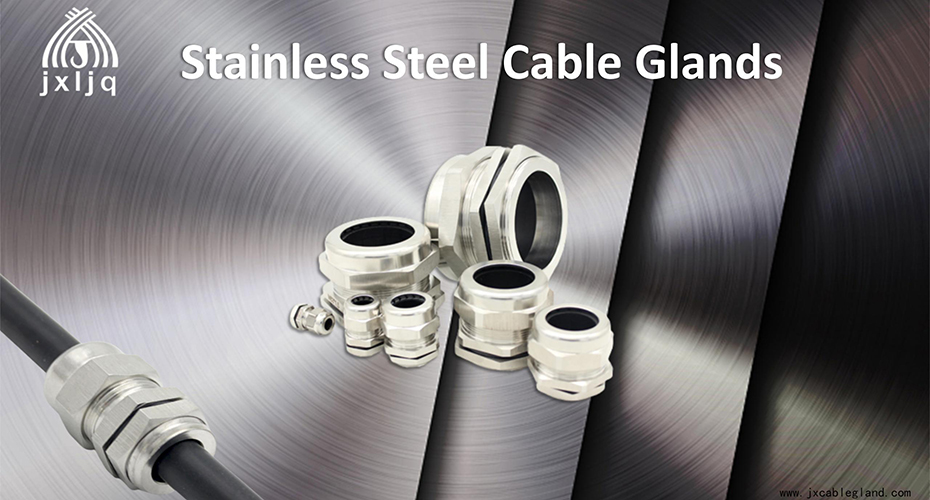
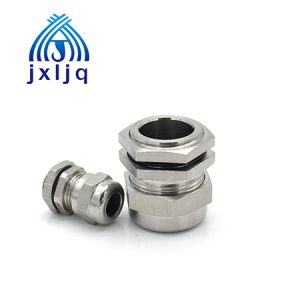
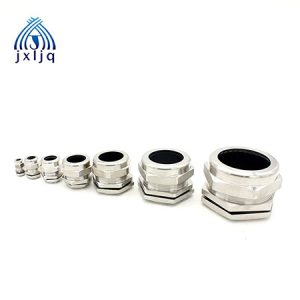
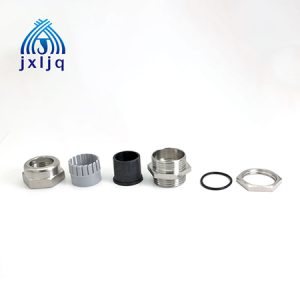
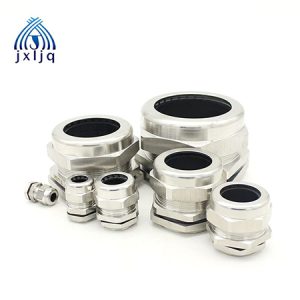
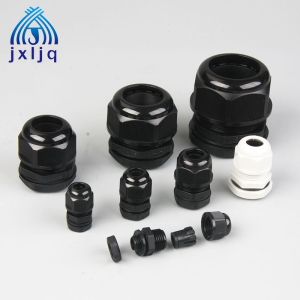
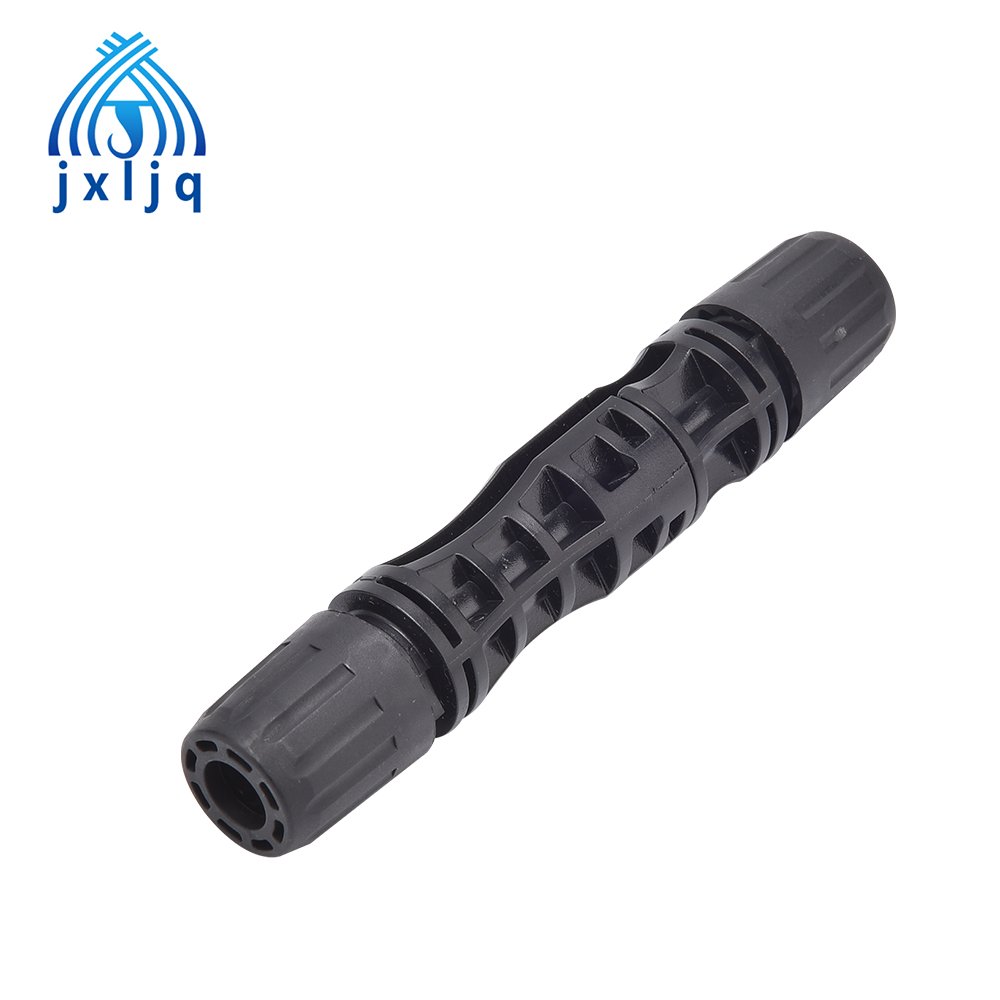
Stainless steel cable glands as know as stainless steel cord grips, has the characteristics of anti-oxidation, anti-corrosion and durability and is widely used in electric power, marine and other industries.
Common stainless steel cable glands are made of stainless steel type 304 or stainless steeltype 316, knowing their characteristics will allow you to better choose the right stainless steel cable glands.
Classification of stainless steel
Stainless steel is an alloy of iron that is resistant to rusting and corrosion.
Stainless steel’s corrosion resistance and mechanical properties can be further enhanced by adding other elements, such as nickel, molybdenum, titanium, niobium, manganese, etc.
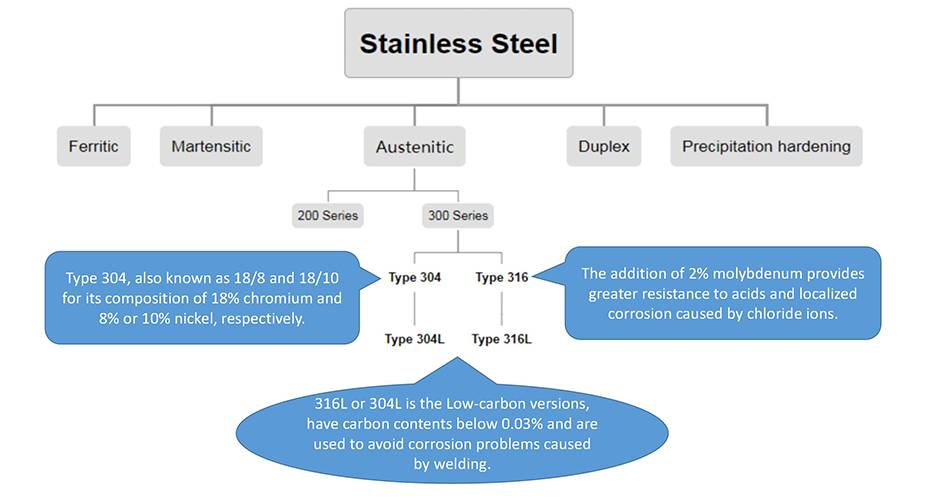
There are five main families, which are primarily classified by their crystalline structure: austenitic, ferritic, martensitic, duplex, and precipitation hardening.
The 300-series formulas is a popular choice for a wide variety of cable glands applications. The 304, 316 and 316L stainless steel cable glands are the most commonly specified.
What Is The Difference Between 304 And 316 Stainless Steel Cable Glands?
Simply distinguish them, 304 contains 18% chromium and 8% or 10% nickel while 316 contains 16% chromium, 10% nickel and 2% molybdenum. 304L or 316L is their low-carbon versions.
You can find the specific difference between SS304 and SS316 from the table below:
Physical Properties
304 Stainless Steel
316 Stainless Steel
Melting Point
1450℃
1400℃
Density
8.00 g/cm^3
8.00 g/cm^3
Thermal Expansion
17.2 x10^-6/K
15.9 x 10^-6
Modulus of Elasticity
193 GPa
193 GPa
Thermal Conductivity
16.2 W/m.K
16.3 W/m.K
Mechanical Properties
304 Stainless Steel
316 Stainless Steel
Tensile Strength
500-700 Mpa
400-620 Mpa
Elongation A50 mm
45 Min %
45% min
Hardness (Brinell)
215 Max HB
149 max HB
Both SS304 and SS316 stainless steel cable glands are with a strong resistance to heat,abrasion, and corrosion. Not only are they known for their resistance to corrosion, they are also known for their clean appearance and overall cleanliness.
In different applications,both 304 stainless steel cable glands and 316 stainless steel cable glands have pros and cons to consider.
When exposure to chemicals or a marine environment, 316 stainless steel cable glands is the better choice, due to 316 stainless steel cable glands is more resistant than 304 to salt and other corrosives.
Such as SS316 stainless steels cable glands are required in the manufacture of certain pharmaceuticals in order to avoid excessive metallic contamination.
On the other hand, 304 stainless steel cable glands is a more economical choice, when it doesn’t need strong corrosion resistance.
Jixiang Connector is a professional cable glands manufacturer and provide SS304 and SS316L stainless steel cable glands, available in a variety of thread types, Metric thread, PG thread, NPT thread and G thread, clamping range from 3mm to 90mm suitable for all sizes of cables.
Hope this article was useful and you also can contact us for details.
Our expert team are standing by and ready to help.
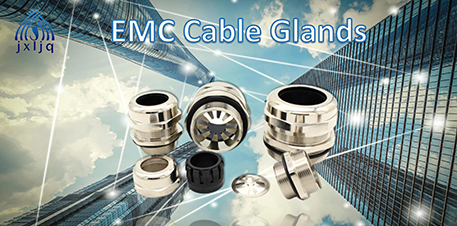
Electromagnetic compatibility (EMC) is an equipment characteristic or property and is defined as ” the ability of equipment or a system to function satisfactorily in its electromagnetic environment without introducing intolerable electromagnetic disturbances to anything in that environment. In the application, the EMC cable glands are used to protect electrical equipment from electromagnetic interference. And to […]
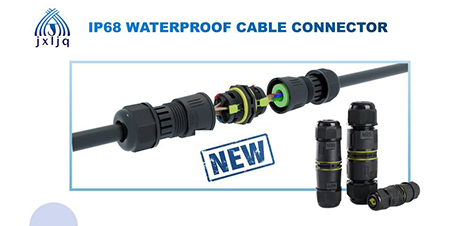
Jixiang Connector announces the launch of their new IP68 Waterproof Cable Connector for electrical installations and equipment which require a full protection against water, damp and dust. IP68 Waterproof Cable Connector as a cost effective solutions, designed to connect in a quick and safety way in permanent and temporary installations. How IP68 Waterproof Cable Connector Work? Jixiang Connector’s IP68 Waterproof […]
What is the main function of cable joints, what are nylon cable joints, and what are the commonly used classifications? Many people still don’t know. Today, Nylon cable gland manufacturers will answer the above questions for you. Now let’s take a look. Nylon Cable Gland Divided Structure G Thread The main function of nylon cable joint The […]
We use cookies to enhance your browsing experience, serve personalised ads or content, and analyse our traffic. By clicking "Accept All", you consent to our use of cookies.