Cable Gland Torque Specifications and Sealing Points Guide
A practical guide to cable gland torque specifications and sealing points, covering nylon, brass, and stainless steel torque values by thread size.

A practical guide to cable gland torque specifications and sealing points, covering nylon, brass, and stainless steel torque values by thread size.
Engineering guide to choosing between nylon, brass, and stainless steel cable glands — environment-driven material selection, side-by-side specs, and a quick selection matrix.
IP67 and IP68 are both dust-tight, but they differ in water immersion protection. Learn when to choose each rating for cable glands.
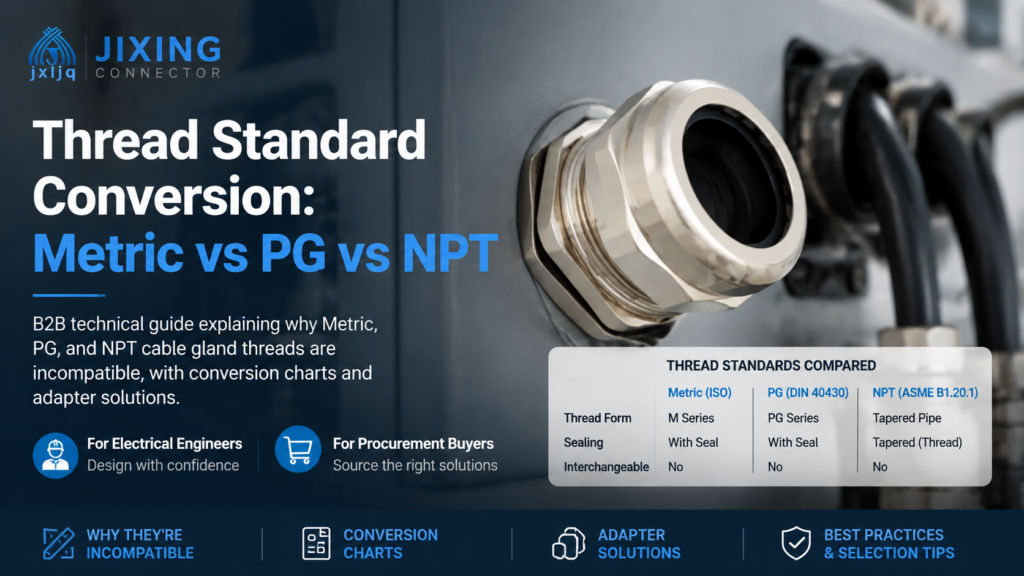
Metric, PG, and NPT cable gland threads are mechanically incompatible. This guide explains the dimensional differences, shows conversion by cable OD band, and lists adapter solutions for legacy enclosures.

Compare metric, PG, and NPT cable gland sizes in one chart. Learn how to measure cable diameter, match sealing ranges, and avoid sizing mistakes.
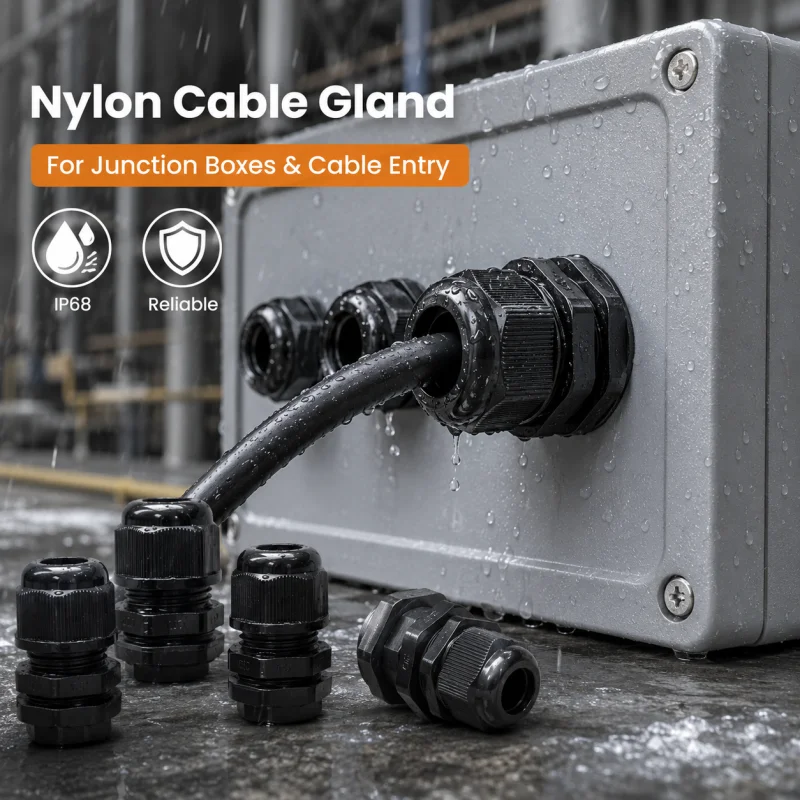
Outdoor electrical systems are constantly exposed to rain, humidity, dust, UV radiation, and temperature changes. When wiring protection is not properly designed, water ingress and
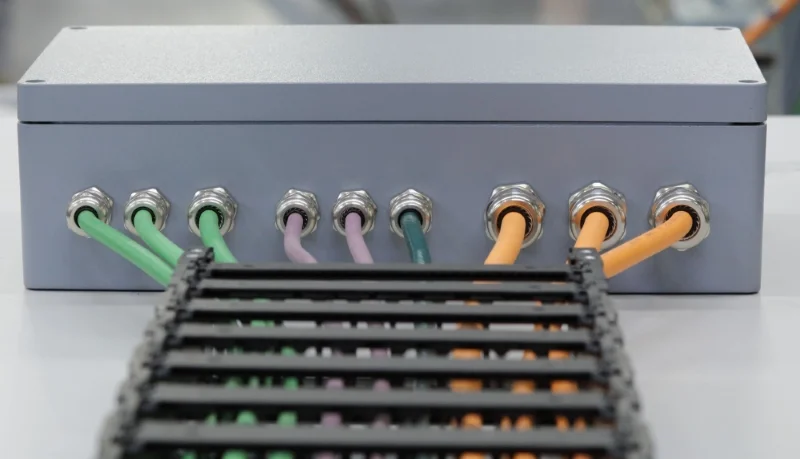
Introduction: Why Material Selection Matters in Cable Glands Choosing between a brass cable gland and a stainless steel cable gland is not just a cost
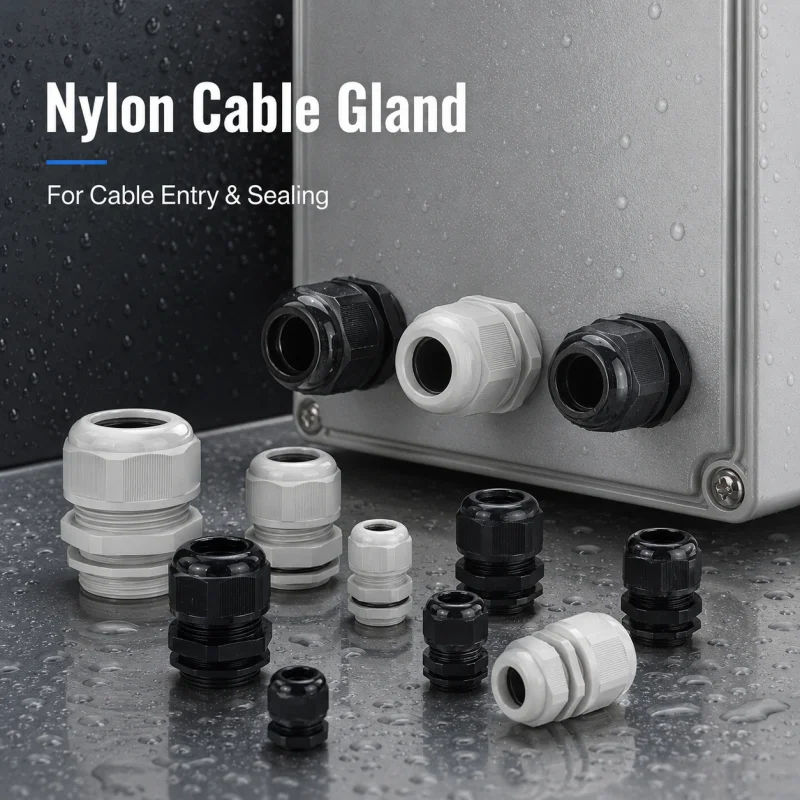
1. IP68 Nylon Cable Gland Overview: What It Is and Why It Matters An IP68 Nylon Cable Gland is a cable entry sealing component used